China Takes Supercomputer Crown From U.S. For First Time Since 2017

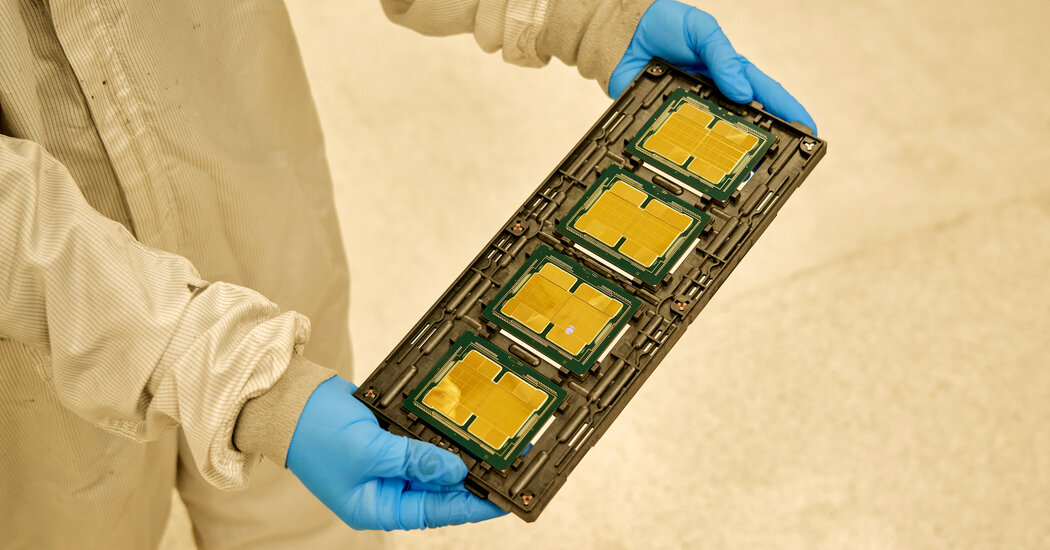
China took back a coveted computing crown from the United States on Tuesday, ratcheting up a fierce technological competition that has implications for science, national security and geopolitics. LineShine, a massive computing system in Shenzhen, China, was declared the world’s fastest by a group of researchers using a set of standard tests for supercomputers. Besides raw speed, the system stood out because it uses only standard microprocessors and not the special-purpose chips called graphics processing units, which most high-end supercomputers rely on for heavy number crunching. That underlying design could…

A.I. Boom Ignites Asian Chip Companies

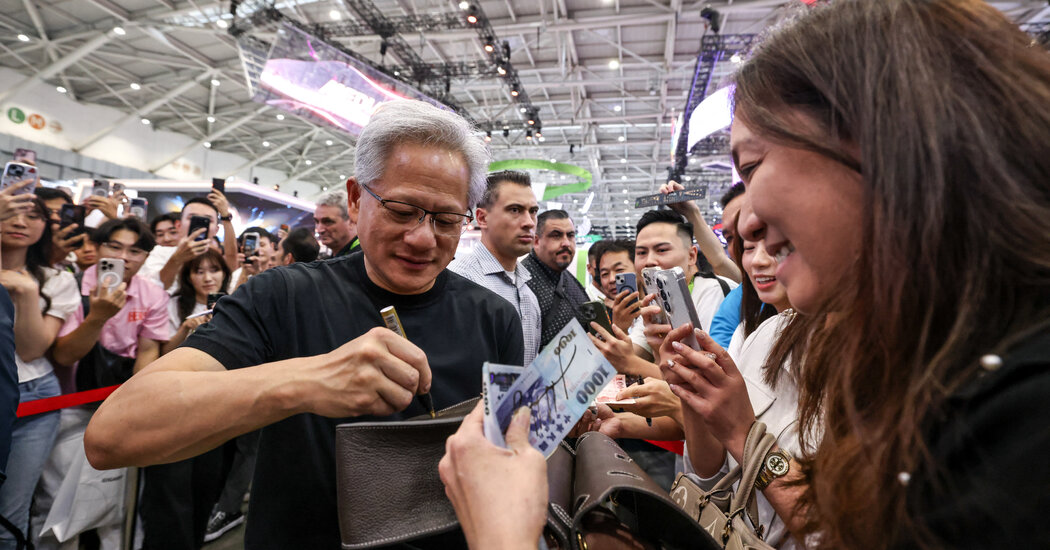
At Taiwan’s biggest computing show this month, Jensen Huang, the chief executive of Nvidia, was mobbed as if he were a rock star, trailed by a crowd from booth to booth as he signed autographs and posed for selfies. At the stand of SK Hynix, one of his most important South Korean suppliers, Mr. Huang picked up a marker and left a message. Atop a reflective wafer of memory — a component of Nvidia’s A.I. supercomputers now in short supply — he wrote: “Please make more :).” It was only…

China Aims A.I. at Predicting Who Could Pose a Political Risk

A Chinese company has been trying to develop artificial intelligence-powered technology that would enable authoritarian governments to not just monitor dissidents but also potentially predict who could become one in the future. The work, which appears to be in the research stage, is ripped out of dystopian science fiction, offering a glimpse of a world in which an authoritarian state is able to move against its citizens before they begin any public dissent. The Chinese company, Geedge Networks, sells a commercial version of the Great Firewall, the surveillance and censorship…

Chinese Military Sought Nvidia Chips for Years, Report Says

Jensen Huang, Nvidia’s chief executive, has said China’s military doesn’t rely on chips from his California-based company. But an analysis of six years of Chinese records shows that China’s military has been openly seeking Nvidia’s artificial intelligence chips since 2019. Chinese records reviewed by Wirescreen, a software platform that provides information about Chinese companies, showed that the People’s Liberation Army has stepped up its efforts to acquire artificial intelligence chips, even after the U.S. government restricted semiconductor sales to foreign adversaries including China. The records document instances when suppliers agreed…

Elon Musk and Other CEOs on Trump’s Trip to China Sought Relief

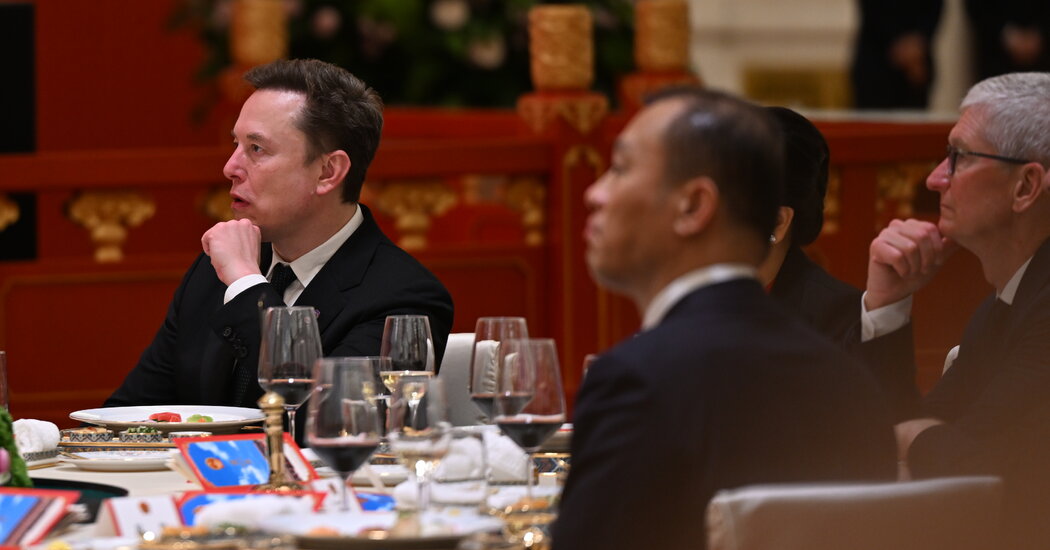
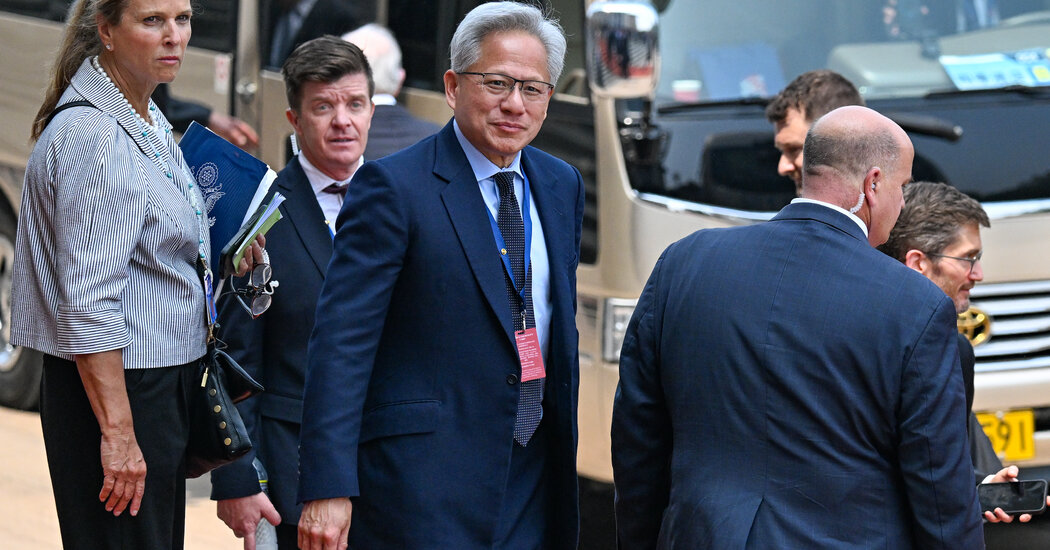
The chief executives who accompanied President Trump to a meeting and grand banquet in China last week were seeking to curry favor with both the Trump administration and the Chinese government, keenly aware that the support of either could make or break their businesses. But the delegation — which included executives from Boeing, Apple, Nvidia, Cargill and other firms — arrived in Beijing with a variety of commercial complaints about doing business in China, some of which are public, some of which have not been previously reported. In recent weeks,…

Nvidia’s Profit Hits $58.3 Billion as A.I. Boom Gathers More Steam

Another huge quarterly profit announced by the chip maker Nvidia on Wednesday provided solid evidence that Silicon Valley’s artificial intelligence spending spree is still gathering steam. Nvidia said profit in its most recent quarter was $58.3 billion, up 211 percent from a year earlier and topping expectations by financial analysts. Just three years ago, the Silicon Valley company’s quarterly profit was $2 billion — about one-thirtieth of what it is today. Nvidia’s chips are an essential part of big A.I. projects, and other tech companies have been lining up to…

Trump Approved a Nvidia Chip for Sale in China. Beijing Doesn’t Want It.

When President Trump announced late last year that Nvidia could sell one of its most powerful chips to China, the deal looked like a rare win-win in a fraying geopolitical relationship. It would provide a major boost for China’s artificial intelligence ambitions, while handing a win to America’s leading chipmaker. Cutting-edge A.I. systems run on staggering amounts of computing power, and Nvidia’s chips are considered the gold standard worldwide. Chinese competitors have yet to build anything that rivals Nvidia’s best, and Mr. Trump’s decision undercut years of U.S. policy designed…

Gaming Out the Price of a Trump Trade Deal With China

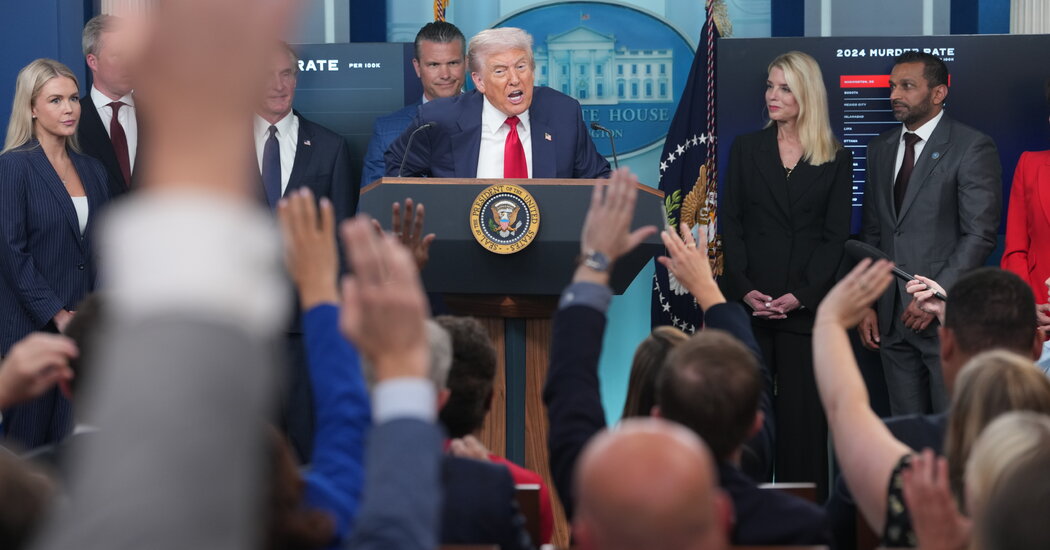
Andrew here. We’re digging deeper into President Trump’s tariff talks with China, which have been postponed for another 90 days. (Some critics are calling it another TACO — short for “Trump Always Chickens Out” — moment.) We’re also still thinking about the implications of the deal Trump reached in which Nvidia will pay 15 percent of revenue from A.I. chip sales to China. Will Beijing view this as state-sponsored capitalism? Will Nvidia — and by extension companies like Apple and Tesla — no longer be viewed as independent businesses but…

U.S. Tightens China’s Access to A.I. Chips

The Biden administration on Tuesday announced additional limits on sales of advanced semiconductors by American firms, shoring up restrictions issued last October to limit China’s progress on supercomputing and artificial intelligence. The rules appear likely to halt most shipments of advanced semiconductors from the United States to Chinese data centers, which use them to produce models capable of artificial intelligence. More U.S. companies seeking to sell China advanced chips, or the machinery used to make them, will be required to notify the government of their plans, or obtain a special…

How the Big Chip Makers Are Pushing Back on Biden’s China Agenda

A year after the Biden administration took its first major step toward restricting the sale of semiconductors to China, it has begun drafting additional limits aimed at denying Beijing the technology critical to modern-day weapons. But in recent months, its progress has been slowed as American chip companies have pushed back with a blunt warning: Cutting sales to China would gut their businesses and derail the administration’s plan to build new semiconductor factories in the United States. Since July, Nvidia, Intel and Qualcomm, three of the world’s largest chip makers,…