1 Campaign, 2 Targets: China’s Cyber Operations Hit Asian Governments and Dissidents Abroad

On May 1, cybersecurity researchers at Trend Micro disclosed a previously undocumented China-aligned espionage campaign that has infiltrated government and defense networks across much of Asia. Tracked as Shadow-Earth-053, the operation has been active since at least December 2024, and it has targeted ministries and contractors in Pakistan, Thailand, Malaysia, India, Myanmar, Sri Lanka, and Taiwan, as well as one European NATO member, Poland, along with journalists and diaspora activists. What distinguishes this campaign from most other China-aligned cyber operations is its dual focus: one track pursued traditional intelligence collection…

The Achilles’ Heel of China’s Supply Chain Strategy: New Technology

China’s electric vehicle giant BYD recently released its first-quarter earnings report for 2026, which has triggered a strong market reaction: BYD saw its most sluggish quarterly performance in six years. Its profits plummeted 55 percent year-on-year to 4.1 billion yuan, while revenue fell 12 percent to 150 billion yuan, accompanied by a 30 percent drop in vehicle deliveries.  In the past years, China’s New Energy Vehicle (NEV) sector has seen a surge of new entrants, such as Xiaomi and Geely. While an unrelenting and intensifying price war persists, BYD’s market…

In Hungary, Voters Exposed the Limits of China’s Ties to Orban

The gigantic Chinese lithium battery factory under construction for three years on the edge of Hungary’s second biggest city hasn’t started production yet. But it has already contributed to a political earthquake. As the biggest Chinese investment in Europe, the $8.5 billion project in the eastern city of Debrecen had been hailed by Hungary’s outgoing prime minister, Viktor Orban, as proof of the economic benefits of his close relations with China. Instead, the factory helped bring about his downfall. In the April 12 election, Mr. Orban’s Fidesz party lost all…

New NTSB Report Into Deadly China Eastern Crash Suggests Struggle in Cockpit

For more than four years, the final moments of China Eastern Flight 5735 remained shrouded in secrecy, with few clues to a baffling descent from 29,000 feet that left no survivors. Now, new data from the Boeing 737 suggests the crash was no accident. The plane’s fatal dive was a deliberate act initiated from within the cockpit, aviation experts say, following what appears to have been a struggle for control of the aircraft. The plane, which was operated by highly experienced pilots, had been traveling from Kunming, in southwestern China,…

Why the Upcoming China-US Summit Is Likely to Be Misread

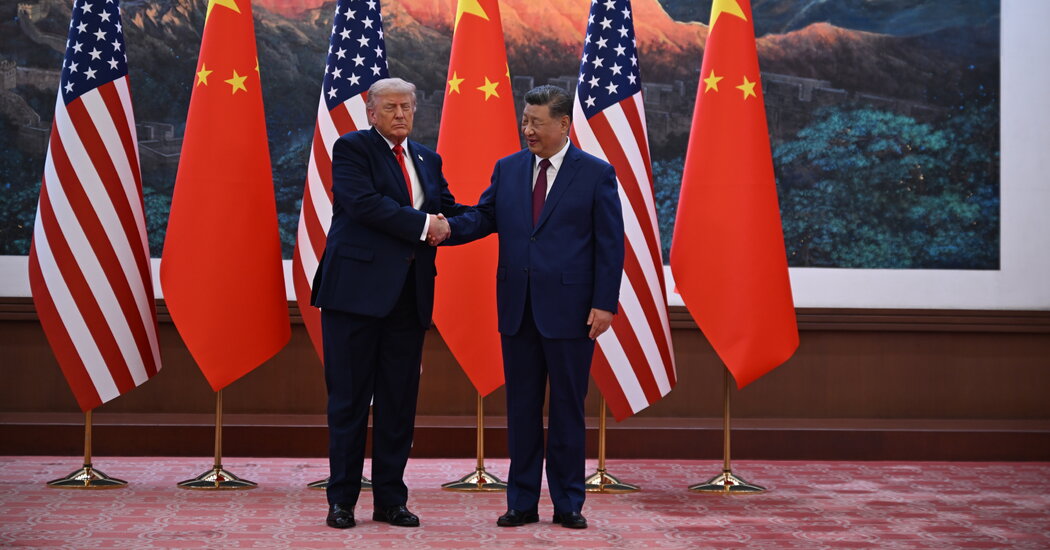
As Washington and Beijing prepare for their first leaders’meeting of the year – and the first visit by a U.S. president to China since 2017 – expectations are once again beginning to harden. Across much of the Western commentary, the summit is framed as a test of leverage. After months of renewed tariffs, technology restrictions, and economic signaling, engagement is widely interpreted as evidence that pressure has begun to work. The underlying assumption is familiar: escalation narrows options, and dialogue follows when costs become intolerable. This reading is politically intuitive…

Navigating the Many Issues Surrounding China’s Ports Abroad

Powerful factors have propelled Chinese companies into ports abroad where they serve as builders, financiers, investors, terminal operators, and more. Equally powerful factors have motivated Beijing to support them.  Part 1 in this four-part series inter alia dove into the national and corporate motivations behind China’s port’s push, sketched a portrait of China’s overseas ports presence, and surveyed the raging storm about the economic, political, and military downsides of China’s heavy footprint in overseas ports. The topic of Chinese ports remains front and center. China is escalating its detention of…

American Factories Lag in Adopting A.I. This Drugmaker Is an Exception.

In a sterile Bristol Myers Squibb lab about an hour north of Boston, scientists in scrubs and hairnets transfer living cells to a 2,000-liter stainless steel bioreactor that grows them for weeks. The goal is to produce proteins that are genetically engineered to attack cells that cause disease. Tiny variations in heat, light or pH level can stop the cells from growing, causing drug shortages that endanger patients. Typically scientists would have to wait to see what went wrong during that fragile process, but now artificial intelligence is used to…