Why China Is So Much Less Scared of A.I. Than the U.S.

Every evening as our children eat dinner, my phone notifies me that our 3-year-old’s teacher has uploaded photos taken during the day at school. An artificial intelligence facial recognition feature puts a red square around his face, letting me know which photos to look at. It’s kind of creepy, but kind of helpful, too. In China, surveillance technology and A.I. surround our everyday life. It’s built into the way we order food delivered to us from online apps; almost nobody I know here in Shanghai buys groceries at a grocery…

In Hungary, Voters Exposed the Limits of China’s Ties to Orban

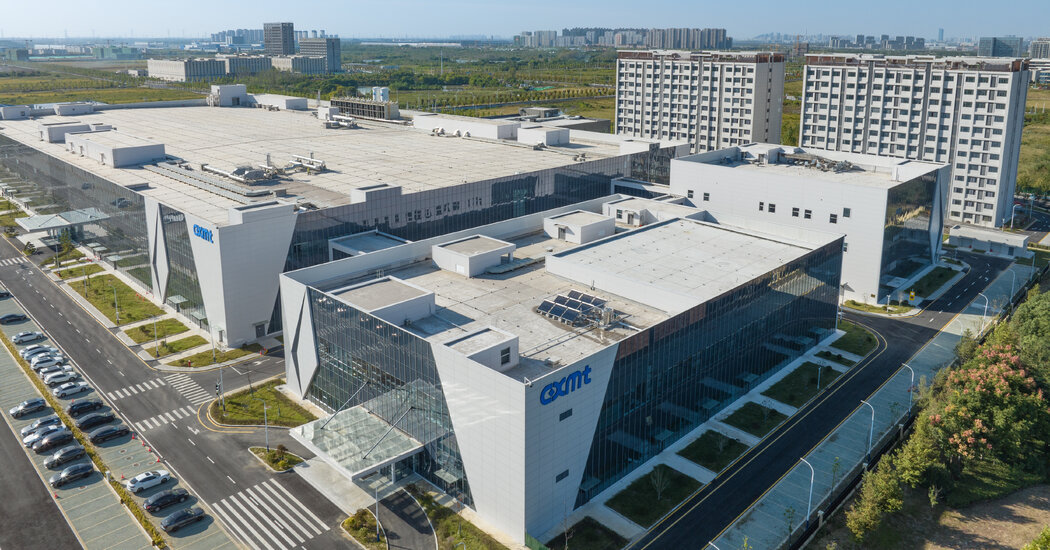
The gigantic Chinese lithium battery factory under construction for three years on the edge of Hungary’s second biggest city hasn’t started production yet. But it has already contributed to a political earthquake. As the biggest Chinese investment in Europe, the $8.5 billion project in the eastern city of Debrecen had been hailed by Hungary’s outgoing prime minister, Viktor Orban, as proof of the economic benefits of his close relations with China. Instead, the factory helped bring about his downfall. In the April 12 election, Mr. Orban’s Fidesz party lost all…

This Is What Should Unite the Right and the Left on A.I.

We come from different parties and have guided artificial intelligence policy under very different presidents. But we agree: A.I. has become so powerful that, along with its tremendous promise, the technology poses immediate risks to national security. The United States is competing with authoritarian powers for control of A.I.’s future. Yet the country lacks a strong plan to protect the nation from A.I.’s profound dangers. There are clear steps the government can take that both parties can agree on. But Washington lacks urgency. Unless we change course, A.I. systems will…

Meta Deal Reversal Deepens Split Between China and Silicon Valley

Manus, an artificial intelligence start-up, began with an idea among three engineers in Wuhan, China, united by an obsession with A.I. and a shared ambition to build a global venture. From the outset, they looked beyond China. Their big break came in March last year. Manus had drawn the attention of Silicon Valley investors with an A.I. agent capable of carrying out tasks on its own. By year’s end, Meta had agreed to acquire Manus. It looked like a clean breakout from China’s crowded, tightly regulated market and a path…

How the Supreme Court’s Shadow Docket Upended Climate Policy

In 2016, a surprise decision from the Supreme Court “sent both climate policy and the court itself spinning in new directions,” Jodi Kantor and Adam Liptak wrote in an investigation published last week. The one-paragraph ruling halted the Clean Power Plan, President Barack Obama’s signature environmental policy, which was aimed at reducing emissions from power plants. The decision signaled the birth of the court’s modern “shadow docket,” which the court uses to issue short opinions and bypass the time-tested procedures of hearing oral arguments and publishing detailed explanation of the…

Why Diesel Has Become a Much Bigger Economic Problem Than Gasoline

The price of diesel has risen much more quickly than gasoline as the U.S.-Israeli war with Iran has choked global oil supplies. That could have severe consequences for the diesel-dependent transportation industry. Since the war began on Feb. 28, the average price of a gallon of diesel has gone up about 45 percent, while a gallon of regular gasoline has risen about 35 percent. The Energy Information Administration, a federal research agency, expects average diesel prices to peak at more than $5.80 a gallon this month. Gasoline, the agency said,…

Gaming Out the Price of a Trump Trade Deal With China

Andrew here. We’re digging deeper into President Trump’s tariff talks with China, which have been postponed for another 90 days. (Some critics are calling it another TACO — short for “Trump Always Chickens Out” — moment.) We’re also still thinking about the implications of the deal Trump reached in which Nvidia will pay 15 percent of revenue from A.I. chip sales to China. Will Beijing view this as state-sponsored capitalism? Will Nvidia — and by extension companies like Apple and Tesla — no longer be viewed as independent businesses but…

Republican Bill to End E.V. Tax Credit Could Hurt G.M. and Ford

Sales of electric vehicles have been rising in recent years, partly because of a $7,500 tax credit from the federal government that helps lower the cost of buying one. But a budget bill that House Republicans released on Monday would end that tax credit. Their proposal would also put new restrictions on other tax breaks that have encouraged automakers to invest tens of billions of dollars in new battery plants in the United States. By next year, the bill would do away with the $7,500 tax credit for buyers of…

The Many Challenges Facing Apple

For more than a decade, Apple could do almost no wrong. The iPhone made it the world’s most valuable company. The App Store helped launch businesses such as Uber and Airbnb. And the company’s new products made it a player in health, Hollywood and finance. Now, the difficulties are piling up. The Justice Department filed an antitrust lawsuit against Apple on Thursday for giving its own products advantages that it deprived rivals of having. The suit is the latest in a series of actions brought against the company by regulators…

China Evergrande Founder Accused of Exaggerating Revenue by $78 Billion

China Evergrande Group exaggerated its revenue by more than $78 billion and committed securities fraud over two years before its spectacular collapse in 2021, a top Chinese regulator said. The China Securities Regulatory Commission accused Hui Ka Yan, the founder of Evergrande, of “making decisions and organizing fraud,” the company reported in a filing to the Shanghai and Shenzhen stock exchanges on Monday night. Mr. Hui was fined $6.5 million and banned from China’s financial markets for life. Xia Haijun, a former chief executive, was fined $2 million and also…