American Factories Lag in Adopting A.I. This Drugmaker Is an Exception.

In a sterile Bristol Myers Squibb lab about an hour north of Boston, scientists in scrubs and hairnets transfer living cells to a 2,000-liter stainless steel bioreactor that grows them for weeks. The goal is to produce proteins that are genetically engineered to attack cells that cause disease. Tiny variations in heat, light or pH level can stop the cells from growing, causing drug shortages that endanger patients. Typically scientists would have to wait to see what went wrong during that fragile process, but now artificial intelligence is used to…

Ford Says an Affordable Electric Pickup Truck is Still Coming Next Year

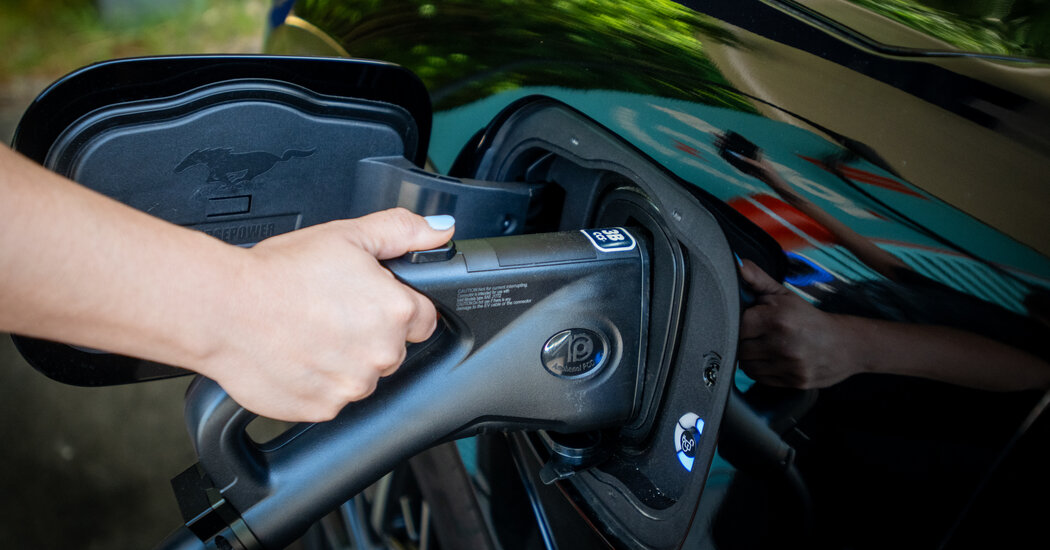
Last year Ford Motor suspended production of an electric pickup truck, shut down a battery factory in Kentucky and booked a $20 billion loss to account for its diminished plans. Then, last month, the senior executive who oversaw development of this new technology left the company. But Ford executives insist that those setbacks do not mean that the company has given up on electric vehicles. As evidence, they point to a former warehouse here in Long Beach, Calif. There, a team lead by Alan Clarke, a Tesla veteran, is building…

DeepSeek’s Sequel

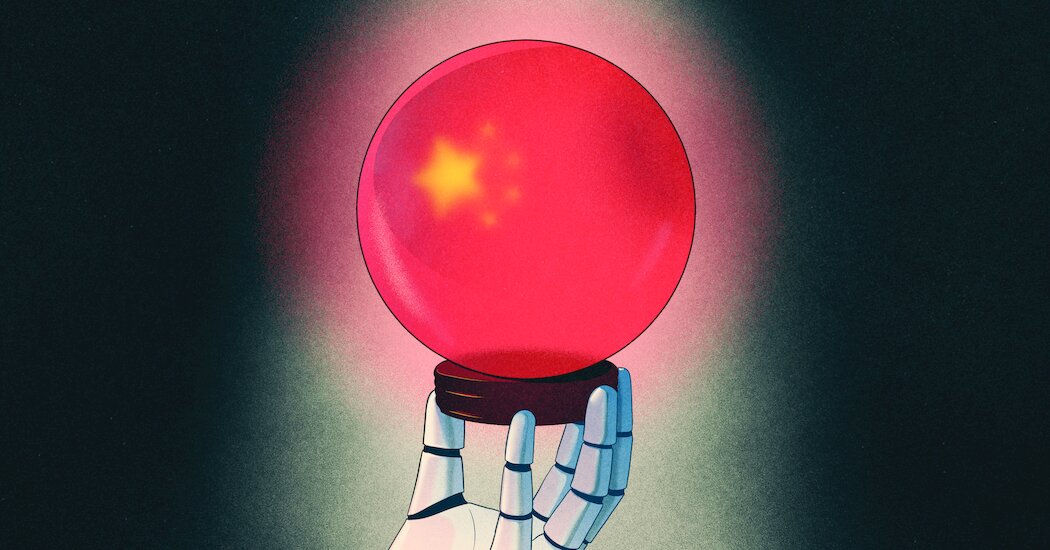
Remember the “DeepSeek moment?” The Chinese start-up announced in early 2025 that it had created an artificial intelligence model that could rival ChatGPT. Not only that, it had created it at a fraction of the cost of its American competitors. If China had been considered behind the United States on A.I., DeepSeek changed that. Almost instantly, its model became the most downloaded free app in the U.S. Some in Silicon Valley started calling it “A.I.’s Sputnik moment.” DeepSeek released its latest model last week. Today, my colleague Meaghan Tobin, who…

DeepSeek’s Sequel Set to Extend China’s Reach in Open-Source A.I.

When the Chinese start-up DeepSeek published details about one of its artificial intelligence models last year, it sent shock waves through the tech industry. The company said it had built its system by spending far less on computer chips than American rivals like OpenAI and Anthropic. It marked the start of what became known as China’s “DeepSeek moment,” shorthand for the belief that Chinese A.I. companies were ready to showcase their technical capabilities to the world. The DeepSeek moment reflected a shift in the global A.I. landscape. The change was…

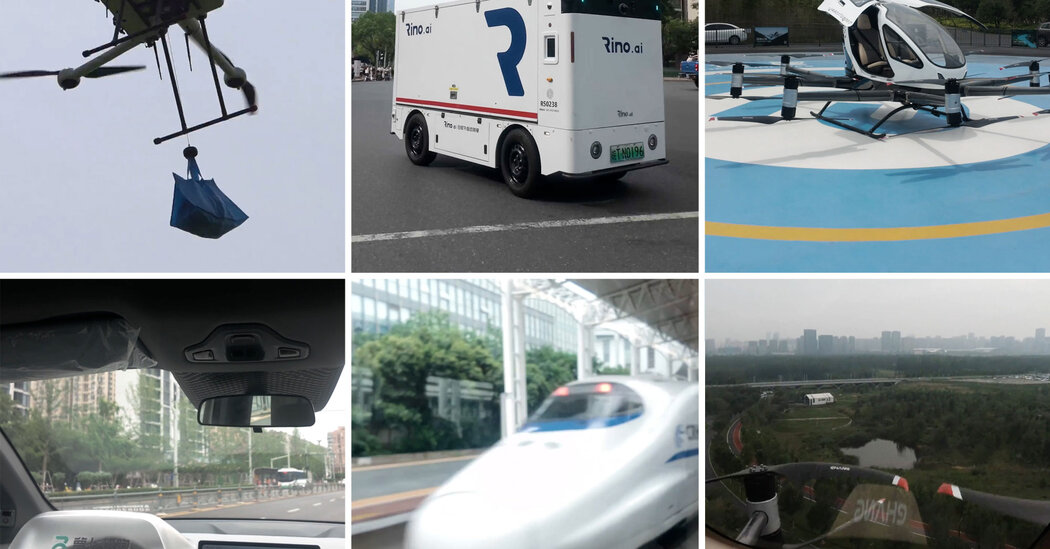
China’s Clean Energy Push is Powering Flying Taxis, Food Delivery Drones and Bullet Trains

By The New York Times Dec. 17, 2025 Battery-swapping robots for carsLunch from the skyVery rapid transitTaxis that drive themselvesRobot trucks don’t need windowsSubways get a makeover NYT

Germany’s Solar Panel Industry, Once a Leader, Is Getting Squeezed

Before China came to dominate the solar panel industry, Germany led the way. It was the world’s largest producer of solar panels, with several start-ups clustered in the former East Germany, until about a decade ago when China ramped up production and undercut just about everyone on price. Now as Germany and the rest of Europe try to reach ambitious goals to cut greenhouse gas emissions, the demand for solar panels has only increased. Some of the last remaining manufacturers in Germany’s solar industry are not ready to give up.…

China’s Rush to Dominate A.I. Comes With a Twist: It Depends on U.S. Technology

In November, a year after ChatGPT’s release, a relatively unknown Chinese start-up leaped to the top of a leaderboard that judged the abilities of open-source artificial intelligence systems. The Chinese firm, 01.AI, was only eight months old but had deep-pocketed backers and a $1 billion valuation and was founded by a well-known investor and technologist, Kai-Fu Lee. In interviews, Mr. Lee presented his A.I. system as an alternative to options like Meta’s generative A.I. model, called LLaMA. There was just one twist: Some of the technology in 01.AI’s system came…

The Race to Avert Quantum Computing Threat With New Encryption Standards

They call it Q-Day: the day when a quantum computer, one more powerful than any yet built, could shatter the world of privacy and security as we know it. It would happen through a bravura act of mathematics: the separation of some very large numbers, hundreds of digits long, into their prime factors. That might sound like a meaningless division problem, but it would fundamentally undermine the encryption protocols that governments and corporations have relied on for decades. Sensitive information such as military intelligence, weapons designs, industry secrets and banking…

Why Chatbots like ChatGPT Weren’t Invented in China

Along the way, Beijing tamed the industry’s ambition and blunted its innovative edge. But tech companies and investors also have themselves to blame for falling behind their Silicon Valley counterparts. Even before the government started to impose a stronger hand on them, Chinese tech leaders were laser-focused on making money and reluctant to spend on research projects that weren’t likely to yield revenue in the short term. After the government’s onslaught in the past few years, executives are even less inclined to invest in long-term ventures. In 2021, the United…