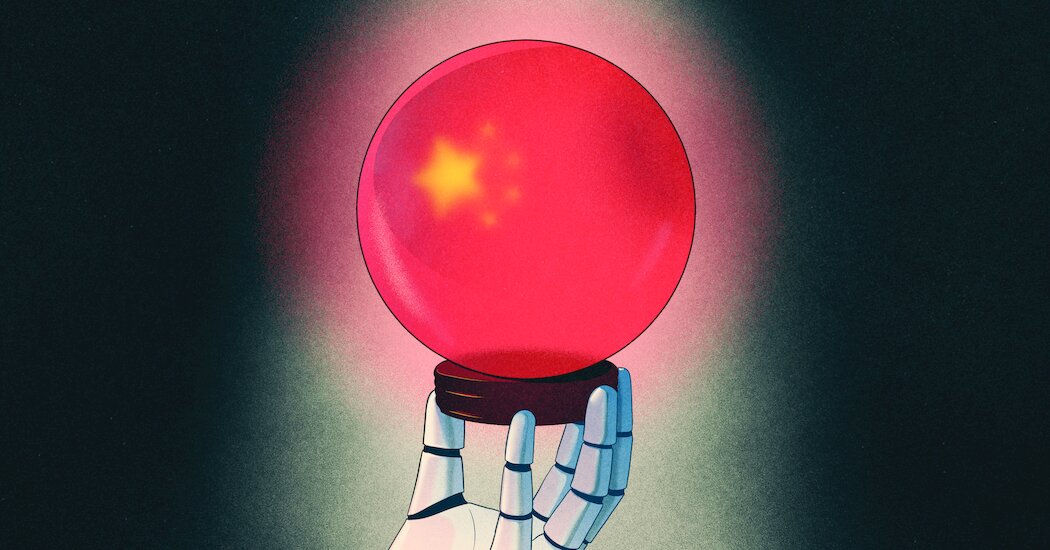
Why China Is So Much Less Scared of A.I. Than the U.S.

Every evening as our children eat dinner, my phone notifies me that our 3-year-old’s teacher has uploaded photos taken during the day at school. An artificial intelligence facial recognition feature puts a red square around his face, letting me know which photos to look at. It’s kind of creepy, but kind of helpful, too. In China, surveillance technology and A.I. surround our everyday life. It’s built into the way we order food delivered to us from online apps; almost nobody I know here in Shanghai buys groceries at a grocery…

China’s Rush to Dominate A.I. Comes With a Twist: It Depends on U.S. Technology

In November, a year after ChatGPT’s release, a relatively unknown Chinese start-up leaped to the top of a leaderboard that judged the abilities of open-source artificial intelligence systems. The Chinese firm, 01.AI, was only eight months old but had deep-pocketed backers and a $1 billion valuation and was founded by a well-known investor and technologist, Kai-Fu Lee. In interviews, Mr. Lee presented his A.I. system as an alternative to options like Meta’s generative A.I. model, called LLaMA. There was just one twist: Some of the technology in 01.AI’s system came…

Microsoft Debates What to Do With A.I. Lab in China

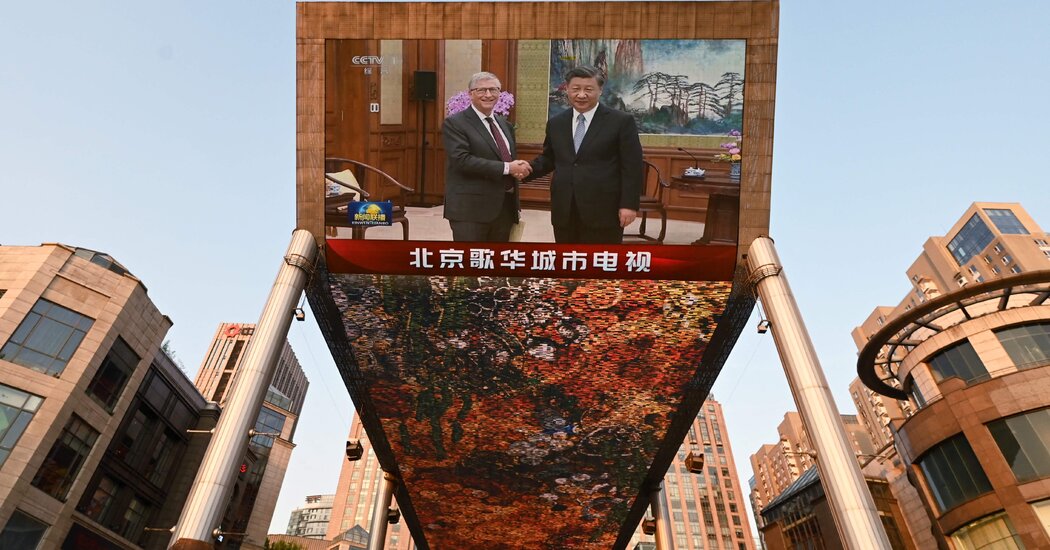
When Microsoft opened an advanced research lab in Beijing in 1998, it was a time of optimism about technology and China. The company hired hundreds of researchers for the lab, which pioneered Microsoft’s work in speech, image and facial recognition and the kind of artificial intelligence that later gave rise to online chatbots like ChatGPT. The Beijing operation eventually became one of the most important A.I. labs in the world. Bill Gates, Microsoft’s co-founder, called it an opportunity to tap China’s “deep pool of intellectual talent.” But as tensions between…