Google Sues to Stop Chinese Cybercrime Group from Using Its A.I.

Google sued a Chinese cybercrime network on Friday, accusing it of using the company’s artificial intelligence to blast online financial scams to hundreds of thousands of Americans. The internet giant also said it was coordinating for the first time with the Federal Bureau of Investigation and wireless providers such as AT&T, T-Mobile and Verizon to shut down the network, known as Outsider Enterprise. The Chinese group used Gemini, Google’s A.I. system, to create hundreds of fake websites mimicking companies like Google and YouTube and government operations like the Postal Service…

China Aims A.I. at Predicting Who Could Pose a Political Risk

A Chinese company has been trying to develop artificial intelligence-powered technology that would enable authoritarian governments to not just monitor dissidents but also potentially predict who could become one in the future. The work, which appears to be in the research stage, is ripped out of dystopian science fiction, offering a glimpse of a world in which an authoritarian state is able to move against its citizens before they begin any public dissent. The Chinese company, Geedge Networks, sells a commercial version of the Great Firewall, the surveillance and censorship…

Nvidia’s Profit Hits $58.3 Billion as A.I. Boom Gathers More Steam

Another huge quarterly profit announced by the chip maker Nvidia on Wednesday provided solid evidence that Silicon Valley’s artificial intelligence spending spree is still gathering steam. Nvidia said profit in its most recent quarter was $58.3 billion, up 211 percent from a year earlier and topping expectations by financial analysts. Just three years ago, the Silicon Valley company’s quarterly profit was $2 billion — about one-thirtieth of what it is today. Nvidia’s chips are an essential part of big A.I. projects, and other tech companies have been lining up to…

China’s Peak Is Now

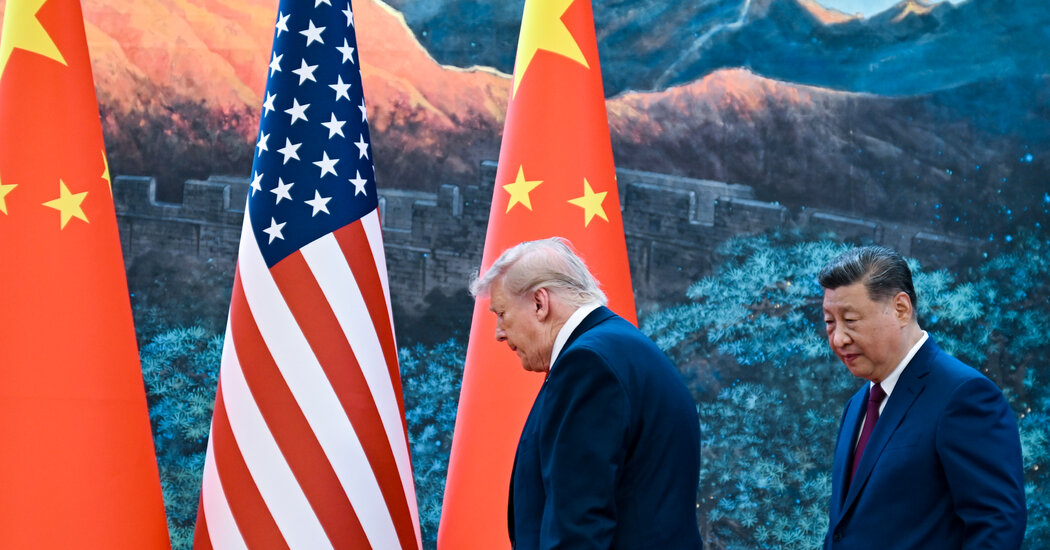
A grand summit in Beijing is a natural time to assess the state of the U.S.-China competition, the dynamics of great power conflict, the balance of forces in this new Cold — or maybe just Cool? — War. It’s also a good time to revisit my own predictions. Six years ago, in the early days of the coronavirus, I argued that rather than a “Chinese century” we might be looking at a “Chinese decade,” a window when China’s power would hit a peak and the American position would be maximally…

The Shared Feeling of Being Harvested by the Future

Within an hour of landing in Shanghai, I was sitting in the back of a Didi cab while the driver pleaded with me to game the company’s algorithm. Didi is the “Uber of China” and has a ubiquitous footprint in the country, dispatching tens of millions of rides per day. Could I cancel the ride and pay him directly through WeChat? There was an oversupply of drivers competing for too few fares, he explained. After dropping me off, he would be sent straight back to the airport, where he would…

Why China Is So Much Less Scared of A.I. Than the U.S.

Every evening as our children eat dinner, my phone notifies me that our 3-year-old’s teacher has uploaded photos taken during the day at school. An artificial intelligence facial recognition feature puts a red square around his face, letting me know which photos to look at. It’s kind of creepy, but kind of helpful, too. In China, surveillance technology and A.I. surround our everyday life. It’s built into the way we order food delivered to us from online apps; almost nobody I know here in Shanghai buys groceries at a grocery…

This Is What Should Unite the Right and the Left on A.I.

We come from different parties and have guided artificial intelligence policy under very different presidents. But we agree: A.I. has become so powerful that, along with its tremendous promise, the technology poses immediate risks to national security. The United States is competing with authoritarian powers for control of A.I.’s future. Yet the country lacks a strong plan to protect the nation from A.I.’s profound dangers. There are clear steps the government can take that both parties can agree on. But Washington lacks urgency. Unless we change course, A.I. systems will…

Meta Deal Reversal Deepens Split Between China and Silicon Valley

Manus, an artificial intelligence start-up, began with an idea among three engineers in Wuhan, China, united by an obsession with A.I. and a shared ambition to build a global venture. From the outset, they looked beyond China. Their big break came in March last year. Manus had drawn the attention of Silicon Valley investors with an A.I. agent capable of carrying out tasks on its own. By year’s end, Meta had agreed to acquire Manus. It looked like a clean breakout from China’s crowded, tightly regulated market and a path…

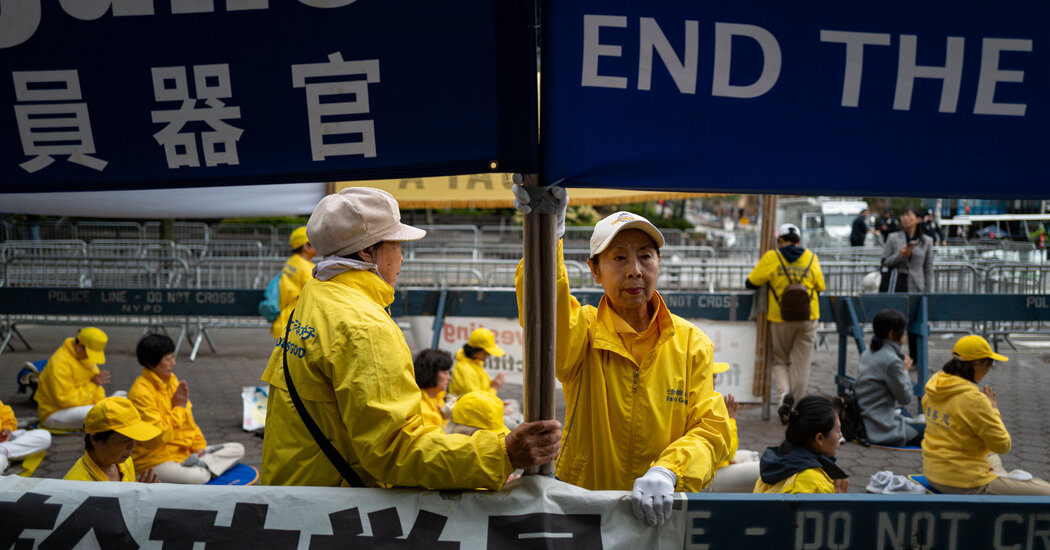
Supreme Court Appears Skeptical of Falun Gong Lawsuit Against Cisco

A majority of the Supreme Court on Tuesday appeared skeptical of a lawsuit by Falun Gong members who claim that an American tech company helped the Chinese government to target them for torture. The lawsuit asserts that Cisco Systems Inc. helped the Chinese government create an internet censorship program, known as the Golden Shield, that enabled the government to surveil and harm members of the spiritual movement, which is banned in China. At issue before the Supreme Court is whether American courts can judge such disputes. During oral arguments on…

5 Tall Tasks for John Ternus, Apple’s Next C.E.O.

Apple said this week that Tim Cook, its chief executive since 2011, would step down and become its executive chairman in September. John Ternus, the company’s head of hardware engineering, will succeed Mr. Cook in the corner office. Mr. Ternus, who has worked at Apple for 25 years, will take over a moneymaking behemoth facing a series of pressing questions, including geopolitical threats, an unpredictable man in the White House, artificial intelligence, and the search for new ideas. Here are some of the challenges confronting Mr. Ternus: Navigating Apple’s ties…