Two pro-democracy activists who were put on trial for organising an annual Tiananmen Square massacre vigil in Hong Kong have been sentenced to seven years in jail, in one of the city’s most significant national security cases. Chow Hang-tung, 41 and Lee Cheuk-yan, 69, were found guilty in August of incitement to subversion. The court found they had “incited other persons to organise, plan, commit or participate in acts by unlawful means with a view to subverting the state power”. Chow and Lee were leaders of the Hong Kong Alliance,…
Tag: Censorship
Wall Street Journal publisher convicted in Hong Kong of deterring reporter from union role
A Hong Kong court has convicted the publisher of the Wall Street Journal of deterring a reporter from taking up a trade union role, in a case that raised concerns about press freedom in the city. The newspaper dismissed Selina Cheng just weeks after she was appointed chair of the Hong Kong Journalist Association (HKJA) in 2024. She was told at the time her termination was officially due to restructuring. Outside court on Thursday, Cheng said: “If reporters’ employment rights are not sufficiently safeguarded, or when their rights are violated…
How the Nepal-Tibet disaster became the latest victim of China’s ‘Clean Internet’ campaign
Tsering Phuntsok watched news of the Nepal-Tibet flood unfold from thousands of miles away in southern India. The 46-year-old Tibetan in exile has missing family members on both sides of the border; those in Nepal are named in official government lists, but in Tibet he has received no information. “I have started praying for the lost ones now. I have to accept they will not return [because] … I’m not getting any information.” The flooding disaster is an example of the increasing use by Chinese authorities of “Clean Internet 2026”,…
Chinese control of information hampers assessment of Tibet flood damage
In the days since an enormous glacier in the Himalayas snapped away from a mountaintop and cascaded into the valley below, the true scale of the devastation caused by the flash floods in Nepal and Tibet is still unfolding. But the picture is emerging far more quickly in Nepal than in China, where strict controls on the flow of information from one of its most sensitive regions are hampering the public’s understanding of events. The floods devastated villages along the Himalayan border region that straddles Nepal and the Chinese region…
China’s Information Control Could Hamper Flood Rescue Efforts in Tibet
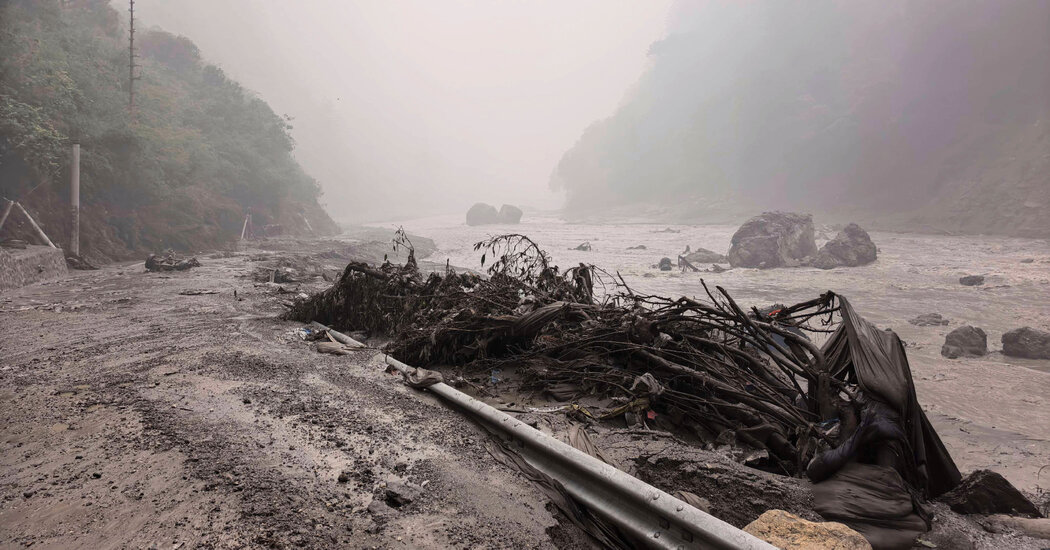
As journalists in Nepal gather eyewitness accounts and up-to-date information about the deadly flood that swept entire villages away on Wednesday, the scene across the border in China could not be more different. By Thursday, videos taken and posted online by locals, including a widely circulated clip of a mudslide engulfing a border crossing in Gyirong County, in China’s Tibet, were censored on Chinese social media platforms. More than 500 people were missing in Gyirong, with three confirmed deaths in the county of about 2,000 people. The authorities have provided…
Artist known for sculptures of Mao Zedong jailed for slandering ‘heroes and martyrs’
Gao Zhen, a prominent Chinese artist known for provocative sculptures of the former leader Mao Zedong, has been sentenced to three years in prison after being found guilty of slandering China’s “heroes and martyrs”. The sentencing came two years after he was detained while visiting the country with his family, according to his wife and human rights groups. The case has attracted international condemnation, largely because the artworks at the centre of the case were created more than 10 years before China created the law under which Gao was charged.…
‘A statement of freedom’: T-shirt slogan goes viral and book sales rocket in Taiwan after Hong Kong raids
Walking out of one of Hong Kong’s last remaining independent bookstores, hands behind her back but head held high, the woman’s T-shirt was emblazoned with a simple slogan: “I am a bookstore employee”. Escorted by police, the woman was among five people arrested during raids on two bookstores last week, suspected of displaying and selling publications with “seditious” content, a national security crime which carries a maximum sentence of 10 years. Since then, the T-shirt phrase has spread far and wide on Taiwanese social media amid concern for the fate…
China wants to suppress independent cinema. But young film-makers are undaunted by red lines
Class started at 9am. Assignments were doled out, ideas were pitched and scripts written, followed by a long day of shooting and editing. Twelve hours later, 20 aspiring and exhausted film-makers were sat in a crowded, makeshift studio, listening to their work being trashed. “The content is still too poor,” the course director, Nan Xin, remarked, after watching a two-minute film about boys on the loose who harass a stray dog. “I didn’t see any deep thought in it. What you did left me with no clue how to actually…
China Aims A.I. at Predicting Who Could Pose a Political Risk
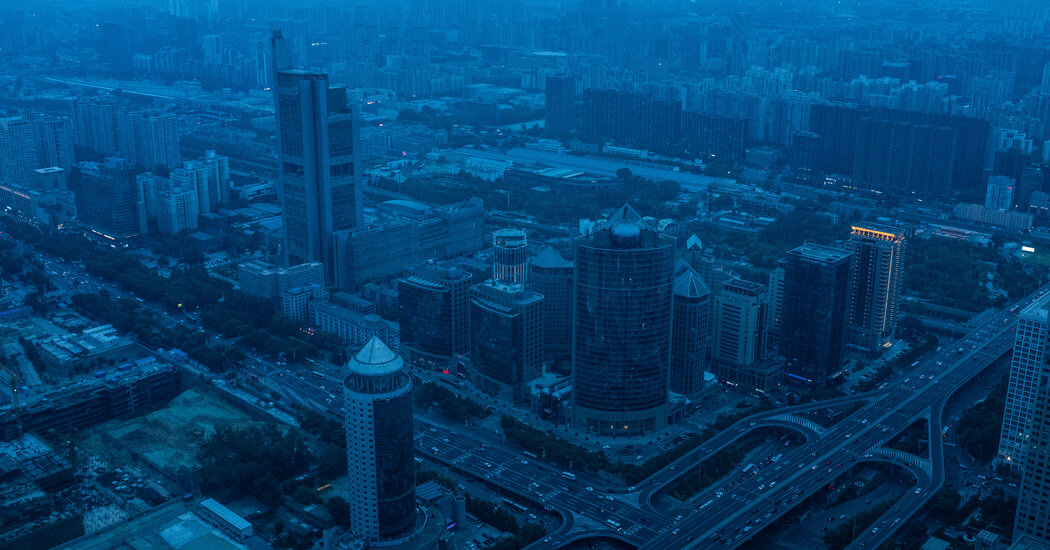
A Chinese company has been trying to develop artificial intelligence-powered technology that would enable authoritarian governments to not just monitor dissidents but also potentially predict who could become one in the future. The work, which appears to be in the research stage, is ripped out of dystopian science fiction, offering a glimpse of a world in which an authoritarian state is able to move against its citizens before they begin any public dissent. The Chinese company, Geedge Networks, sells a commercial version of the Great Firewall, the surveillance and censorship…
The Guardian view on the splinternet: where China led, Iran and others are eagerly following | Editorial
China boasts of having the world’s largest population of internet users: 1.125 billion by the end of 2025, according to official figures. But as one joke has it, the Great Firewall – blocking not only politically sensitive material but also global tech firms such as Google and Meta – has produced what looks more like the world’s largest intranet. Beijing is not an anomaly, but a pioneer. Its extraordinary investment in the apparatus of “cyber sovereignty” – others would call it censorship and repression – is guiding other authoritarian countries. A realm defined by…