Europe Is Edging Closer to a Trade War With China. Here’s Why.

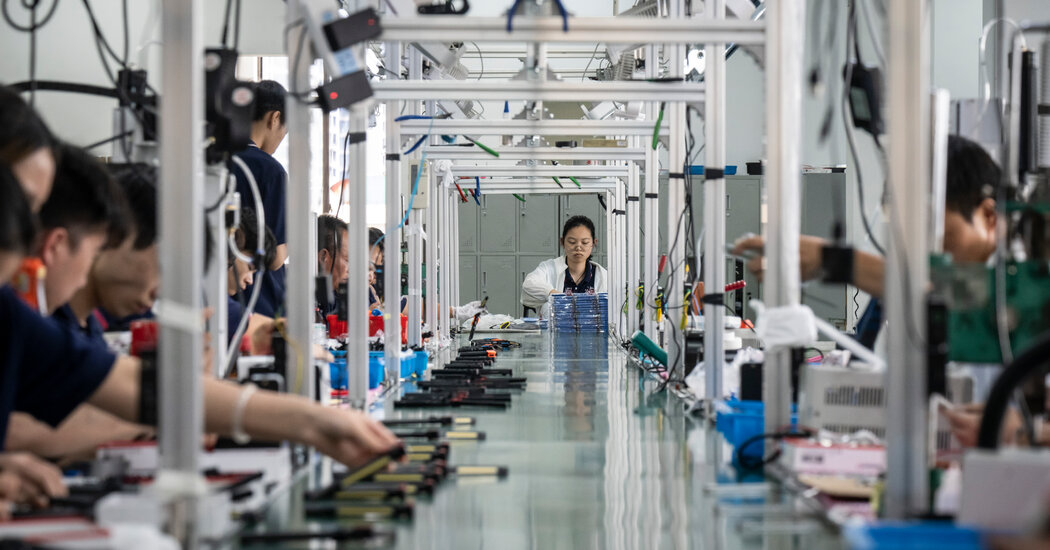
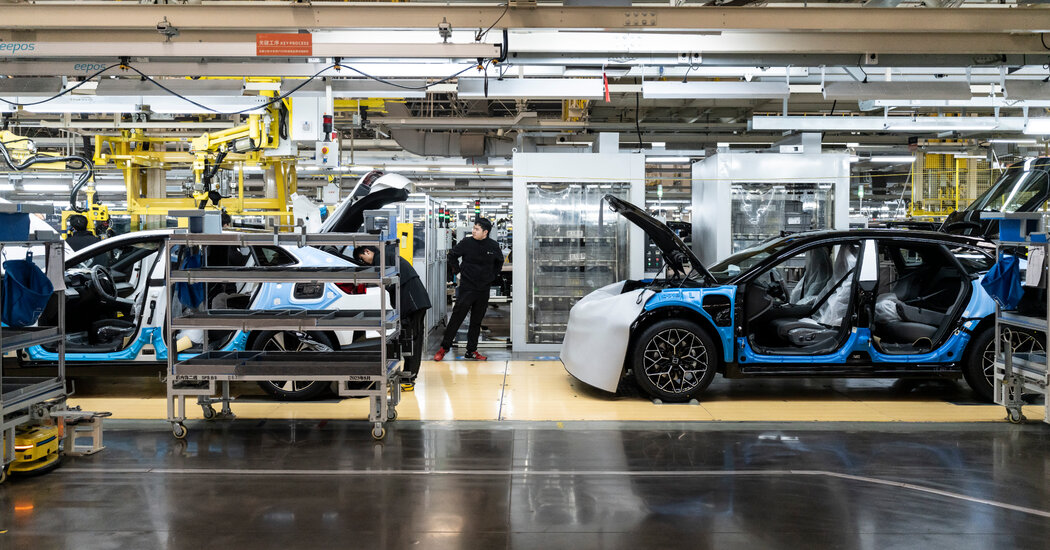
Kaja Kallas, the top European Union diplomat, recently suggested that ending the continent’s dependence on China was like trying to cure a disease. “Chemotherapy” might be needed, she said, and it was likely to be painful. The comments were an example of the tone Europe is increasingly taking on China, the second-largest goods trading partner for the 27-nation European Union, after the United States. As Beijing adopts more aggressive trade policies and as imports from China into Europe soar, European leaders and companies are fretting over their reliance on Chinese…

What Plunging Pork Prices Say About China’s Economy

Sun Haoyu, a hog farmer in Dalian, in northern China’s Liaoning Province, first noticed pork prices beginning to tumble late last year. With 3,000 hogs to care for, Mr. Sun said, he had “no choice but to tough it out,” relying entirely on loans and borrowed money to keep his operation afloat. But prices kept plummeting, and last month they hit a 16-year low. Now, across his region, many small farms are on the brink of collapse. “Many hog farmers can no longer hold out,” Mr. Sun said in an…

China’s Endless Housing Crisis Shows Faint Signs of Hope

During China’s slow-moving housing crash, there have been brief stretches when prices stabilized, raising hopes that the multiyear slide was finally over. Each time, those reprieves have proved short-lived — pauses before the market resumed its decline. After housing prices in several of China’s biggest cities leveled off in the first few months of the year, the market is again at a crossroads. Analysts and economists are split over whether this constitutes a bottom for a downturn that has eroded much of the country’s middle-class savings or merely another lull…

How China’s Housing Crisis Has Global Consequences

new video loaded: How China’s Housing Crisis Has Global Consequences <img src="https://www.chinastrategy.org/wp-content/uploads/2026/05/how-chinas-housing-crisis-has-global-consequences.png" data-testid="betamax-poster" sizes="(width Our Beijing bureau chief, Keith Bradsher, describes how China’s enormous housing crash is affecting economies all over the world. By Keith Bradsher, Rebecca Suner, Thomas Vollkommer, Joey Sendaydiego and Luke Piotrowski May 21, 2026 NYT

China’s Peak Is Now

A grand summit in Beijing is a natural time to assess the state of the U.S.-China competition, the dynamics of great power conflict, the balance of forces in this new Cold — or maybe just Cool? — War. It’s also a good time to revisit my own predictions. Six years ago, in the early days of the coronavirus, I argued that rather than a “Chinese century” we might be looking at a “Chinese decade,” a window when China’s power would hit a peak and the American position would be maximally…

Nations Brace for Long-Term Economic Woes as Trump Calls Iran Truce Plan ‘Garbage’

Countries were bracing on Monday for prolonged economic woes stemming from high energy prices after President Trump called the latest Iranian offer to end the war and reopen the Strait of Hormuz “garbage” and declared that the cease-fire was “on massive life support.” Mr. Trump, speaking to reporters in the Oval Office, reiterated that Iran could not be allowed to develop a nuclear weapon and likened the truce announced last month to a patient with a “1 percent chance” of survival. Iran’s state-owned broadcaster reported on Monday that in its…

In Hungary, Voters Exposed the Limits of China’s Ties to Orban

The gigantic Chinese lithium battery factory under construction for three years on the edge of Hungary’s second biggest city hasn’t started production yet. But it has already contributed to a political earthquake. As the biggest Chinese investment in Europe, the $8.5 billion project in the eastern city of Debrecen had been hailed by Hungary’s outgoing prime minister, Viktor Orban, as proof of the economic benefits of his close relations with China. Instead, the factory helped bring about his downfall. In the April 12 election, Mr. Orban’s Fidesz party lost all…

Why Countries Are Stocking Up on Gold

Central banks around the world have bulked up their reserves of gold, a safe but cumbersome investment that has been revived in popularity by intensifying geopolitical tensions and concerns over inflation. This year, the price of gold exceeded $5,000 per troy ounce for the first time in history. One major reason prices have soared — doubling in a year and a half — is the demand from emerging economies: The central banks of Poland, Turkey, India and China have been some of the biggest buyers of gold in the past…

China’s Economy Starts to Show Cracks From Iran War

Rising oil and natural gas prices from the war in Iran are beginning to weigh on the Chinese economy, further slowing already anemic consumer spending and hurting critical export sectors. Car sales fell in March and plunged further in April. Restaurants and hotels are seeing fewer customers as households turn cautious. In southern China, thousands of toy factory workers protested last week after their employer collapsed under rising plastic costs and ongoing tariffs in the United States. The emerging signs of strain underscore how even China, with vast strategic oil…

War and Sanctions Accelerate China’s Currency Push

Neat rows of Chinese currency bills sit behind glass at the center of the national security gallery inside Hong Kong’s Museum of History, along with model fighter jets, attack helicopters and vials of rare-earth metals. Set with instruments of war and trade, the display underscores a central idea: The internationalization of its currency, the renminbi, is considered a pillar of China’s national security. Despite its rise as an economic superpower, China remains reliant on a global financial system anchored by the dollar. Turning the renminbi into a globally accepted currency…