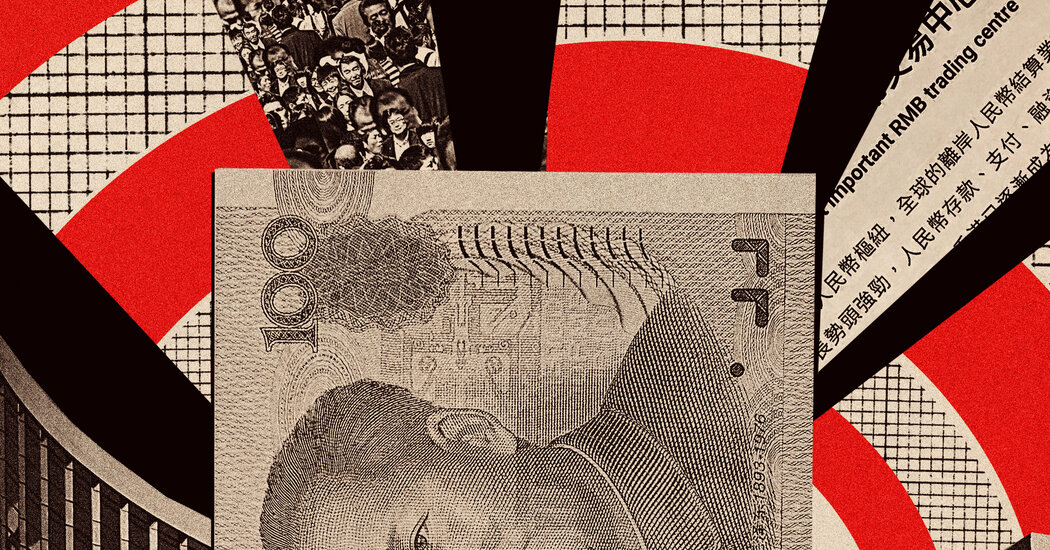
Neat rows of Chinese currency bills sit behind glass at the center of the national security gallery inside Hong Kong’s Museum of History, along with model fighter jets, attack helicopters and vials of rare-earth metals.
Set with instruments of war and trade, the display underscores a central idea: The internationalization of its currency, the renminbi, is considered a pillar of China’s national security.
Despite its rise as an economic superpower, China remains reliant on a global financial system anchored by the dollar. Turning the renminbi into a globally accepted currency would let Beijing conduct more trade on its own terms and blunt a longstanding source of American leverage.
That push has gained momentum from the wars in Ukraine and Iran, as sanctions drive American adversaries toward the renminbi to bypass the Western financial system. In effect, China’s 20-year project to build the international financial ties and technological infrastructure for a globally accepted currency is paying off, even if others are the ones sidestepping the dollar.
China’s financial positioning is “meeting the demand for de-dollarization” from countries seeking to trade with restricted nations like Iran, said Alisha Chhangani, an associate director at the Atlantic Council, a Washington think tank.