Bao Fan, Star Banker, Goes Missing in China
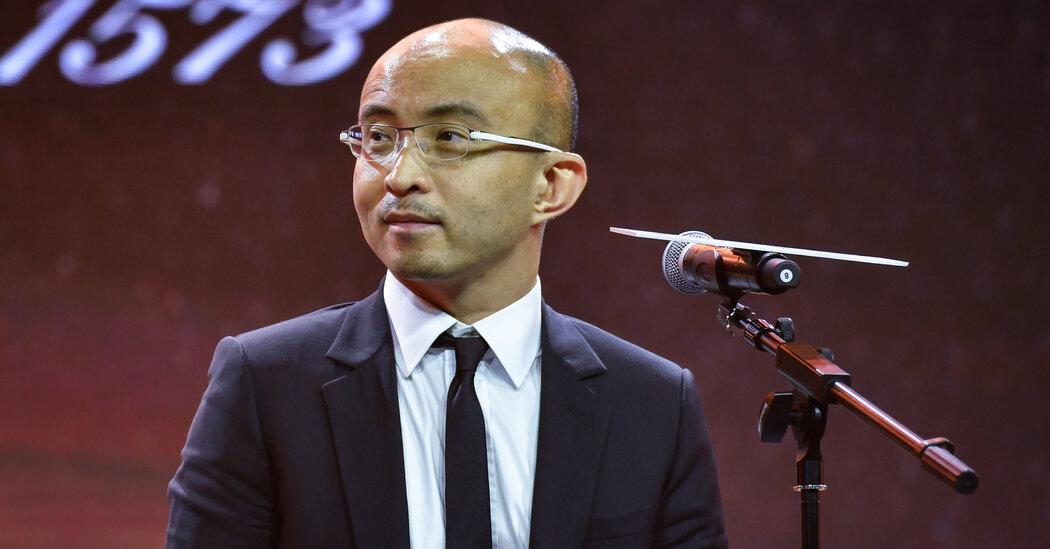
Bao Fan, a renowned investment banker in China, has disappeared and is unreachable, raising concerns that Beijing’s crackdown on the country’s business elite is continuing. In a filing to the Hong Kong Stock Exchange on Thursday, China Renaissance Holdings said that it has been unable to contact Mr. Bao, the company’s chairman and chief executive. China Renaissance said its board was “unaware” of any information that indicated his disappearance was tied to the company’s operations. The company’s share price plunged on the news, falling 28 percent on Friday. The disappearance…

They Poured Their Savings Into Homes That Were Never Built

To Tang Chao, the apartment in northeast China was where he and his wife were going to start a new life together. They put down tens of thousands of dollars for it. But months past its scheduled completion, a concrete shell with wiring protruding from the walls and piles of dirt on the floor was all there was to show for the expense. Soon, even their marriage unraveled. In another city, a man bought a space for a grocery business he thought would help give his young son a better…

China Is Finally Trying to Fix Its Housing Crisis

More than a year after one of China’s biggest real estate developers began to collapse, trouble has rippled through cities across the country. Dozens of other developers have also missed debt payments, the sale of new homes has plunged and construction cranes have come to a standstill at many sites. This week the Chinese government, which until now has stayed largely on the sidelines of the country’s housing crash, has taken its most forceful steps so far to try to minimize the damage from the turmoil that has enveloped China…

In Global Slowdown, China Holds Sway Over Countries’ Fates

BEIJING — When Suriname couldn’t make its debt payments, a Chinese state bank seized the money from one of the South American country’s accounts. As Pakistan has struggled to cope with a devastating flood that has inundated a third of the country, its loan repayments to China have been rising fast. When Kenyans and Angolans went to the polls in presidential elections in August, the countries’ Chinese loans, and how to repay them, were a hot-button political issue. Across much of the developing world, China finds itself in an uncomfortable…

Businesses Brace for Currency Chaos in Asia

Tigun Wibisana and Sandra Kok, who own the SiTigun cafe on Penang Island in Malaysia, are facing an excruciating decision that could make or break their business of 14 years: Can they increase prices to cover rising expenses without driving customers into the arms of their bigger rivals? The cost of the coffee beans that the couple, who are married, buy is spiraling because they are traded globally in U.S. dollars, and the Malaysian ringgit has fallen to a 24-year low. Compound that with an inflationary spike in prices for…

Real Estate Crisis Is at the Heart of China’s Economic Troubles

For decades, buying property was considered a safe investment in China. Now, instead of building a foundation of wealth for the country’s middle class, real estate has become a source of discontent and anger. In more than 100 cities across China, hundreds of thousands of Chinese homeowners are banding together and refusing to repay loans on unfinished properties, one of the most widespread acts of public defiance in a country where even minor protests are quelled. The boycotts are part of the fallout from a worsening Chinese economy, slowed by…

Didi’s Wall Street Exit Signals Investors Playing by China’s Rules

When the Chinese ride-hailing giant Didi Chuxing decided to delist its shares in the United States, it was an abrupt reversal that illustrated the growing rift between Wall Street and China’s rapidly growing corporate sector. Barely six months ago, Didi had been the latest Chinese start-up darling to go public on the New York Stock Exchange, following the path of such companies as Alibaba and Baidu to list its shares in the world’s premier financial hub. Now Didi’s move to relocate its listing to the Hong Kong stock exchange almost…

Wall Street Is Finally Getting Access to China. But for How Long?

For decades, American banks have been eager to expand their business in China, the world’s second-largest economy. They’re finally getting their way — just as a spiraling corporate debt crisis threatens to rock the country’s financial system and China’s central government takes a stronger hand with big businesses. In July, Citigroup became the first foreign bank to win approval to open a custody business in China, essentially acting as a bank for Chinese investment funds. In August, JPMorgan Chase got permission from the Chinese authorities to take full ownership of…

Goldman Sachs Wins Approval to Buy Out Partner in China

Goldman Sachs has won approval to take full ownership of a joint venture in China, enabling the Wall Street firm to expand its operations in the country at a time when Beijing has made moves to open up its financial sector. The go-ahead from the China Securities Regulatory Commission for Goldman Sachs to buy out Beijing Gao Hua Securities, its local partner, comes as Beijing tries to make good on a pledge it made in 2017 to allow foreign investment banks to fully own their China operations. “This marks the…

Why Wall Street Backs China Despite Beijing’s Tighter Grip

This year has been unsettling for Chinese business. The ruling Communist Party has gone after the private sector industry by industry. The stock markets have taken a huge hit. The country’s biggest property developer is on the verge of collapse. But for some of the biggest names on Wall Street, China’s economic prospects look rosier than ever. BlackRock, the world’s biggest asset manager, urged investors to increase their exposure to China by as much as three times. “Is China investable?” asked J.P. Morgan, before answering, “We think so.” Goldman Sachs…