Anne F. Thurston, an American political scientist and expert on China who co-wrote a best-selling book with Mao Zedong’s longtime personal physician that revealed intimate — and often bawdy — details about the dictator’s personal life, died on Oct. 2 in Alexandria, Va. She was 83. The death, at a senior-care facility, was from complications of dementia, said Adam Nelson, a longtime friend and colleague. “The Private Life of Chairman Mao,” published in 1994 and co-written with Dr. Li Zhisui, was Dr. Thurston’s sole best seller, but she wrote, co-wrote…
Tag: Books and Literature
The Voices Behind ‘Made in China’
When British authorities passed laws targeting working-class pamphlets during the Industrial Revolution, they did so because they knew that words can be powerful. The poetry and writing of those who experience hardship can be galvanizing. In China, the People’s Republic, a genre of literature known as “workers’ literature,” written by gig-economy and factory workers, is becoming increasingly popular. It’s also under increasing government scrutiny. Today my colleague Yan Zhuang writes about the fine line that Chinese worker-poets have to walk. In Seoul, where I live, it’s normal to place an…
Book Review: ‘A Shadow Over the World,’ by William I. Hitchcock
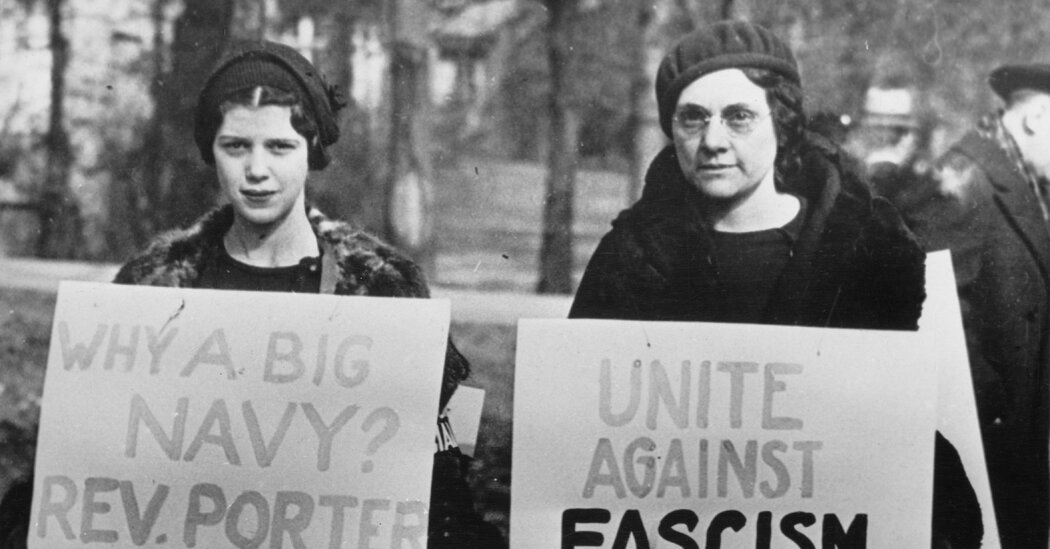
A SHADOW OVER THE WORLD: Franklin D. Roosevelt, the Rise of Fascism, and the Making of America’s World War II, by William I. Hitchcock In “For Whom the Bell Tolls,” Ernest Hemingway’s classic novel of the Spanish Civil War in the 1930s, the protagonist, Robert Jordan, proclaims his uncompromising worldview early in the story. Beside a campfire in a cave amid the pine-covered hills, Jordan is asked whether he is a communist. “No,” he replies. “I am an antifascist.” “For a long time?” “Since I have understood fascism.” Nearly a…
In a Faltering Chinese Economy, Working-Class Stories Strike a Chord
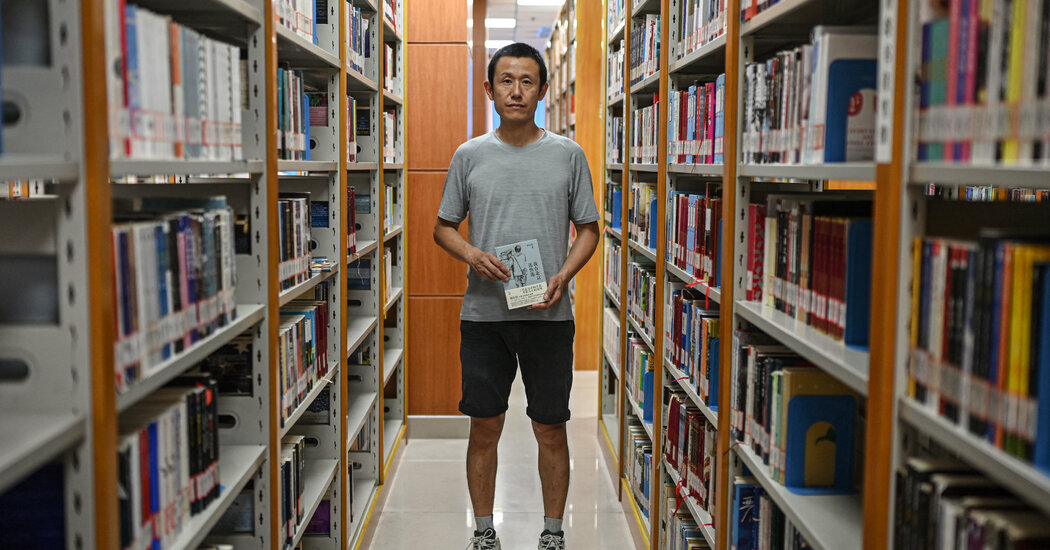
A Chinese food delivery driver rushes from gig to gig, measuring time by the number of jobs he completes instead of by the passing of the seasons. He toils in cities across China to send money back to his family, but has been away for so long that his son calls him “that man” instead of “Dad.” These are scenes from the poems of Wang Jibing, a food delivery driver, one of several Chinese poets and authors who have turned their experiences of repetitive factory labor and insecure gig work…
Lam Wing-Kee, Hong Kong Bookseller Who Defied Authorities, Dies at 70
Lam Wing-kee, a bookseller in Hong Kong whose abduction and imprisonment by Chinese authorities, forced confession to selling forbidden books and subsequent public stand against his detention made him an international cause célèbre, died on July 2 in Taipei, the capital of Taiwan. He was 70. Mr. Lam’s death in a hospital, from lung cancer, was announced by the ministry of culture in Taiwan, where Mr. Lam had been living in exile since 2019. For two decades, Mr. Lam’s celebrated Hong Kong storefront, Causeway Bay Bookstore, specialized in titles that…
A Writer’s To-Do List: Learn History. Learn Chinese. Learn to Draw Comics.
When Tessa Hulls set out to write a book about three generations of women in her family, she had few illusions about how hard the task would be. The tale was geographically sprawling, and spanned a century: Her grandmother Sun Yi, a journalist in Shanghai, fled China for Hong Kong in 1957, then slowly went mad; her mother, Rose, attended an elite boarding school in Hong Kong founded in part for the mixed-race children of European expatriates, then moved to the United States in 1970. Much of her family’s story…
Murder and Magic Realism: A Rising Literary Star Mines China’s Rust Belt
For a long time during Shuang Xuetao’s early teenage years, he wondered what hidden disaster had befallen his family. His parents, proud workers at a tractor factory in the northeastern Chinese city of Shenyang, stopped going to work, and the family moved into an empty factory storage room to save money on rent. But they rarely talked about what had happened, and Mr. Shuang worried that some special shame had struck his family alone. It was not until later that he learned about the mass layoffs that swept northeastern China…
Book Review: ‘Means of Control,’ by Byron Tau; ‘The Sentinel State,’ by Minxin Pei
MEANS OF CONTROL: How the Hidden Alliance of Tech and Government Is Creating a New American Surveillance State, by Byron Tau THE SENTINEL STATE: Surveillance and the Survival of Dictatorship in China, by Minxin Pei In 1975, the French philosopher Michel Foucault published “Surveiller et Punir” — “To Surveil and Punish” — a book popularly translated into English as “Discipline and Punish,” about how societies keep their populations in line with minimal violence. At the center of his argument lay the panopticon, a prison designed by the 18th-century political reformer…
Book Review: ‘Smoke and Ashes,’ by Amitav Ghosh
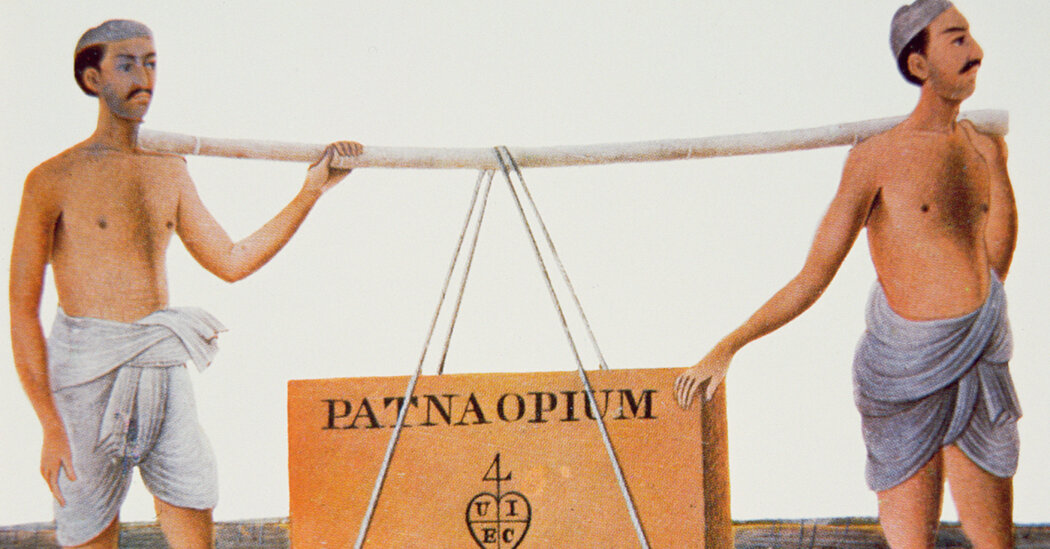
SMOKE AND ASHES: Opium’s Hidden Histories, by Amitav Ghosh Biographies of humble things that their authors claimed had “changed the world” — chronometers, salt, potatoes and even the color mauve — were a turn-of-the-21st-century publishing phenomenon. Looking back, they seem fixated on European heroes and their achievements. As Amitav Ghosh observes at the beginning of his bracing new history of the global opium trade, it’s hard to see past a Western conception of the world that “looms so large that it obscures everything else.” “Smoke and Ashes” is the story…
Ai Weiwei’s ‘Zodiac’ Is a Mystical Memory Tour
As the Year of the Dragon dawns, the Chinese artist Ai Weiwei has released “Zodiac,” a “graphic memoir” of scenes from his career — both real (hanging with Allen Ginsberg, the O.G. of Beat poets, in 1980s Greenwich Village) and imagined (debating Xi Jinping, China’s paramount leader). Each chapter frames the artist’s take on traditional beliefs about the characteristics humans share with the 12 animals of the Chinese lunar calendar. Gianluca Costantini’s intricate line drawings pair with Elettra Stamboulis’s comic-bubble text to help expand Ai’s lifelong campaign for free expression…