The Voices Behind ‘Made in China’

When British authorities passed laws targeting working-class pamphlets during the Industrial Revolution, they did so because they knew that words can be powerful. The poetry and writing of those who experience hardship can be galvanizing. In China, the People’s Republic, a genre of literature known as “workers’ literature,” written by gig-economy and factory workers, is becoming increasingly popular. It’s also under increasing government scrutiny. Today my colleague Yan Zhuang writes about the fine line that Chinese worker-poets have to walk. In Seoul, where I live, it’s normal to place an…

In a Faltering Chinese Economy, Working-Class Stories Strike a Chord

A Chinese food delivery driver rushes from gig to gig, measuring time by the number of jobs he completes instead of by the passing of the seasons. He toils in cities across China to send money back to his family, but has been away for so long that his son calls him “that man” instead of “Dad.” These are scenes from the poems of Wang Jibing, a food delivery driver, one of several Chinese poets and authors who have turned their experiences of repetitive factory labor and insecure gig work…

Book Review: ‘Sparks,’ by Ian Johnson

SPARKS: China’s Underground Historians and Their Battle for the Future, by Ian Johnson By now, it is almost clichéd to compare political misrule to the dystopia that Orwell conjured through the story of the low-ranking functionary Winston Smith in “1984,” but so many aspects of the novel have come true in today’s China — from mass surveillance to fury-inciting demagogy to President Xi Jinping’s declaration that the Communist Party’s rule is “the conclusion of history” — that it may appear to preclude, as it ultimately did for Smith, the possibility…

A Poet Captures the Terror of Life in an Authoritarian State

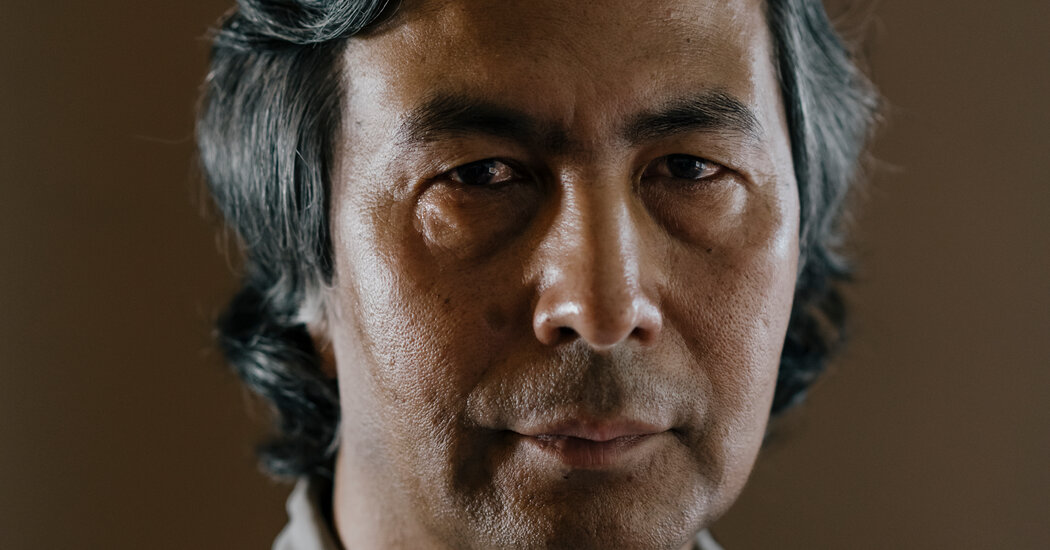
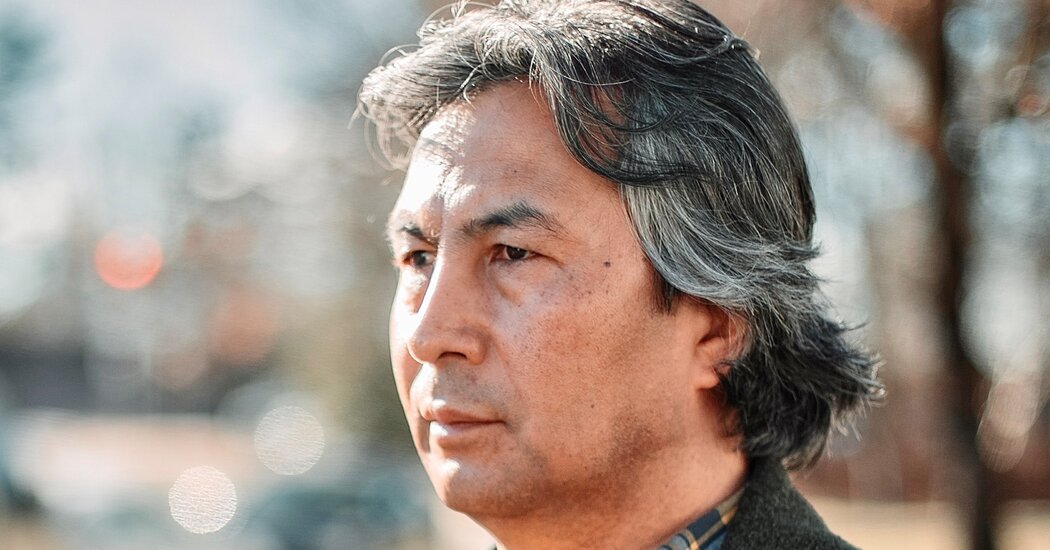
Tahir Hamut Izgil watched as parks emptied of people, naan bakeries boarded up their windows and, one after another, his friends were taken away. The Chinese government’s repression of Uyghurs, the predominantly Muslim ethnic minority to which he belonged, had gone on for years in Xinjiang, the group’s ancestral homeland in China’s northwest. But in 2017, it morphed into something more terrifying: a mass internment system into which hundreds of thousands of people were disappearing. Millions lived under intense and growing surveillance. Izgil, a prominent poet and film director, feared…

Book Review: ‘Waiting to Be Arrested at Night,’ by Tahir Hamut Izgil

But their departure is no triumph. When Izgil calls his mother after arriving in the United States, the police in China confiscate her cellphone and ID card, returning them only after Izgil’s father and brother sign an affidavit promising never to speak to Izgil again. His friends delete his contact info on WeChat. Despite these precautions, some of his relatives are swept up in the mass detentions that have ensnared more than one million Uyghurs. Izgil cannot enjoy the uneasy freedom of life in the United States. With little English,…

Deep Underground, a Chinese Miner Discovered Poetry in the Toil

In 2011, he found a broader audience via the blogging craze then spreading across China. Online, he met other poets, amateur and professional. One day in 2014, a well-known critic, Qin Xiaoyu, happened across Mr. Chen’s blog and asked to meet. Over the next year, Mr. Qin and a filmmaker, Wu Feiyue, followed Mr. Chen and five other migrant worker poets, for a documentary called “The Verse of Us” (later released internationally as “Iron Moon”). The film, released in 2015, received considerable attention — in part because of tragedy. Another…