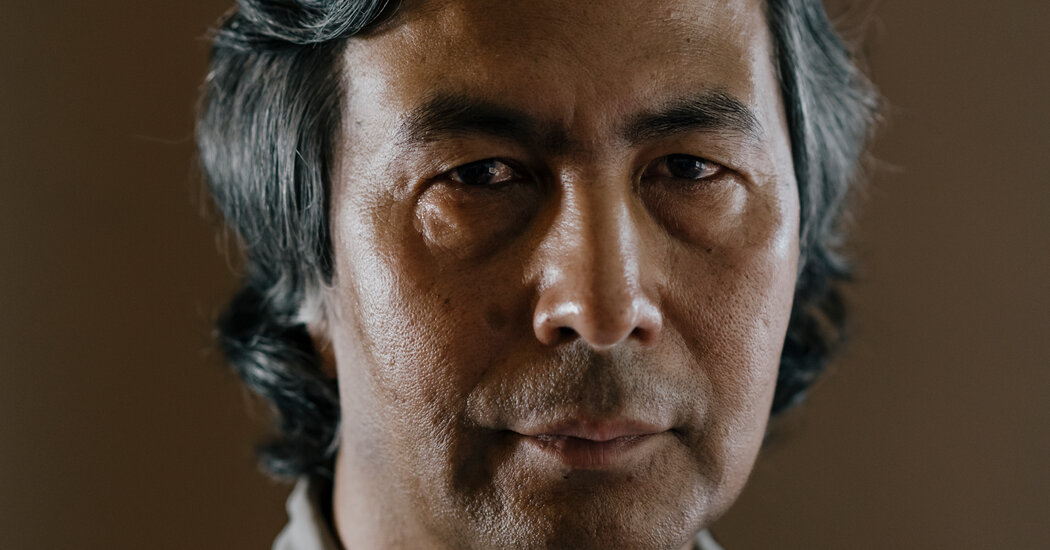
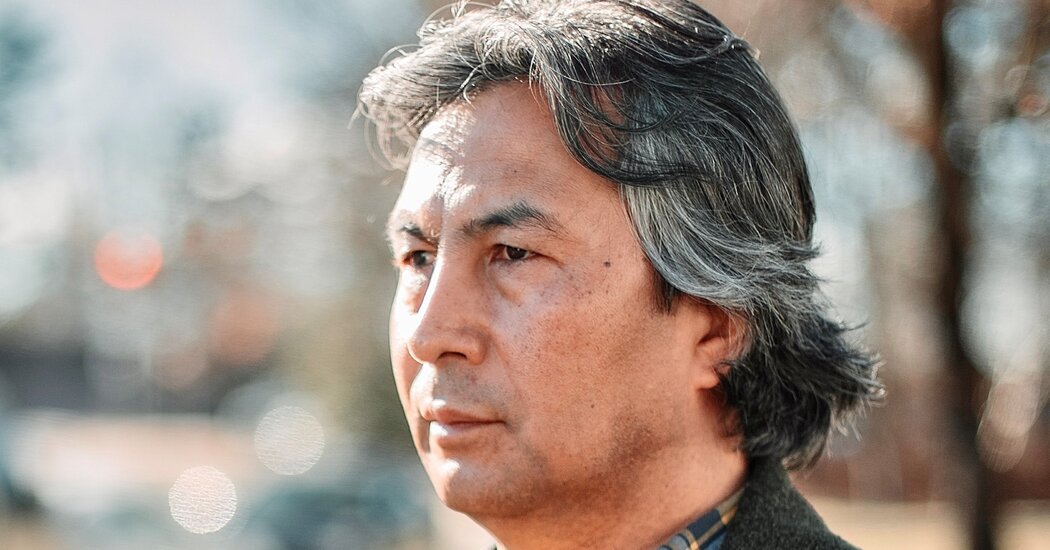
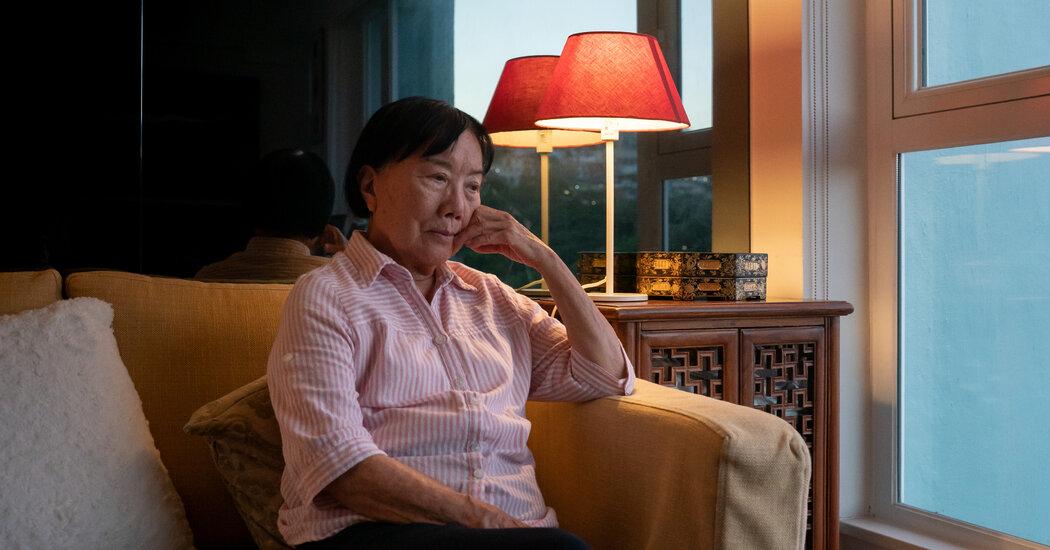
Tahir Hamut Izgil watched as parks emptied of people, naan bakeries boarded up their windows and, one after another, his friends were taken away. The Chinese government’s repression of Uyghurs, the predominantly Muslim ethnic minority to which he belonged, had gone on for years in Xinjiang, the group’s ancestral homeland in China’s northwest. But in 2017, it morphed into something more terrifying: a mass internment system into which hundreds of thousands of people were disappearing. Millions lived under intense and growing surveillance. Izgil, a prominent poet and film director, feared…
Tag: Books and Literature
Book Review: ‘Waiting to Be Arrested at Night,’ by Tahir Hamut Izgil
But their departure is no triumph. When Izgil calls his mother after arriving in the United States, the police in China confiscate her cellphone and ID card, returning them only after Izgil’s father and brother sign an affidavit promising never to speak to Izgil again. His friends delete his contact info on WeChat. Despite these precautions, some of his relatives are swept up in the mass detentions that have ensnared more than one million Uyghurs. Izgil cannot enjoy the uneasy freedom of life in the United States. With little English,…
A Look Back at Our Coming War With China
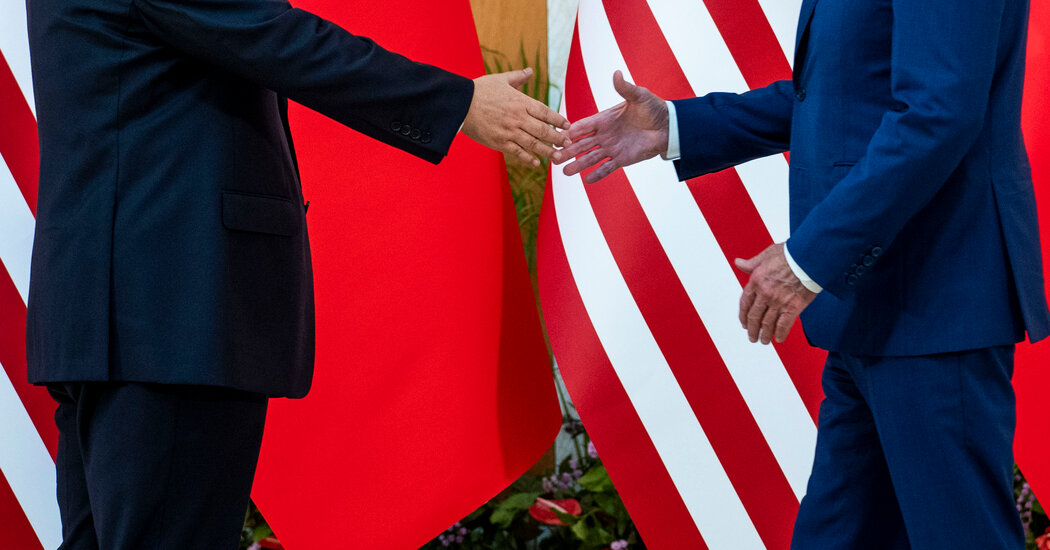
In “The Avoidable War: The Dangers of a Catastrophic Conflict Between the US and Xi Jinping’s China,” Kevin Rudd, a former prime minister of Australia and a longtime scholar of China, imagines 10 distinct plotlines, many revolving around the fate of Taiwan. For instance, what if China seeks to take the island by force and Washington opts to not respond? That would be America’s “Munich moment,” Rudd writes, eviscerating any American moral authority. Even worse would be the United States reacting with military force but then losing the fight, which…
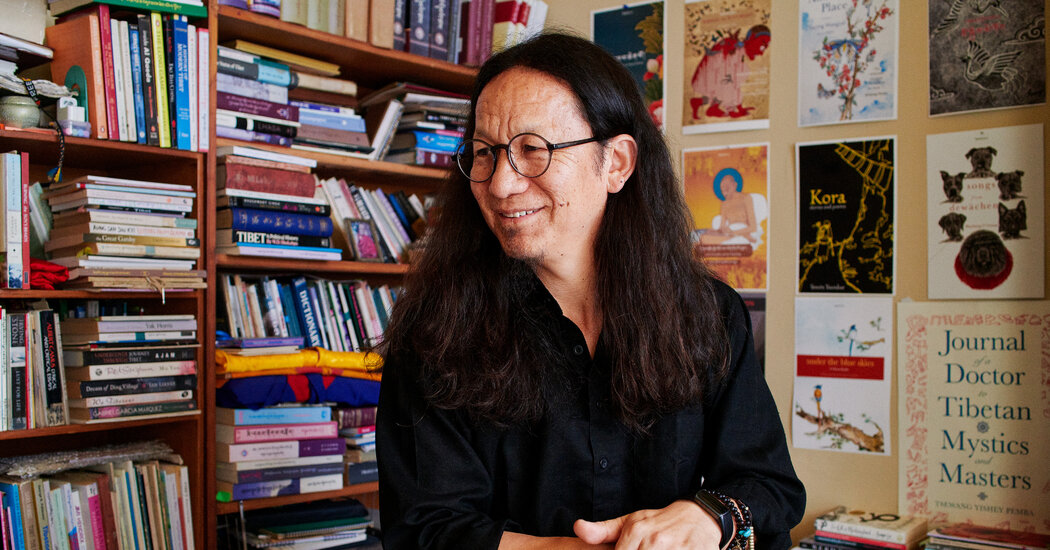
An Exiled Publisher Creates a ‘Brotherhood Across Tibetans’
In the winter of 1982, Bhuchung Sonam left his home in Central Tibet. For five days, he trekked with his father across the Himalayas to the Nepali border. Only around 11 years old then, he knew little about what they were fleeing — China’s decades-long colonization of his homeland — and why. He also didn’t realize that he would never again see his homeland, his mother or his six siblings. After arriving in Nepal, Sonam and his father made a pilgrimage to Buddhist sites in neighboring India, the home of the…
She Witnessed Mao’s Worst Excesses. Now She Has a Warning for the World.
In 1955, not long after Ms. Chen joined the Central Film Bureau, Hu Feng, a well-known Chinese Marxist writer, was detained for penning a report arguing that literature should allow for greater expressiveness. His words triggered a purge that rippled through Ms. Chen’s circle of friends and colleagues, some of whom were accused of being part of Mr. Hu’s “counterrevolutionary clique.” Then, unexpectedly, Mao began to welcome criticism of the party, urging a “hundred flowers to bloom,” a phrase meant to encourage people to speak up and criticize the party’s…
Book Review: ‘Ghost Music,’ by An Yu
GHOST MUSIC, by An Yu Not much is known about the inner life of mushrooms, but we can guess at the presence of a sort of subterranean sociality from the extensive networks of underground filaments that link individual organisms to a vast community of plants, tree roots and other fungi. Although the mushroom’s cap and stalk are its most obvious features, they are only the visible signs of a deeper life — the way that the tip of an iceberg hints at the bulk obscured below, the white and black…
Book Review: ‘Chip War’ by Chris Miller
Europe’s failure to grasp the importance of transistors comes through in a great story about the French president Charles de Gaulle sniffing at a transistor radio — a gift from Hayato Ikeda, the prime minister of Japan, in 1962. De Gaulle apparently found the radio distasteful, a tacky gizmo for the petite bourgeoisie. Only much later, in the Netherlands, did Europe make its own breakthrough in chip engineering, with the invention of extreme ultraviolet (EUV) lithography, a heart-stoppingly precise technology that continued to shrink transistors when the progress of miniaturization…
Jonathan Spence, Noted China Scholar, Dies at 85
Jonathan D. Spence, an eminent scholar of China and its vast history who in books like “God’s Chinese Son: The Taiping Heavenly Kingdom of Hong Xiuquan” (1996) and “The Search for Modern China” (1990) excavated that country’s past and illuminated its present, died on Saturday at his home in West Haven, Conn. He was 85. His wife, Annping Chin, said the cause was complications of Parkinson’s disease. Professor Spence, who taught for more than 40 years at Yale University, where his lecture classes were always in great demand, found the…
Deep Underground, a Chinese Miner Discovered Poetry in the Toil
In 2011, he found a broader audience via the blogging craze then spreading across China. Online, he met other poets, amateur and professional. One day in 2014, a well-known critic, Qin Xiaoyu, happened across Mr. Chen’s blog and asked to meet. Over the next year, Mr. Qin and a filmmaker, Wu Feiyue, followed Mr. Chen and five other migrant worker poets, for a documentary called “The Verse of Us” (later released internationally as “Iron Moon”). The film, released in 2015, received considerable attention — in part because of tragedy. Another…
Biden Expresses Confidence in Milley Amid Questions About His Calls to China
WASHINGTON — The senior-most U.S. military officer did not bypass his civilian leaders when he called his Chinese counterpart in October and January, his office said on Wednesday after the release of excerpts from a new book that alleges that the conversations centered on concerns about President Donald J. Trump. “Peril,” by the Washington Post reporters Bob Woodward and Robert Costa, says that Gen. Mark A. Milley, the chairman of the Joint Chiefs of Staff, secretly called China twice to offer reassurances that Mr. Trump had no plans to start…