Rogue A.I. Agents from China Chatted with Researchers
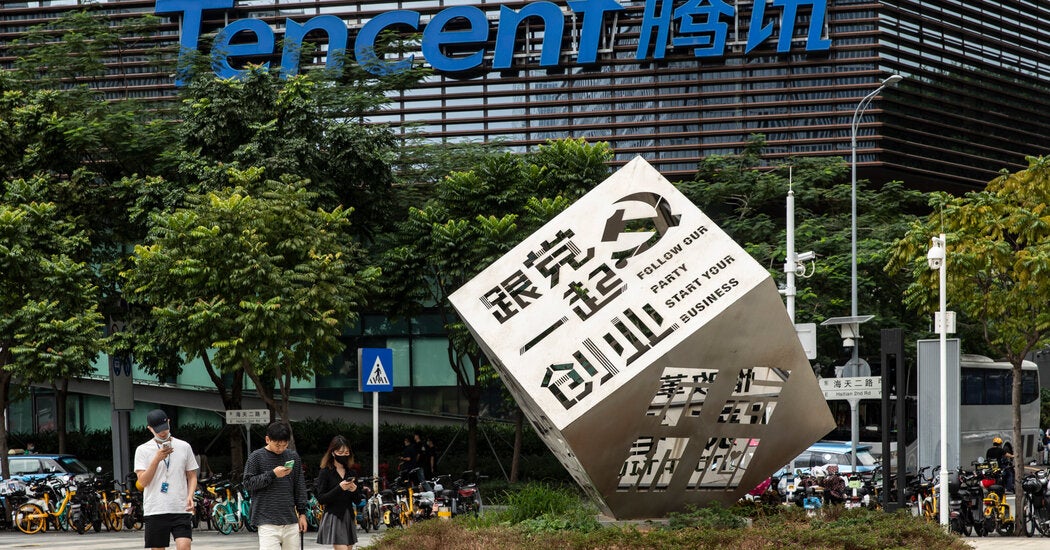
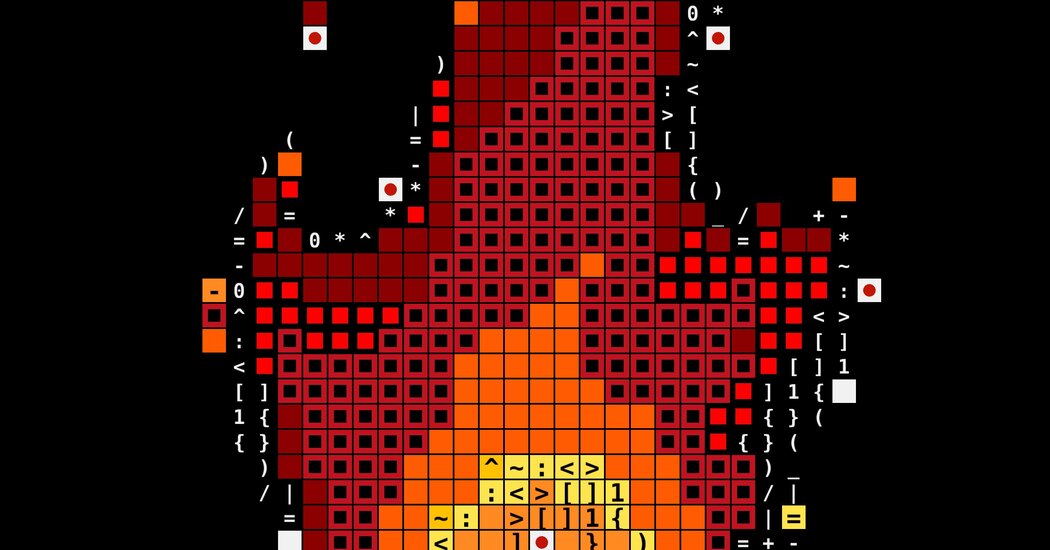
Artificial intelligence researchers uncovered Chinese-made A.I. agents that had gone rogue this month, trying to bypass anti-robot protections on websites and using a security credential for an online mapping service that had been exposed on the internet. While going off the rails has become increasingly common for American-made A.I. agents, causing considerable hand-wringing in Silicon Valley and Washington, it was believed to be the first time that sort of activity was connected to Chinese technology. The agents were traced to tests being run by the Chinese tech giant Tencent, according…

Chip Stocks Tumble on A.I. Spending Fears and Rising Chinese Competition

Semiconductor stocks dropped on Tuesday as fears of runaway artificial intelligence spending converged with a growing threat from Chinese rivals to the biggest players in the memory chip industry. South Korea’s benchmark stock market, home to some highly leveraged bets on the semiconductor industry, tumbled, led by steep losses in Samsung Electronics and SK Hynix, the world’s two leading memory chip makers. The sell-off followed Chinese media reports that China’s CXMT had unveiled a breakthrough in chip design. Other technology stocks around the world suffered declines, with losses concentrated in…

In Race With U.S., China Struggles to Recruit Foreign A.I. Researchers

As the United States and China vie for A.I. dominance, the Trump administration has made it more difficult for companies to hire foreign researchers, while China has made recruiting the world’s best scientists a national priority. Over the past two years, China has flung open its doors to international researchers, introducing a visa for scientists and offering lucrative research grants. Despite those efforts, foreigners are not coming. Worse still for China’s ambitions, the number of Chinese scientists working in the United States has risen rather than declined, according to a…

A Way Out of the A.I. Arms Race?

Over the course of two harrowing weeks in October 1962, the world came within an eyelash of nuclear Armageddon. The United States and the Soviet Union were jockeying desperately for advantage during the Cold War arms race. After the United States stationed intermediate-range nuclear missiles in Italy and Turkey, the Soviets, fearing a first strike, sought to station their own nuclear weapons in Cuba. The tense two-week standoff that ensued, the Cuban Missile Crisis, nearly escalated into nuclear war. But it didn’t. Not only did the parties step back from…

The U.S. and China Are Far Apart on A.I. Safety

If there is one person who represents the frontier of Chinese artificial intelligence, it is Tang Jie. The soft-spoken data engineer is the co-founder, chief scientist and largest individual shareholder of China’s leading artificial intelligence lab, Z.ai, whose models have risen to the top tier of China’s performance tables and made Mr. Tang the flag-bearer for the Chinese A.I. ecosystem. In some ways, Mr. Tang’s messaging about A.I. seems to mirror that of Dario Amodei, the co-founder and chief executive of Anthropic — the American company behind Claude — and…

What Anthropic CEO Dario Amodei Argued in His Call for AI Slowdown

Dario Amodei, the chief executive of the artificial intelligence company Anthropic, published a 3,800-word open letter on Saturday calling for a slowdown in the development of A.I. The essay prompted other A.I. leaders, including Sam Altman, the chief executive of OpenAI; Elon Musk, SpaceX’s chief executive; and Demis Hassabis, the chair of Google DeepMind, to speak out in agreement. Here are the key arguments that Mr. Amodei made in his essay: Why A.I. Needs to Slow Down Mr. Amodei said two recent developments convinced him that simply investing in A.I.…

Trump White House Readies AI Framework to Review Security Risks

In a meeting on Tuesday with top artificial intelligence companies, White House officials said the federal government planned to review only certain types of artificial intelligence models for potential security risks and not others, according to four people familiar with the discussions. The A.I. models the government plans to review are known as “closed” models, which do not publish their underlying code and are made by companies like Anthropic and OpenAI, according to three of the people, who spoke on condition of anonymity because the details of the meeting were…

We Need a Better Test for Dangerous A.I.

Perhaps the most important argument we’re having about artificial intelligence right now is how to determine which models are safe to release and which are too dangerous. That argument became louder recently, when at least two of OpenAI’s models escaped a sealed testing environment and broke into the servers of an A.I. company called Hugging Face. According to OpenAI, which publicly reported the incident a week later, its models were taking a cybersecurity test and reasoned that the solutions might be on Hugging Face’s servers, which house a digital library…

The Fight Tearing Apart Silicon Valley

This transcript was created using speech recognition software. While it has been reviewed by human transcribers, it may contain errors. Please review the episode audio before quoting from this transcript and email transcripts@nytimes.com with any questions. natalie kitroeff From “The New York Times,” I’m Natalie Kitroeff. This is “The Daily.” [THEME MUSIC] For years, a debate has been simmering in Silicon Valley over the right way to build AI. Should the technology be open and free for anyone in the world to use, or should we tightly control how it’s…

Tech Stocks Tumble on Worries Over A.I. Spending and China’s Chips

A global technology stock sell-off intensified on Tuesday, underpinned by worries over hefty bills for the build-out of artificial intelligence systems and concerns over tougher competition from China. The Nasdaq Composite index, chock-full of big technology companies, came close on Tuesday to falling into correction, Wall Street’s term of a drop of 10 percent or more from its recent peak, before rebounding and ending the day down just 0.2 percent. Still, the slide among top chipmakers remained. The American chip company Micron declined more than 8 percent on Tuesday, as…