Last week’s midterm elections were perhaps the first major elections fought at least in part over issues related to artificial intelligence. This year saw record donations from tech executives to tech-friendly candidates. And in some cases, A.I. was actually on the ballot: In local ballot initiatives across the country, people voted to limit or prevent the development of data centers. Many newly elected Democrats have promised A.I. regulation.
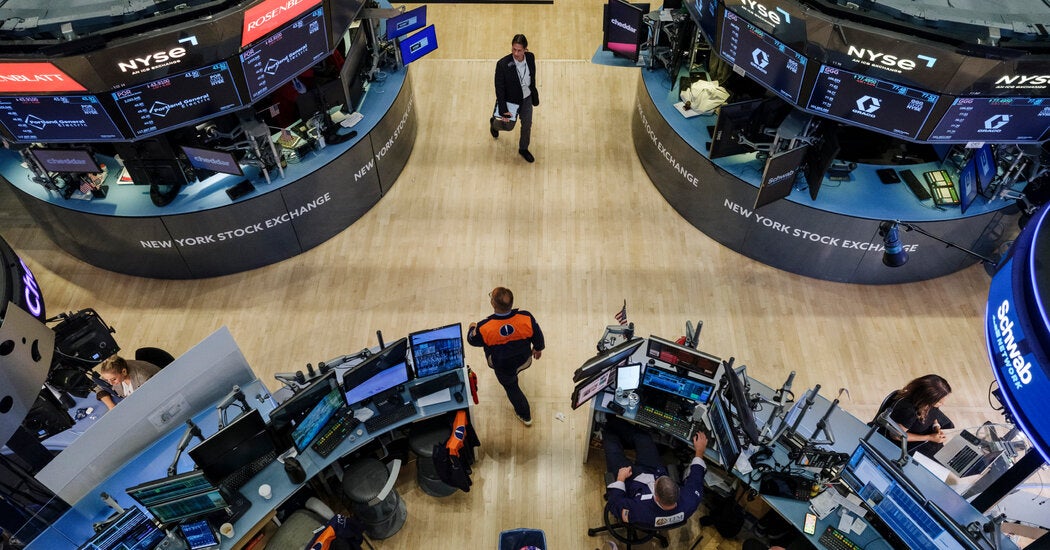
If A.I. has surged to the forefront of U.S. politics, it’s in part because A.I. is at the forefront of the U.S. economy. And stock markets around the world rise and fall with A.I. shares, particularly the multitrillion-dollar behemoths based in Silicon Valley. I spoke to my colleague Joe Rennison, who covers financial markets, about the dramatic swings in tech stocks following the midterms and what they mean — for Americans, and for the rest of us.
Markets up. Markets down. Markets up …?
So, Joe. We’ve seen some serious volatility in the stock market after the midterms. First markets rallied, then they had their worst day in nearly two years. This week, as Nvidia stock plunged because of the Jensen Huang affair, the rest of the market bounced back.
What’s going on, and how much of all this is down to politics?
Certainly some of it is down to politics. The initial rally after the midterms came in part from investors who had parked their cash on the sidelines, in case of some unexpected event — say, a contested election. They bought back in when it became evident we were going to get a clear outcome.
The plunge the next day, though, came after some weaker than expected financial reports from a couple of A.I. companies, and after investors began processing what Democratic control of Congress and some Democratic wins at the state level might actually mean for the A.I. industry.