Two of China’s EV Makers Announce a Deal as Auto Industry Moves Toward Consolidation
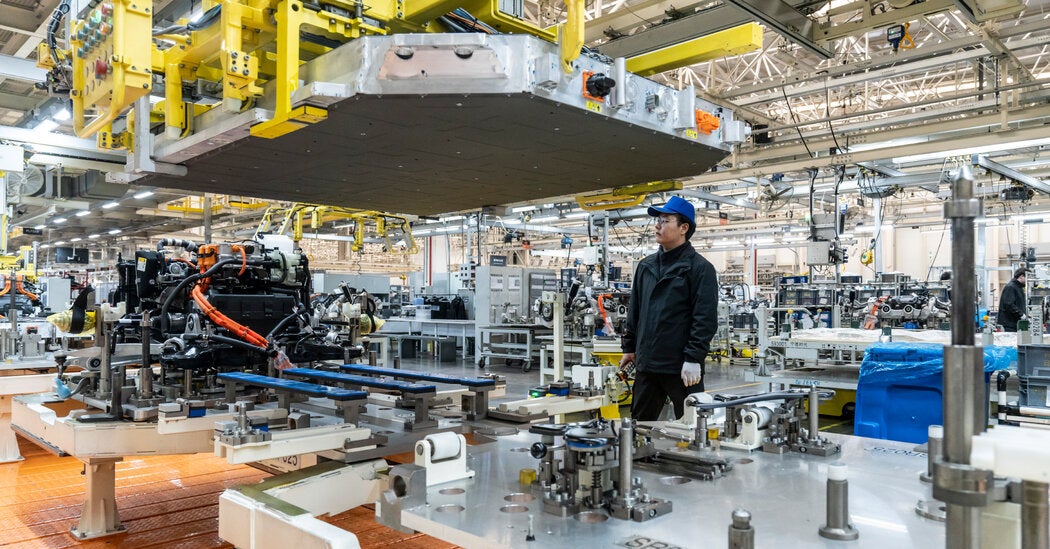
Two leading electric carmakers in China said on Monday they would combine their battery charging subsidiaries, in the latest sign of consolidation in a severely crowded Chinese car industry. The deal will combine divisions of Nio and Zhejiang Geely Holding Group, with Nio also acquiring 10 percent of a separate Geely business. The transaction comes just two weeks after another Chinese automaker, Guangzhou Automobile Group, announced plans for a complex tie-up with First Automotive Works, a large manufacturer. Last year, two of the Chinese car industry’s giants, Dongfeng Motor and…

Tiny Electric Vehicles Pack a Bigger Climate Punch Than Cars

In Darbhanga, a new acid-battery rickshaw, like the one Mr. Rai drives, sells for around 175,000 rupees, or $2,100. That’s half the price of a new rickshaw powered by natural gas. Charging the battery costs 20 rupees (25 cents), one-fourth of the price of filling a gas tank. The rebates seem to be working. Reliance Industries, India’s biggest company, is converting its three-wheeled cargo vehicles from gas to electric. Food delivery services are going electric as quickly as possible. Chetan Maini, whose company Sun Mobility builds charging infrastructure, said business…

A New Law Supercharged Electric Car Manufacturing, but Not Sales

President Biden’s signature climate law has stimulated a surge of investment in electric vehicle production across the country, including tens of billions of dollars on battery plants across the South and new assembly lines near the Great Lakes. Based on early evidence, it is succeeding at a goal that economists have long considered difficult and costly: using the power of government to rapidly grow a new industry. That growth could prove crucial for the other side of the electric vehicle equation: enticing more consumers to buy them. That’s because Mr.…