The appointment to the legislature of Li Zhen-xiu has stoked no shortage of controversy in Taiwan. Li is the first China-born legislator in Taiwan’s contemporary democratic politics, having acquired Taiwanese nationality through marriage to a Taiwanese. In this sense, Li is the first “Chinese spouse” to take office in the legislature. The status of Chinese spouses who have Taiwanese nationality through marriage has long been contested, with the Kuomintang (KMT) traditionally seeking to depict itself as defending the interests of Chinese spouses in Taiwan to court their votes, while framing…
Category: The Diplomat
Why China’s OpenClaw Mania Is More Than Just a Tech Craze
China has succeeded in positioning itself at the forefront of the global artificial intelligence race, but few could have predicted what happened next. Almost overnight, millions of Chinese users became devoted “lobster farmers.” The culprit? An AI agent called OpenClaw, whose icon – a bright red crustacean – sparked one of the biggest public tech crazes in recent memory. Installing and putting it to work quickly earned a nickname that spread from state media to street-level slang: yǎng lóngxiā (养龙虾): literally, “raising lobsters.” Developed by Austrian programmer Peter Steinberger, OpenClaw…
Refashioning a Strategic Partnership: Canada and China in a Fragmenting World Order
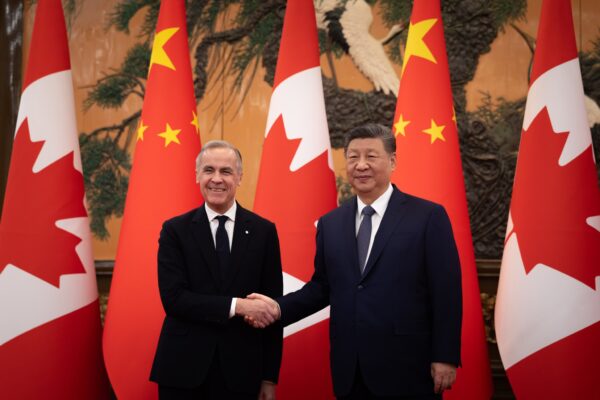
China and Canada have reset their relationship after eight years of frosty diplomacy. This energetic diplomatic reversal follows a pathway that a few other countries have already trodden and that many others may find instructive at the current turbulent moment in our world, something Canadian Prime Minister Mark Carney accurately described as a “rupture.” As widely reported, the detention of a Huawei CFO by Canada at the request of the United States in December 2018 and the subsequent arrest of two Canadians in Beijing a few days later sent the…
The China–Iran Partnership and the Limits of Beijing’s Non-Interference Alliance Model
The continuing U.S. and Israeli strikes on Iran have raised an important question in East Asia: Why has China not acted more decisively to support Tehran? Some analysts argue that Beijing does not view Iran as a genuine strategic partner and that the relationship is largely transactional. This interpretation, however, overlooks the depth of China–Iran cooperation. Beijing has supported Iran’s entry into BRICS and the Shanghai Cooperation Organization amid rising U.S. economic sanctions, mediated the restoration of diplomatic relations between Iran and Saudi Arabia in 2023, and repeatedly emphasized Iran’s…
China’s Difficult Choice in the Iran-Israel-US War
After the outbreak of the conflict among the United States, Israel, and Iran, China’s position and role quickly became a focal point of international attention. In some media and analytical narratives, China has been portrayed as an important partner of Iran, maintaining close political and diplomatic ties with Tehran alongside Russia. Some commentaries even suggest that China has significant influence over Iran through financial cooperation, political engagement, and technological exchanges. As a result, China is sometimes viewed externally as one of the key countries that could potentially shape Iran’s policy…
China’s New Five-Year Plan Prioritizes Robotics. The World Should Pay Attention.
When China’s National People’s Congress convened in Beijing last week to review the draft outline of the 15th Five-Year Plan (2026–2030), much of the Western commentary focused on the headline GDP growth target – kept at a cautious “reasonable range” – and the familiar refrain about technological self-reliance. What received far less attention was a structural shift buried deep in the 141-page document that may prove more consequential than any macroeconomic figure: the systematic elevation of robotics and “embodied intelligence” (具身智能) from a niche industrial subsidy target into the connective…
Beijing Is Legalizing the Assimilation of Tibetans and Other Ethnic Minorities
In recent years, the Chinese government has intensified policies in Tibetan areas that aim to reshape Tibetan identity through language, education, and cultural control. These measures are not isolated administrative actions but part of a broader national strategy centered on what Beijing calls “forging a strong sense of the Chinese nation community.” Under this framework, the Chinese Communist Party (CCP) seeks to strengthen a unified national identity by weakening ethnic identities that might compete with the political narrative of the “Chinese nation.” Increasingly, these assimilationist policies are not merely administrative…
When Wang Yi Speaks, It’s Not Just China’s Foreign Minister Talking
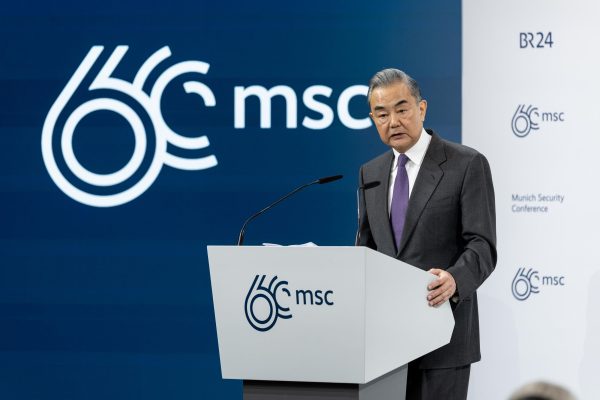
On March 8, China’s foreign minister gave his annual press conference during the Two Sessions, the meetings of China’s legislature and political consultative body. Most coverage of Wang Yi’s press conference has focused on what he said – the warmth toward Washington, the sharp words on Japan, the silence on Ukraine. All of it matters. But the more consequential story is structural: who was speaking, and in what capacity. Wang Yi is simultaneously foreign minister, Politburo member, and the director of the Office of the Central Foreign Affairs Commission —…
China’s 5-Year Plan Has Moved Beyond the Chip War. Washington Hasn’t Noticed.
The word for lithography machine does not appear once in the draft outline of China’s 15th Five-Year Plan. Neither does wafer fab, extreme ultraviolet, or chip manufacturing. In the 141-page planning document submitted to the National People’s Congress on March 5, the entire vocabulary of the “chip war” as debated in Washington is absent. What appears instead is a different strategic vocabulary. Artificial intelligence outnumbers references to integrated circuits by roughly 13 to 1. Computing power, nearly absent from the previous plan, now receives its own dedicated chapter. A new…
Africa Gets Duty-free Access to China – But Chinese Companies Win on Both Sides
China is going all in to support the export of African minerals and other goods into the Middle Kingdom. Beginning May 1, China will no longer impose duty on almost all imports crossing its borders from all but one African nation. (That one nation is Eswatini, which still does not recognize the People’s Republic of China.) Building on previous legislation, which had already dropped duties for imports from 33 Least Developed Countries (LDCs) in Africa, the move is meant to be seen as a notable step toward furthering China’s relationship…