Perceptions of China are changing, if not among its neighbors – who directly face security concerns ranging from territorial and maritime issues to ongoing influence operations – at least among more distant partners, where public opinion does not perceive an immediate and direct geopolitical challenge from China. This is above all the case in Europe, for several reasons. First, while Europe continues to discuss “de-risking” and debates, whether or not it would be realistic to “decouple” from the Chinese economy for security reasons or to prevent competition under asymmetric and…
Category: The Diplomat
The Strait of Hormuz Is Burning, But China Is Not Panicking
On paper, the ongoing Israeli-U.S. offensives against Iran have turned into a nightmare for many countries due to the concomitant oil and gas crunch. As the factory of the world, China should be no different given roughly half of its crude oil and condensate imports come from the Gulf producers: Iran, as well as Saudi Arabia, Iraq, and others. Regarding the blockaded Strait of Hormuz at the center of the world’s attention, about 20 percent of global oil and 20 percent of liquefied natural gas (LNG) trade flows through the…
TPP Founder Ko Wen-je Gets 17 Years in Prison
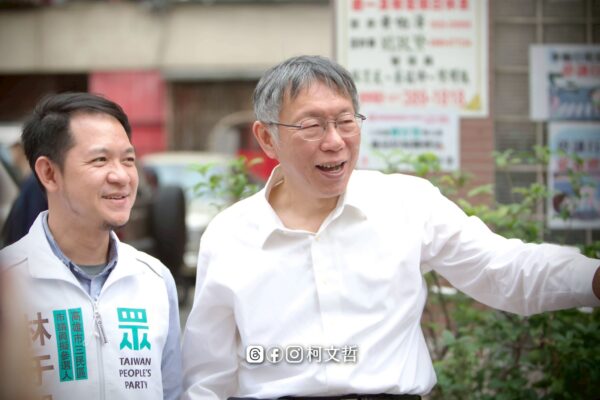
Former Taipei mayor Ko Wen-je has been sentenced to 17 years in jail by the Taipei District Court. Ko will also be deprived of civil rights for six years. Ko is the founder of the Taiwan People’s Party (TPP), which at present is the third largest party in the Taiwanese legislature. Ko ran as the party’s presidential candidate in the 2024 elections, after a failed bid by the party to form a joint ticket with the Kuomintang (KMT). Indeed, until facing corruption charges, Ko continued to be a presidential hopeful,…
What the Engagement Debate Misses: Visiting China Is Not the Same as Understanding It
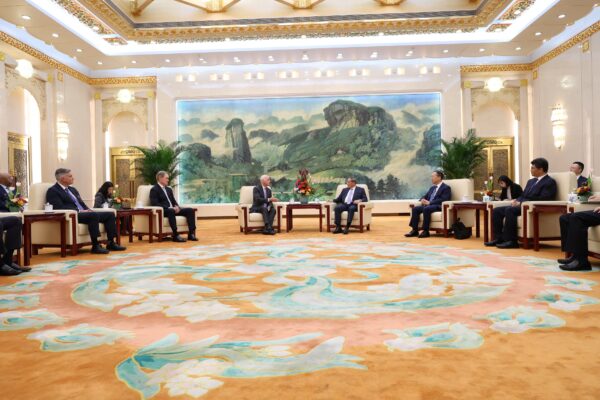
As the planned summit between Presidents Donald Trump and Xi Jinping slides further into uncertainty, Jing Qian and Neil Thomas, both affiliated with the Asia Society Policy Institute’s Center for China Analysis, argued in the New York Times that American policymakers urgently need to restore regular travel to China. They are right that the collapse of official exchanges since 2020 is a problem. They are right that navigating a rivalry without firsthand exposure to the rival is dangerous. But their argument rests on an assumption that deserves scrutiny: that visiting…
China’s Afghanistan-Pakistan Mediation Efforts Cast Doubt on Its Influence in Both Countries
After unsuccessful efforts to mediate between Pakistan and Afghanistan by Qatar, Saudi Arabia, and Turkiye, China initiated efforts to resolve the conflict in its neighborhood, which Pakistan has declared an “open war.” The fighting started in October of last year when both Pakistan and Afghanistan conducted strikes inside each other’s territory. Even though a ceasefire was brokered, with mediation by Qatar, Saudi Arabia, and Turkiye, the attacks from both sides eventually resumed due to unresolved underlying issues. The return to conflict raised significant concerns for China, which is an ally,…
China’s Free Ride at Hormuz
The Strait of Hormuz has once again emerged as a geopolitical fault line. As tensions deepen across the Iran-Israel-U.S. axis, the narrow maritime corridor, through which nearly a fifth of global oil flows, has become a site of selective disruption, coercive signalling, and strategic manoeuvring. Shipping slowdowns, rising insurance costs, and episodic targeting of vessels have injected uncertainty into global energy markets. Yet, amid this turbulence, Chinese-linked oil shipments, particularly from Iran, have continued to move with relative resilience. The crisis, therefore, is not experienced equally; it is filtered through…
Will China’s Stalinesque Purges Sabotage Its Military Ambitions?
As the cashiering of members of the Chinese People’s Liberation Army (PLA) high command continues to roll on, some analysts have suggested that the removals by President Xi Jinping are akin to the purges in the Soviet Union’s late Stalinist period (1945-1953). On the surface, both the Xi and Stalinist purges appear to be driven by concerns over coalescing patron-client networks – as both strongmen strived to preserve their personalist rule while seeking great power status for their respective regimes. Stalin carried out numerous high-profile personnel purges in the army,…
Taiwan’s New Southbound 2.0: Rewiring the Indo-Pacific Beyond China
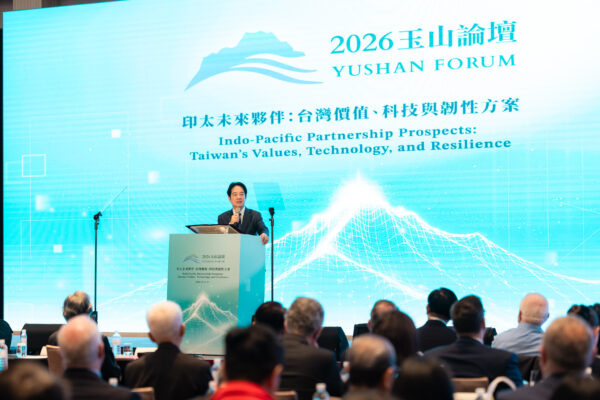
On March 16, at the 2026 Yushan Forum in Taipei, President Lai Ching-te signaled that Taiwan’s New Southbound Policy is no longer merely an economic diversification initiative. Framed around this year’s theme of values, technology, and resilience, the policy is increasingly being presented as something larger: a broader Indo-Pacific strategy linking trade realignment, technological cooperation, democratic coordination, and regional deterrence. The Yushan Forum has long served as a platform for Taiwan to connect with political, economic, and strategic elites from across the region and beyond. This year’s forum brought together…
China’s Censorship Is the Most Pressing Threat to Freedom of Expression
In the global struggle for freedom, democracies do not have the luxury of squabbling among themselves. This is because a far greater, global censorship threat in the form of the Chinese Communist Party (CCP) is already chugging along with exceptional force – using the full weight of its repressive and coercive apparatus to undermine the foundation of free speech across the world. In this contest with China, the democracies better get their act together quickly. This urgency is needed because advanced technologies are propelling the CCP’s capabilities for suppressing speech…
Beijing’s Real Problem With Trump’s China Summit Delay
When U.S. President Donald Trump told the Financial Times on March 15 that he might delay his planned state visit to Beijing unless China helped reopen the Strait of Hormuz, it set off a now-familiar interpretive cycle: genuine ultimatum, negotiating bluff, or Trump being Trump? By the afternoon of March 16, the question was academic. Trump appeared in the Oval Office, asked China to push the trip back “a month or so” because of the war with Iran, and added, “There’s no tricks to it either.” Treasury Secretary Scott Bessent…