When Feminist Speech Disappears Online, Chinese Women Find New Ways to Speak

Recently, a Chinese stand-up comedian, Xiao Pa, was temporarily banned from posting on Weibo after sharing a brief personal reflection. Sick with a fever and lying in bed for two days, she wrote that a thought suddenly crossed her mind: if she had a husband and child, she might still have to get up and cook for them even while ill. The comment was quickly removed, and the comedian was accused of “stoking gender conflict” and “creating anxiety about marriage and childbirth.” Yet screenshots of the post continued circulating widely…

The Notion of the Chinese Nation: How Beijing’s New Ethnic Law Pushes Taiwan Further Away

In March 2026, China’s new Ethnic Unity and Progress Promotion Law passed during the “Two Sessions.” While the law’s enactment went largely unnoticed outside of China, it reflects Beijing’s continued emphasis on conformity in identity under a unified national framework.  This runs in direct contradiction to Taiwan’s Development of National Languages Act, enacted in July 2019, which elevated all natural languages in Taiwan as national languages and embedded linguistic diversity into public life, education, and governance.  These contrasting approaches to language and identity highlight a widening divide in how each…

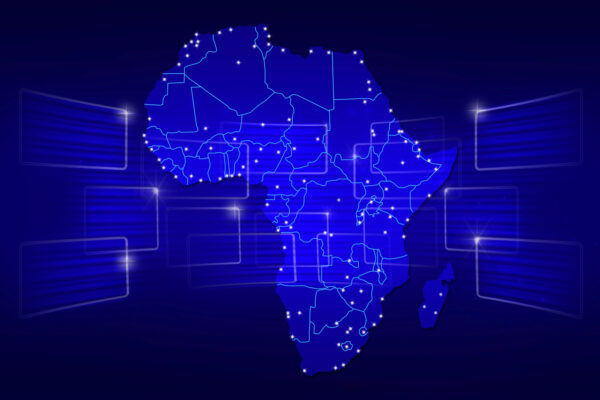
China and African Sovereignty: Beyond the Digital Silk Road Narrative

Critics of China’s digital engagement with African countries argue that Beijing, through Huawei and ZTE, is systematically exporting its model of digital governance to the continent, locking African governments into Chinese hardware, cloud infrastructure, and crowding out Western alternatives. This concern has driven considerable policy commentary and shaped how analysts measure Chinese influence in the region. However, this perspective rests on a flawed zero-sum assumption and falls short in three important regards, each of which reflects a broader analytical failure to account for the agency of African states as deliberate…

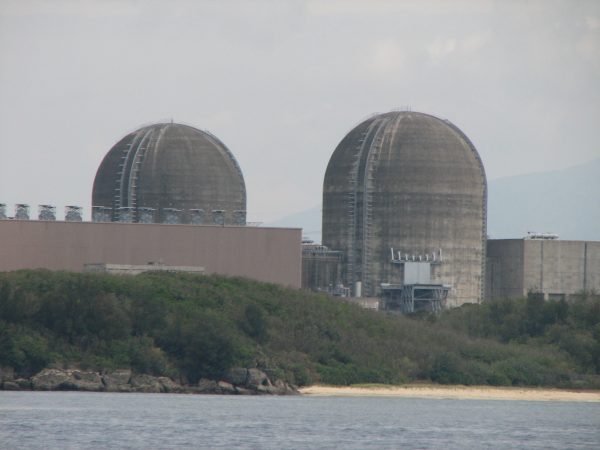
Amid Iran War Energy Crunch, Taiwan Turns Back Toward Nuclear Energy

In early March, China made an unusual offer to Taiwan – promising energy security in return for acquiescing to Chinese rule.  It surprised few, then, that the offer was quickly turned down by the Lai administration. With the Democratic Progressive Party (DPP) in power, China would not expect Taiwan to agree. The offer was only for optics, so that Beijing could frame the Lai administration as unwilling to engage in dialogue with China, even if this puts Taiwan’s energy security into crisis.  China is, of course, playing on global anxieties…

The China-Pakistan Iran Peace Plan: All Words, No Commitment

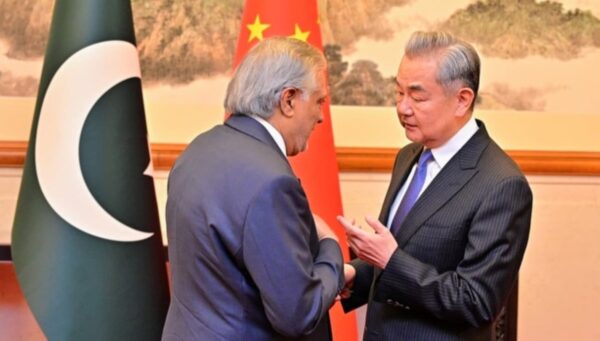
Pakistan’s Foreign Minister Ishaq Dar arrived in Beijing on March 31 to meet with China’s Foreign Minister Wang Yi, a day after chairing a meeting with his counterparts from Turkiye, Saudi Arabia, and Egypt as part of efforts to mediate the ongoing Iran-Israel-U.S. war. The timing of the visit was deliberate, positioning Beijing as an important stakeholder and not a distant observer. China chose that moment to release its five-point proposal on the crisis, signaling entry into a diplomatic space it had, until recently, approached with caution. On paper, the…

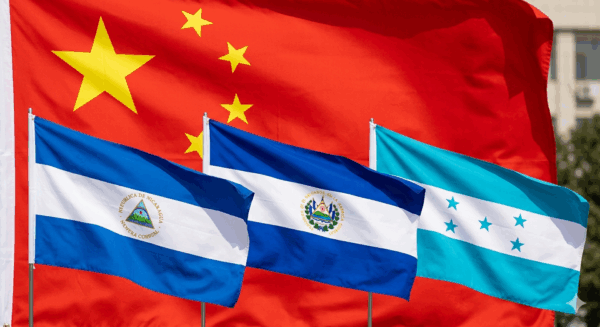
Between Cooperation and Control: China’s Expanding Role in Central America

The study of China’s influence in Latin America has, without question, focused primarily on economic and trade relations between the Asian giant and countries in the region. While there is an extensive body of literature examining these ties from multiple perspectives, far less attention has been paid to China’s political and institutional influence.  Existing research has largely concentrated on the Chinese Communist Party’s (CCP) soft power and disinformation efforts – often compared to those of Russia – leaving other instruments of political internationalization relatively underexplored. These include people-to-people diplomacy, Chinese…

Ko Wen-je’s Downfall Strengthens the KMT’s Position Ahead of Key Elections

On March 26, a Taipei court sentenced Taiwan People’s Party (TPP) founder Ko Wen-je to 17 years in prison in a corruption case that the TPP and Kuomintang (KMT) allege was politically motivated. The verdict, which also strips Ko of his civil rights for six years, will reshape Taiwanese politics ahead of this November’s island-wide local elections and the 2028 presidential race. The party that stands to gain the most from the shakeup is the KMT. The ruling dealt a heavy blow to the TPP, a party built largely around…

China’s Economy Feels the Iran War Shock

When the United States and Israel launched their first missile strikes against Iran on February 28, the reaction world-wide was shock. The White House had managed not to leak. The press was oblivious. And Iran itself was caught completely off guard, with Supreme Leader Ali Khamenei killed in the first strikes. It is difficult to imagine that any country was more disconcerted than China. They had miscalculated the American intention on Iran, on a gargantuan level. China should have read the tea leaves. The United states had already neutralized Iran’s…

Despite Growing Crackdown, Independent Religious Groups Defy China’s Communist Party

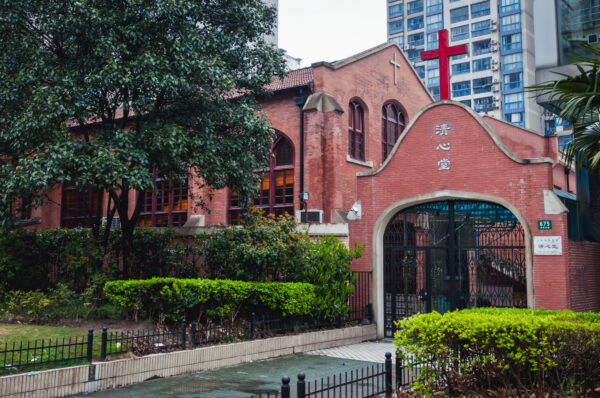
Over the past six months, Beijing has arrested hundreds of leaders and practitioners of Protestant “underground churches,” including Early Rain Covenant Church in Chengdu, Yayang Church in Wenzhou, and Beijing Zion Church, with arrests across several cities. Zion Church pastors have since been charged with “illegally using information networks” and the lawyers representing them are facing threats in a mounting pressure campaign.  The Chinese government has been targeting Protestant underground churches regularly, and yet this could be China’s harshest crackdown on Christianity in years. The current campaign signifies not only…

The Global Implications of China’s 5-Year Plan AI Ambitions

China’s 15th Five-Year Plan (2026-2030), unveiled in early March, sets ambitious goals for AI and cybersecurity with global reach. While the Five-Year Plan (FYP) imperative for China to “seize the commanding heights of science and technological development” is more aggressively articulated than in past planning documents, it is the natural progression of Xi Jinping’s directive for China to become a cyber superpower.  As explained by the Cyberspace Administration of China (CAC), this means increasing internet content controls and cybersecurity capacity; promoting national technology champions, including in AI; and pushing China’s…