China’s Definition of an ‘Evil Cult’ Is Expanding Beyond Religious Groups
The U.S. Commission on International Religious Freedom (USCIRF) recently added the Chinese group “Create Abundance” to its Victims List, identifying it as a persecuted religious organization. The designation is significant and welcome. It reflects growing awareness in Washington that Beijing continues to repress belief communities.  Yet the label actually risks missing a deeper and more troubling reality: “Create Abundance” is not, in any conventional sense, a religion. For that reason, its persecution signals a dangerous expansion of China’s ideological control. “Create Abundance” (创造丰盛) emerged nearly three decades ago as a…

China’s $4.5 Billion Headache: The Niger-Benin Pipeline and the Limits of Non-Interference

In February 2026, the Chinese Embassy in Niamey sent out a warning to its citizens in Niger, urging them to avoid high-risk areas and to activate their emergency plans. The warning followed a series of rebel attacks on the Niger-Benin pipeline operated by the China National Petroleum Company (CNPC), and an offensive against Niamey International Airport in late January claimed by the Islamic State.  For a country that has long made non-interference the cornerstone of its foreign policy, this alert speaks to a growing paradox. China, as it develops ever…

Coal Is Rising in China’s Clean Energy Transition

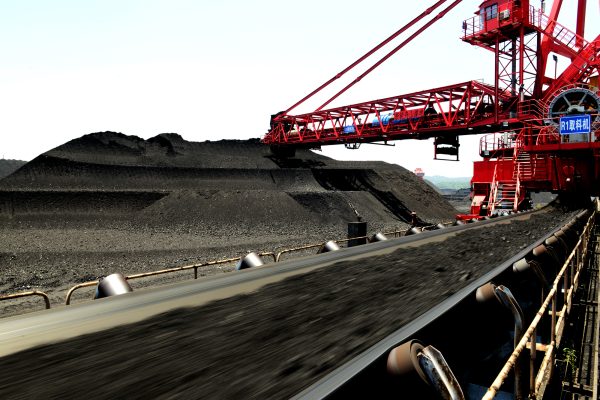
China’s energy transition is entering a more complex phase than commonly assumed. While the country is rapidly scaling up renewable energy – China now leads the world in both investment and deployment – coal production and coal power investment are also increasing. This contradiction reflects a deeper structural reality: China is not moving from coal to renewables in a linear transition. Instead, it is attempting to expand both simultaneously, balancing decarbonization goals with rising electricity demand and system reliability constraints. China’s renewable expansion has reached unprecedented levels. In 2024, China’s…

Why Did Wang Yi Go to North Korea? China’s 3 Strategic Calculations

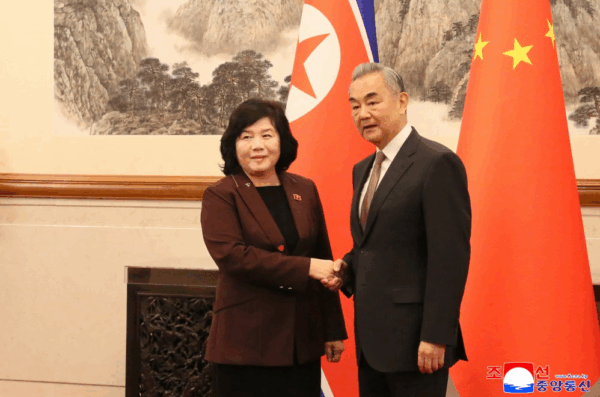
The recent, unexpected visit by China’s foreign minister, Wang Yi, to Pyongyang from April 9 to April 10 drew immediate attention across diplomatic and analytical circles. During the trip, Wang met not only with North Korean Foreign Minister Choe Son Hui but also with the country’s leader, Kim Jong Un. In a region where signals are often as important as substance, the timing and opacity of the trip suggest that this was not routine diplomacy but a calibrated intervention at a moment of heightened uncertainty. Read against the broader strategic…

The Domestic Politics of Cheng Li-wun’s China Trip

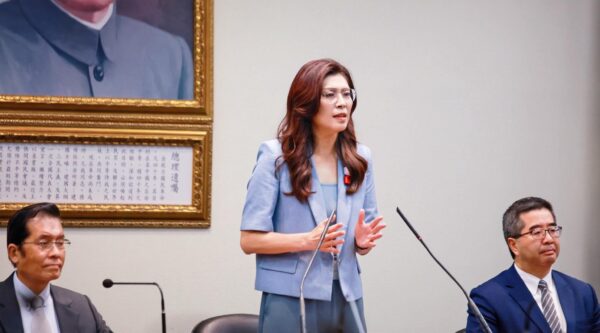
Cheng Li-wun, the chair of Taiwan’s Kuomintang (KMT), visited China from April 7 to April 12 as part of a six-day trip during which she met with Chinese President Xi Jinping. The trip is expected to make the domestic politics of the pan-Blue camp more contentious going forward.  Cheng’s rise to become KMT chair was relatively unexpected. Although not new to the political stage, Cheng was mostly a marginal figure, and it was expected that former Taipei mayor Hau Lung-bin would handily win the chair race.  Cheng won as a…

With Orban Gone, China Has Lost Its Best Friend in the EU

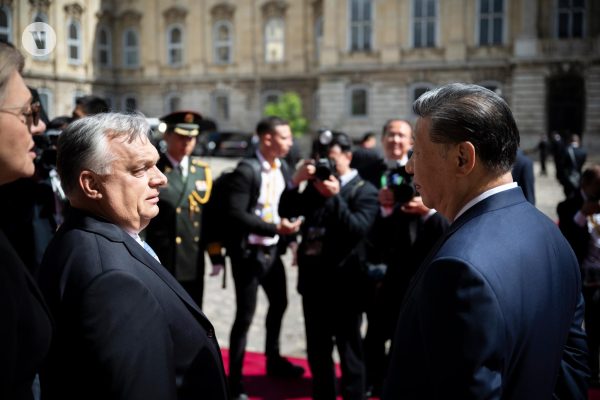
The Hungarian elections, in which longstanding Prime Minister Viktor Orban lost, attracted major international attention. Indeed, the results will have repercussions far beyond Hungarian borders. And while much of commentary focuses on the implications for the European Union, United States, and Russia; China also had a stake here. In several recent elections worldwide, including the last presidential clash in the U.S., it was not entirely clear what China’s preference would be. For instance, while much of the world seemed to have concerns about a second term for Donald Trump, China…

Friendly Strangers: How Two Peoples Across the Taiwan Strait Are Drifting Apart

Over the past three decades, public attitudes on both sides of the Taiwan Strait have shifted in ways that are strikingly consistent and difficult to reverse. In Taiwan, identification with a distinct Taiwanese – rather than Chinese – identity has risen steadily since the early 1990s, accelerating at key political inflection points and most pronounced among younger generations. The gap between those favoring eventual independence and those favoring unification has widened significantly, while the largest single position now favors maintaining the status quo indefinitely. This trajectory has been reinforced by…

China’s Economic Sanctions Against Japan: An Assessment

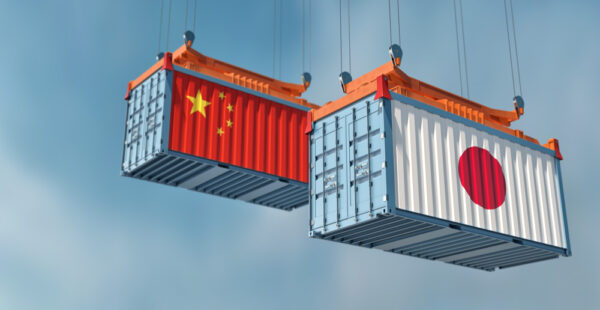
On February 24, 2026, China placed twenty Japanese companies on its Entity List. This move marked a significant shift in China’s posture: Having previously sought to keep Japan’s security status deliberately ambiguous, Beijing has now explicitly designated Japan a country of security concern and publicly identified specific firms it views as threats. By framing the measure under the national security exceptions recognized by the WTO framework, China has made it considerably more difficult for Japan to establish a clear trade rule violation. Until now, China had pursued a different strategy.…

Beijing’s Foreign Influence Tactics, Hidden in Plain Sight 

Over the past month, several reports offered new details on the scale and tactics of the Chinese Communist Party (CCP)’s foreign influence operations. In late February, OpenAI published findings on how ChatGPT was being misused, including by an account linked to Chinese law enforcement, to plan and document what that user termed “cyber special operations.” Meta’s first report of 2026 on adversarial threats detailed the takedown of a China-linked network targeting Taiwan. The European Council on Foreign Relations published an analysis of China’s influence playbook in Europe, drawing on a…

Why Cheng Li-wun’s Visit to China Matters

For the first time in nearly a decade, the leader of Taiwan’s Kuomintang (KMT), Cheng Li-wun, is visiting the Chinese mainland from April 7-12 at the invitation of Xi Jinping. At one level, the trip fits a familiar pattern: Beijing refuses political engagement with Taiwan’s “pro-independence” ruling Democratic Progressive Party (DPP) while keeping channels open to “non-pro-independence” forces such as the KMT. But the timing and framing of this visit suggest a broader message as well. In addition to speaking to Taiwan, China is also signaling to the U.S. that…