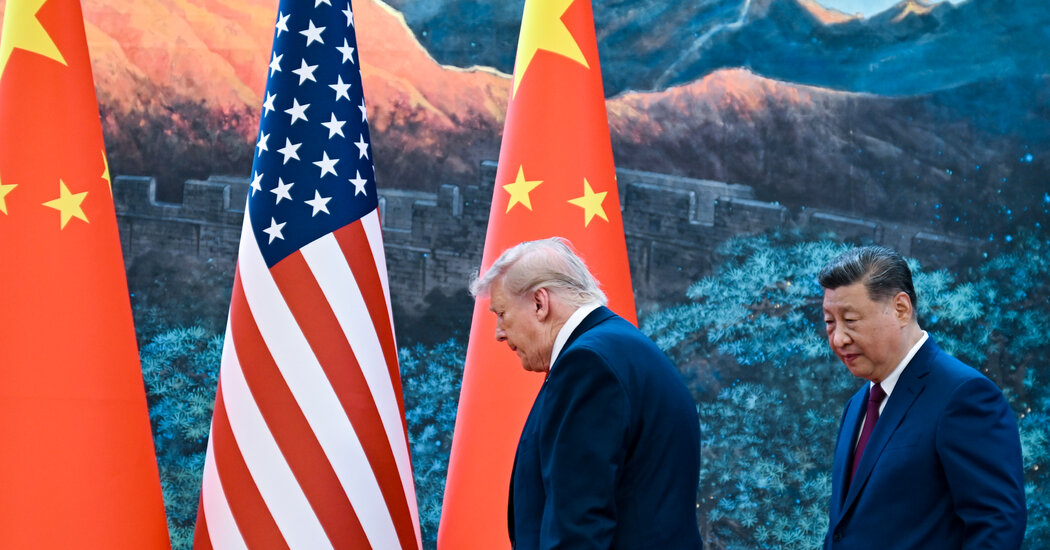
A grand summit in Beijing is a natural time to assess the state of the U.S.-China competition, the dynamics of great power conflict, the balance of forces in this new Cold — or maybe just Cool? — War.
It’s also a good time to revisit my own predictions. Six years ago, in the early days of the coronavirus, I argued that rather than a “Chinese century” we might be looking at a “Chinese decade,” a window when China’s power would hit a peak and the American position would be maximally endangered — but with a more favorable balance awaiting the United States in the later part of the century, if we could get through the Chinese maximum unscathed.
One part of that analysis was simply wrong. I was writing at a moment when the American response to the pandemic seemed much more shambolic than Beijing’s efficient containment strategy, and I assumed that there could be a kind of Covid dividend for China from that difference. In hindsight, America’s stumbling approach actually proved more effective than China’s in the long run, because the People’s Republic eventually found itself in a permanent-lockdown trap that yielded all kinds of social and economic damage.
But in other ways, the 2020s have proceeded somewhat as I expected. The American imperium has been hard pressed on every front, and our leadership — slumping and senescent in the last presidency, obnoxious and bullying in this one — has gifted China a reputation for relative stability, notwithstanding Xi Jinping’s own aggressive and repressive moves.
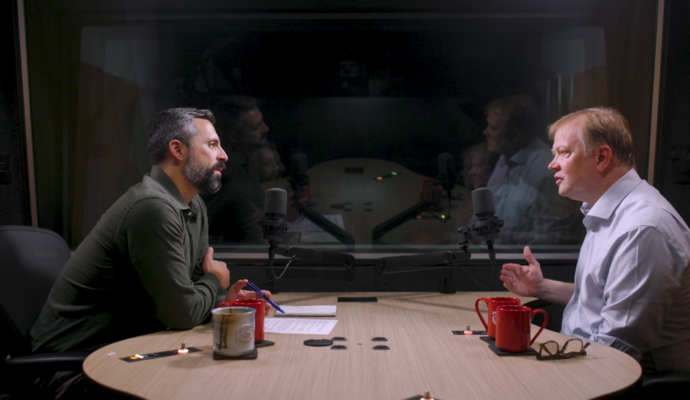
There is a lot of talk about rebuilding American manufacturing, and the Trump era has seen a partial decoupling of the United States and China, a clear shift away from the “Chimerica” model that defined the 2010s. But the decoupling is taking place in the shadow of a profound Chinese industrial advantage and continuing Chinese scientific and technological success. We can debate what it means that China lags just behind Silicon Valley in the artificial intelligence race (that’s the topic of this week’s episode of my podcast, “Interesting Times”), but our edge in frontier models doesn’t feel like a definite hard-power advantage as long as China is radically outpacing us in building machine tools, robots, ships and drones.
Six months ago, I was telling myself an optimistic story about the national security balance, where the United States maintained an edge in battlefield experience — with our support for Ukraine against Russia and our interventions in Iran and Venezuela serving as a testing ground for new weapons and A.I.-enabled tactics. But watching the American military stockpile collapse under the pressure of a regional war against Iran this year should make everyone skeptical that our advantages are adequate for a sustained conflict in East Asia. Fighting Iran to a stalemate seems like the kind of thing that happens just before you fight the Chinese and lose.