PORT MORESBY, Papua New Guinea – Papua New Guinea’s decision to close Taiwan’s trade office in Port Moresby is puzzling from a diplomatic standpoint, but it signals a coming expansion of its economic relationship with China, experts told Radio Free Asia. Last month, PNG’s Foreign Affairs Minister Justin Tkatchenko announced in an official statement the immediate cessation of operations and the formal closure of the physical presence of the Chinese Taipei Economics Office, citing Port Moresby’s “unwavering commitment to honoring, respecting and upholding Papua New Guinea’s foundational One-China Policy,” which…
Day: August 4, 2026
Who are the officers filling the big shoes left behind in PLA anti-corruption drive?
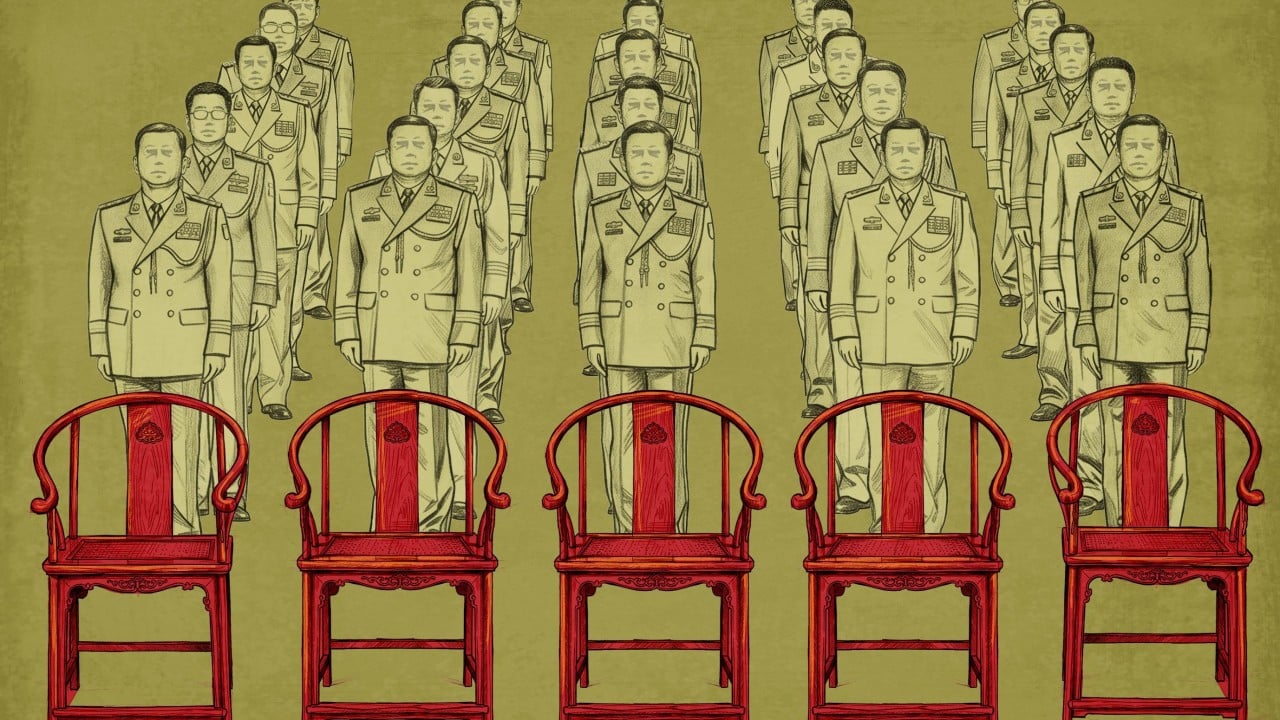
The sweeping anti-corruption drive in China’s military appears to have cleared the way for a new batch of officers to quietly assume de facto leadership of key People’s Liberation Army bodies. According to a South China Morning Post analysis of official insignia and protocol seating from state media coverage of recent meetings, dozens of fresh commanders have stepped into the roles of their ousted predecessors, positioning them to lead the world’s largest standing army. Many have assumed major portfolios previously held by full generals, having recently been promoted from within…
Trump White House Readies AI Framework to Review Security Risks
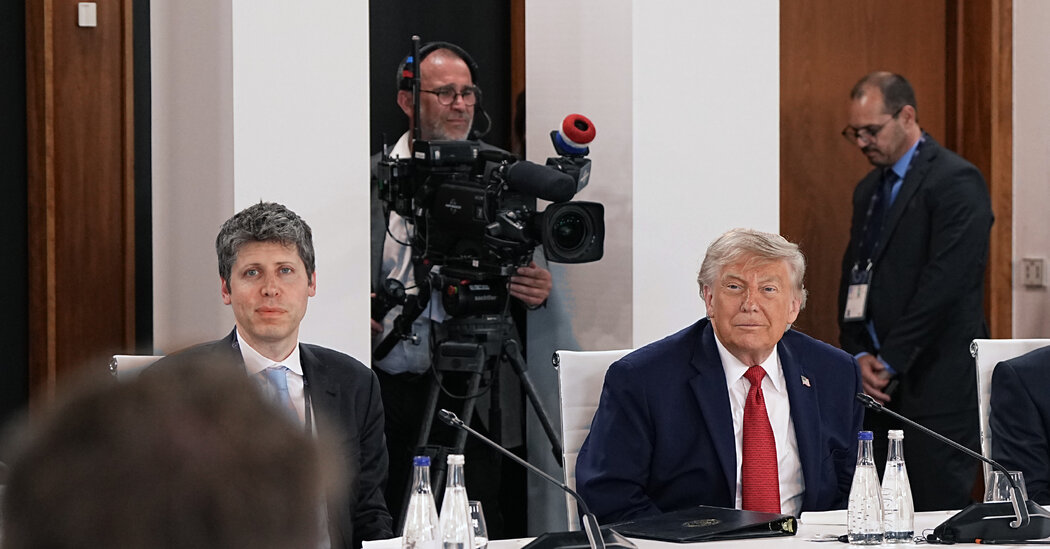
In a meeting on Tuesday with top artificial intelligence companies, White House officials said the federal government planned to review only certain types of artificial intelligence models for potential security risks and not others, according to four people familiar with the discussions. The A.I. models the government plans to review are known as “closed” models, which do not publish their underlying code and are made by companies like Anthropic and OpenAI, according to three of the people, who spoke on condition of anonymity because the details of the meeting were…
Why China’s military is laser-focused on ‘disruptive’ technologies

Having marked its 99th anniversary on August 1, the People’s Liberation Army is now just a year away from its centenary goals, with its evolution highlighting the past, present and future of China’s military strategy. In the fourth part of a series, Amber Wang looks at the PLA’s pursuit of emerging technologies. In an influential book published nearly three decades ago, a PLA military strategist argued that China should not try to match the US weapon for weapon but instead develop asymmetric advantages against its stronger rival. Qiao Liang drew…
Bachelet-led panel urges Latin America not to choose sides in US-China rivalry

Latin American countries should resist pressure to choose between the United States and China and use their vast reserves of lithium, copper and other strategic resources to strengthen their negotiating power, according to a high-level commission co-chaired by former Chilean president Michelle Bachelet and former Colombian president Ivan Duque. But the commission acknowledges that the region’s room for manoeuvre is sharply constrained in security, technology and critical infrastructure, areas in which Washington remains dominant and has sought to curb Beijing’s growing influence. The report, released on Tuesday by the UN…
Trump’s former lawyer advances in attorney general bid after deal with Republican holdouts

US senators voted along party lines on Tuesday to advance US President Donald Trump’s former personal lawyer as attorney general after he formally scrapped a controversial US$1.8 billion fund created through the administration’s settlement of a lawsuit brought by the president. Todd Blanche, who became deputy attorney general after Trump took office, has been serving as acting attorney general since his predecessor, Pam Bondi, resigned in April. The closely scrutinised Senate Judiciary Committee vote followed two hours of debate about Blanche’s relationship with Trump and the unusual settlement that almost…
Trump administration reportedly drafting ban on Chinese datacenter components
The Trump administration is reportedly drafting a ban on US imports of new models of Chinese datacenter components, in the latest sign US authorities are scrambling to respond to the rapid development of AI technology in China. Four people familiar with the matter told Reuters that the Federal Communications Commission (FCC), which oversees the US telecommunications industry, is developing a measure to bar imports of new Chinese optical transceivers, which allow data to travel over fiber-optic cables at the speed of light within datacenters. Officials hope to publish the measure…
China’s ‘Internet Addiction’ Schools Are Now Locking Up Adults
In March, a 21-year-old music student in Beijing arrived at an apartment complex to teach a piano lesson. Waiting for her were her father, her aunt, and two employees of a private disciplinary institution. Her relatives told her the strangers were police officers investigating a family matter. Instead, they forced her into a vehicle, confiscated her phone, and drove her hundreds of miles to an institution in Henan province, where she spent the next 11 days. According to Southern People Weekly, her parents objected to her romantic relationship and believed…
US AI leaders turn to Chinese open-weight models, challenging closed-source safety claims

More American titans of artificial intelligence are describing Chinese open-weight models as better for AI safety and security than closed-source models, challenging the long-standing claim by US closed-source AI model developers such as Anthropic that open-source models present a threat to society. “From what I’m seeing, I think open-weight models seem safer to me than closed-weight models,” AI pioneer Andrew Ng, the former head of Google Brain and former chief scientist at Baidu, said at the Agentic AI Summit in Berkeley, California, on Saturday. Ng said that he and a…
VIP, APP, PPT: Are English abbreviations harming China’s cultural confidence?

A Chinese speaker today might describe their day at work as first making a “PPT” (a PowerPoint presentation) and then having to “PS tu” (Photoshop an image). After clocking off, they might “chang K” (sing karaoke) with friends before taking the “C wei” (centre spot) in a group photo. These novel phrases spring from the widespread habit of adopting English abbreviations directly into daily speech, usually pronounced letter by letter. While this is the organic result of cultural exchange, the phenomenon has sparked concern in some quarters that the Chinese…