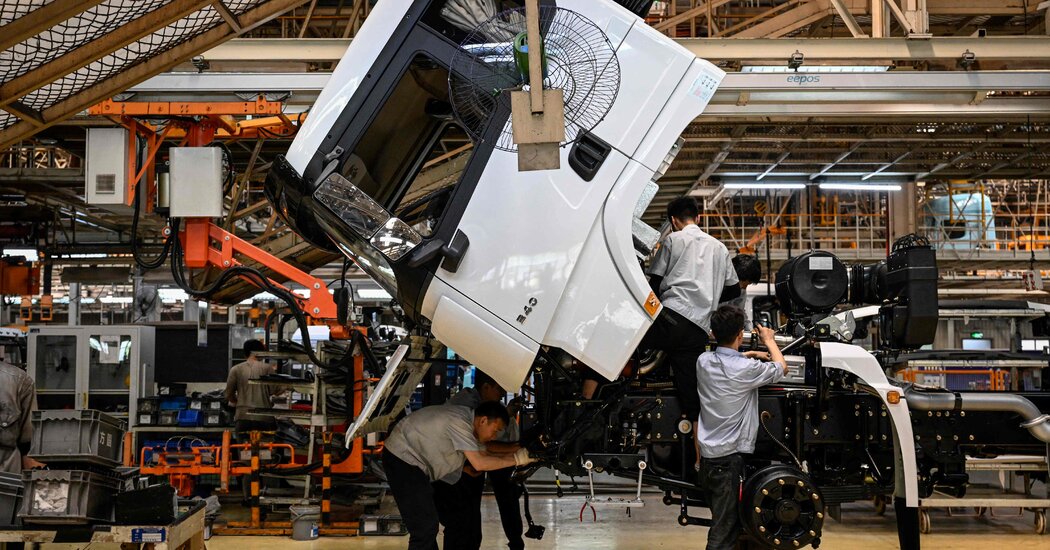
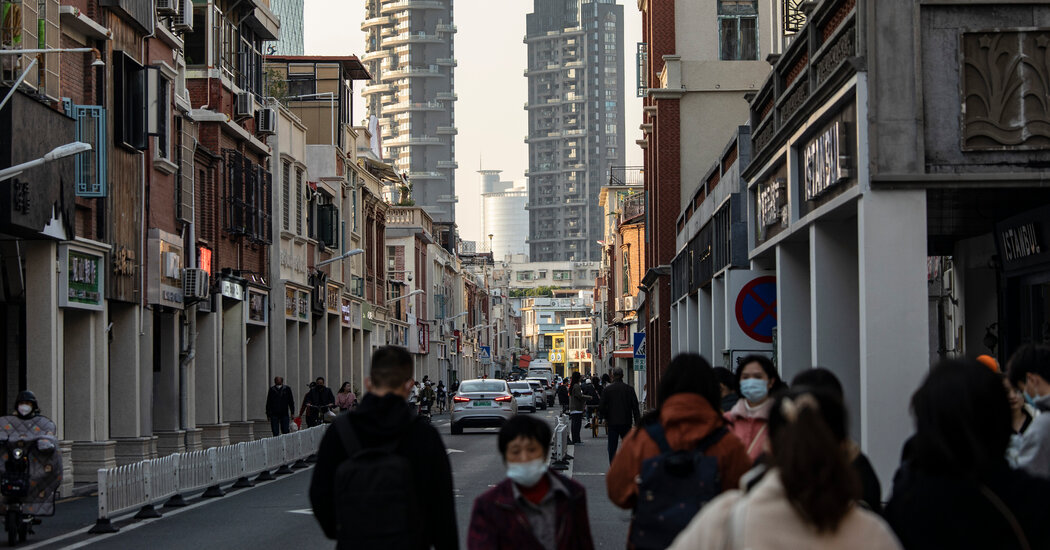
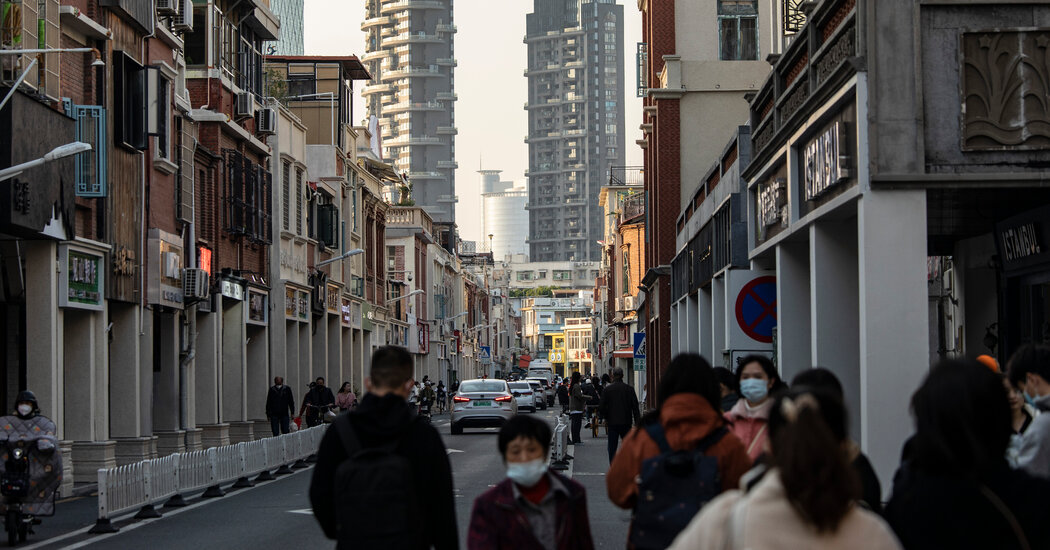
The wager was supposed to be a no-brainer. China was reopening after nearly three years of pandemic lockdowns, and investors expected that its economy, the world’s second-largest, would come roaring back to life. Chinese stocks soared. But that bet has soured. This week, Chinese stocks that are traded in Hong Kong sank briefly into a bear market, after losing more than 20 percent of their value from a high in January. Stocks on the mainland are also in the red for the year. The declines reflect a fizzling optimism in…
Tag: Economic Conditions and Trends
Nanchang, Once a Symbol of China’s Growth, Signals a Housing Crisis
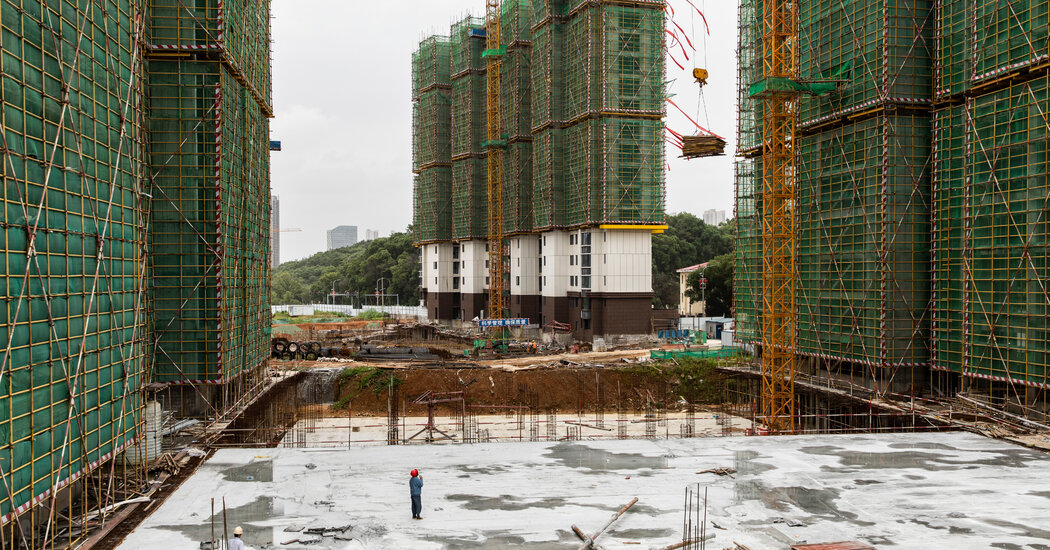
The rows of towering buildings crowding the banks of the Gan River are a testament to the real estate boom that transformed Nanchang in eastern China from a gritty manufacturing hub to a modern urban center. Now those skyscrapers are evidence of something very different: China’s real estate market in crisis, reeling after years of overbuilding. As China’s economy prospered the last two decades, Nanchang, the capital of Jiangxi Province, erected sweeping apartment complexes and gleaming office towers to meet the increasing demand for homes and workplaces. It pursued urban…
What’s De-risking and How Does It Compare to Decoupling
If diplomats were on TikTok, “de-risk” would be trending. The word has suddenly become popular among officials trying to loosen China’s grip on global supply chains but not cut ties entirely, with the joint communiqué from this weekend’s Group of 7 meeting making clear that the world’s largest democratic economies will now focus on “de-risking, not decoupling.” The former is meant to sound more moderate, more surgical. It reflects an evolution in the discussion over how to deal with a rising, assertive China. But the word also has a vexing history…
Alibaba, Baidu and Tencent Signal First Steps in Bumpy Recovery
Eight months ago, the future of China’s largest internet companies looked grim. Covid-era lockdowns crushed sales and Beijing’s harsh tech regulations had spooked even audacious China investors. Shares of Alibaba, Baidu and Tencent dropped to some of their lowest levels in several years. With China’s economy now reopen, the tech giants this week released earnings reports that showed initial signs of recovery. But the financial results, the first issued since the end of “zero Covid” restrictions, also reflected the uneven pace of China’s economic rebound and signaled that the companies’ makeovers, while underway, are likely…
China’s Youth Unemployment Crisis: 1 in 5 Are Out of Work
Shu Xiang, 21, started looking for a job in February and still has had no luck. A financial management major at a college in Chengdu, China, Ms. Shu said she has received five responses to about 100 applications. Graduation is in a few weeks. “I’m not so confident about finding a job,” she said. The only thing that makes her feel less anxious, she said, is knowing she’s not alone — most of her classmates were facing similar problems. Ms. Shu is one of nearly 12 million Chinese expected to…
China’s Economic Needs May Take a Back Seat to Security
To revive its sluggish economy, China set out this year to woo foreign investors and stabilize its ties with the West. But these goals are colliding with what China’s leader, Xi Jinping, considers the paramount priority: bolstering national security in a world he sees as full of threats. Mr. Xi has warned that China must fight back against a campaign by the United States to contain and suppress the country’s rise. In this worldview, foreign rivals are using spies to weaken China’s economy; Russia is not treated as a pariah…
Why China Doesn’t Have a Property Tax
Across China, many local governments are on the brink of insolvency. Some cities have reduced pay for civil servants. Cuts to municipal health insurance have triggered street protests. Central government bailouts are a possibility to rescue cities from their deep budget problems, but China hasn’t turned to a source of revenue that would be an obvious option in other countries: property taxes. In China, where the government owns the land, localities almost never tax homeowners to support services like schools. Cities rely instead on selling long-term leases to real estate…
The Elusive Fix for China’s Budget Crisis
Across China, many local governments are on the brink of insolvency. Some cities have reduced pay for civil servants. Cuts to municipal health insurance have triggered street protests. Central government bailouts are a possibility to rescue cities from their deep budget problems, but China hasn’t turned to a source of revenue that would be an obvious option in other countries: property taxes. In China, where the government owns the land, localities almost never tax homeowners to support services like schools. Cities rely instead on selling long-term leases to real estate…
Why China’s Shrinking Population Is a Problem for Everyone
Despite the rollback of China’s one-child policy, and even after more recent incentives urging families to have more children, China’s population is steadily shrinking — a momentous shift that will soon leave India as the world’s most populous nation and have broad rippling effects both domestically and globally. The change puts China on the same course of both aging and shrinking as many of its neighbors in Asia, but its path will have outsize effects not just on the regional economy, but on the world at large as well. Here’s…
India Is Passing China in Population. Can Its Economy Ever Do the Same?
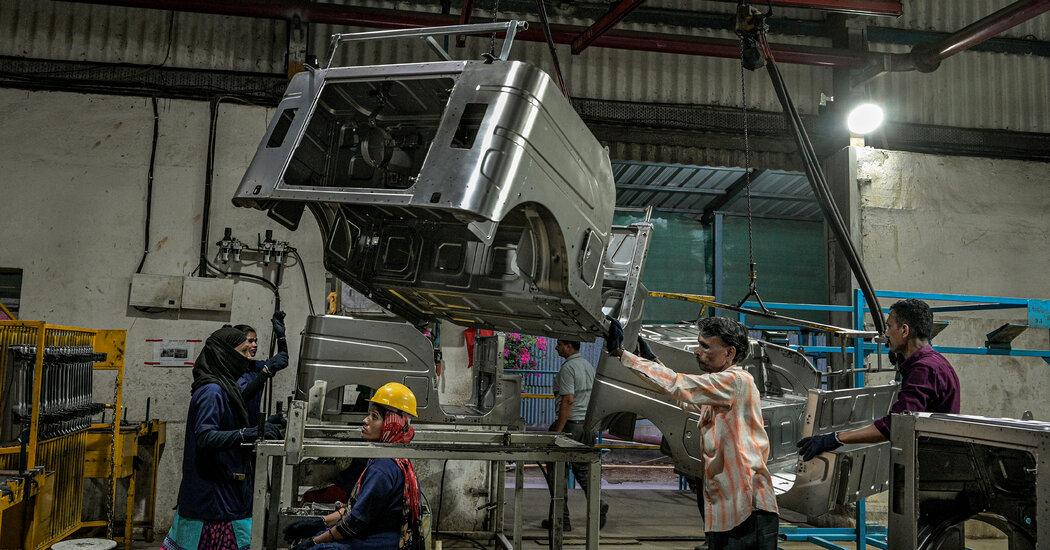
India’s leaders rarely miss a chance to cheer the nation’s many distinctions, from its status as the world’s largest democracy to its new rank as the world’s fifth-largest economy, after recently surpassing Britain, its former colonial overlord. Even its turn this year as host of the Group of 20 summit is being celebrated as announcing India’s arrival on the global stage. Now, another milestone is approaching, though with no fanfare from Indian officials. The country will soon pass China in population, knocking it from its perch for the first time…