1 Campaign, 2 Targets: China’s Cyber Operations Hit Asian Governments and Dissidents Abroad
On May 1, cybersecurity researchers at Trend Micro disclosed a previously undocumented China-aligned espionage campaign that has infiltrated government and defense networks across much of Asia. Tracked as Shadow-Earth-053, the operation has been active since at least December 2024, and it has targeted ministries and contractors in Pakistan, Thailand, Malaysia, India, Myanmar, Sri Lanka, and Taiwan, as well as one European NATO member, Poland, along with journalists and diaspora activists. What distinguishes this campaign from most other China-aligned cyber operations is its dual focus: one track pursued traditional intelligence collection…

The Achilles’ Heel of China’s Supply Chain Strategy: New Technology

China’s electric vehicle giant BYD recently released its first-quarter earnings report for 2026, which has triggered a strong market reaction: BYD saw its most sluggish quarterly performance in six years. Its profits plummeted 55 percent year-on-year to 4.1 billion yuan, while revenue fell 12 percent to 150 billion yuan, accompanied by a 30 percent drop in vehicle deliveries.  In the past years, China’s New Energy Vehicle (NEV) sector has seen a surge of new entrants, such as Xiaomi and Geely. While an unrelenting and intensifying price war persists, BYD’s market…

Why the Upcoming China-US Summit Is Likely to Be Misread

As Washington and Beijing prepare for their first leaders’meeting of the year – and the first visit by a U.S. president to China since 2017 – expectations are once again beginning to harden. Across much of the Western commentary, the summit is framed as a test of leverage. After months of renewed tariffs, technology restrictions, and economic signaling, engagement is widely interpreted as evidence that pressure has begun to work. The underlying assumption is familiar: escalation narrows options, and dialogue follows when costs become intolerable. This reading is politically intuitive…

Navigating the Many Issues Surrounding China’s Ports Abroad

Powerful factors have propelled Chinese companies into ports abroad where they serve as builders, financiers, investors, terminal operators, and more. Equally powerful factors have motivated Beijing to support them.  Part 1 in this four-part series inter alia dove into the national and corporate motivations behind China’s port’s push, sketched a portrait of China’s overseas ports presence, and surveyed the raging storm about the economic, political, and military downsides of China’s heavy footprint in overseas ports. The topic of Chinese ports remains front and center. China is escalating its detention of…

What Critics Get Wrong About China’s Digital Silk Road

The standard Western critique of China’s Digital Silk Road (DSR) runs as follows: Beijing exports surveillance technology and authoritarian governance norms to developing countries under the guise of digital development, creating technological dependencies that serve Chinese strategic interests at the expense of local populations and global digital freedom. It is a compelling narrative. It is also incomplete. As my research on DSR governance across Ethiopia, Indonesia, and the United Arab Emirates shows, the initiative operates through what scholars call digitalpolitik: the strategic deployment of digital infrastructure to pursue national interests,…

Taiwan’s President Makes Surprise Trip to Eswatini

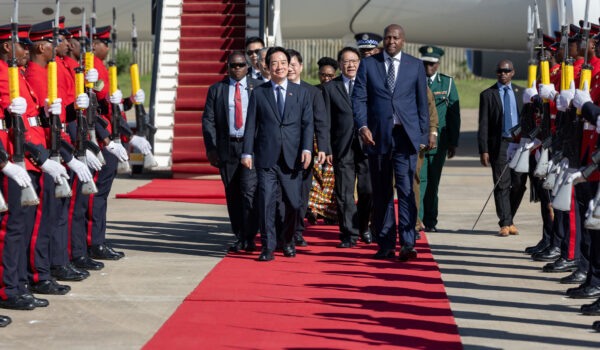
On May 5, President Lai Ching-te returned to Taiwan after a surprise visit to Eswatini, Taiwan’s only diplomatic ally in Africa. His trip was a surprise after a month that had seen China pressure Taiwan’s diplomatic space on the African continent multiple times.  Lai had planned to visit Eswatini at the end of April to attend celebrations marking King Mswati III’s 40th year on the throne and 58th birthday. However, that trip was abruptly canceled after Madagascar, Mauritius, and the Seychelles retracted overflight permission for Lai’s plane to pass through…

What Orban’s 16-Year China Experiment Reveals About Europe

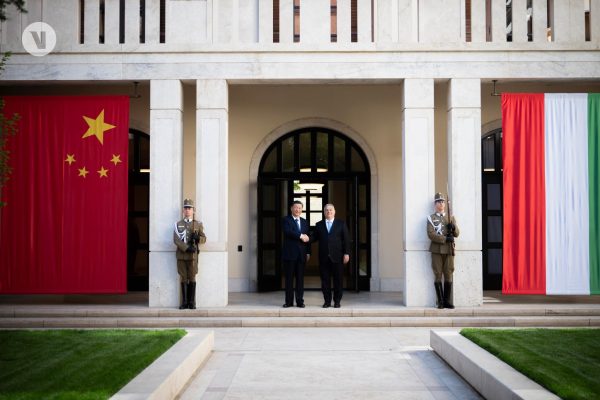
Viktor Orban’s defeat in Hungary’s April 2026 parliamentary election has closed a 16-year political cycle, but it has not closed the China question his governments helped make visible. For much of the past decade, Orban’s China policy was treated in Europe as an anomaly: the geopolitical choice of an illiberal leader drifting away from the Western mainstream. Yet the legacy of Hungary’s “Eastern Opening,” which has often been interpreted as a strategic pivot away from Europe, suggests a more uncomfortable conclusion. The Hungarian government framed this approach as a necessity…

Why China’s Internet Is Reopening the Case Against the ‘Qin System’ of the First Emperor

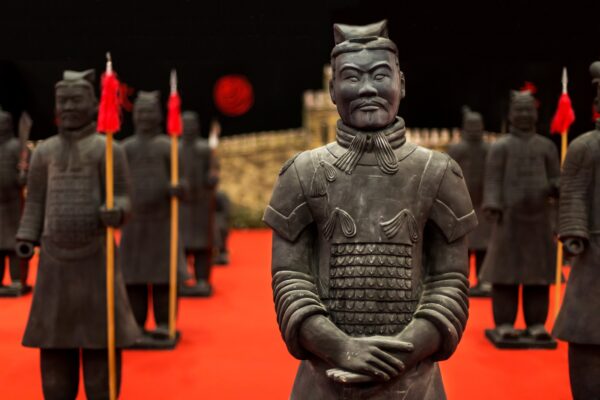
In some historically minded and politically skeptical corners of China’s internet, an old imperial governing order has become shorthand for very modern discontent. On Zhihu, a Chinese question-and-answer site known for long-form discussions, one representative question asked: “What exactly does historian Qin Hui mean by the ‘Qin system’?” The thread that followed was less interested in settling questions of ancient history than in turning Qin – China’s first unified empire – into a political vocabulary for the present. The discussion moved quickly from Legalism, bureaucratic registration, and imperial rule to…

Why China Treats ‘Lying Flat’ as a National Security Threat

China’s Ministry of State Security posted a video on its WeChat public account on April 28, defining the behavior of “lying flat” (tangping) as an attempt to poison Chinese youth with ideological infiltration by hostile foreign forces. How can a lifestyle attitude become a national security issue?  The mainstream analysis takes “lying flat” as an economic phenomenon rooted in the assumption that economic performance is the core of Chinese legitimacy. Of course, youth unemployment, unaffordable house prices, “996,” “flowing downward,” etc., are real problems that have caused the desperation of the…

The Real Role of a Trump-Xi Meeting

A potential meeting between Donald Trump and Xi Jinping is taking shape at a moment of mounting systemic stress in global politics. On March 25, the White House confirmed that Trump would visit Beijing on May 14-15 for his first trip to China in eight years, after postponing an earlier plan due to the Iran conflict. The delay reflects how rapidly shifting geopolitical conditions are reshaping the context of great power diplomacy. In this environment, high-level engagement between Beijing and Washington is unlikely to deliver decisive breakthroughs. Instead, its importance…