For decades, China maintained double-digit GDP growth, yet this period was accompanied by numerous structural problems. When growth slowed, these contradictions became even more severe, manifesting as immense pressure in the fiscal and debt sectors. While Western nations might view a 2 percent or 4 percent growth rate as a spectacular success, China faces a shock even with a slight dip in its much higher figures. To understand this issue surrounding Chinese growth, one must look beyond conventional statistics and examine the operational mechanisms of its industries (the meso level…
Category: The Diplomat
Penpa Tsering’s Re-election and the Institutional Future of the Tibetan Movement
On May 27, Penpa Tsering, who was re-elected in the election held by the Tibetan exile community, was sworn in for a new term as Sikyong of the Central Tibetan Administration (CTA). Formal Sino-Tibetan dialogue has remained stalled since January 2010. Although Penpa Tsering’s re-election may not open a new window for formal negotiations with Beijing, it reveals a deeper historical turning point facing the Tibetan movement: whether Tibetan exile politics can transform a political cause long dependent on the personal moral authority of the Dalai Lama into one sustained…
The Double China Shock: How Beijing Is Disrupting Both Developing and Advanced Economies
Beyond embodied intelligence and fusion energy, China’s 15th Five-Year-Plan contains a segment which may get overlooked: the so-called traditional industries. This code-name represents the low-tech industries which helped China industrialize in the past, including the emblematic Made-in-China textile industry. The fact that traditional industries remain high in the new priorities suggests that China intends to keep making low-tech goods alongside its push into advanced technology. The question this raises is whether there is still room for other countries. If China competes simultaneously with both advanced and developing economies, is there…
The Putin-Xi Summit and the Asymmetry of the China-Russia Partnership
The meeting between Chinese President Xi Jinping and Russian President Vladimir Putin in Beijing on May 20 offered an important insight into the contemporary character of Sino-Russian relations. While Putin hailed the relationship as a “paradigm of comprehensive strategic coordination,” the summit highlighted the persistent tensions between the ideological rhetoric surrounding the partnership, on the one hand, and the practical limits of cooperation as the relationship becomes increasingly dominated by Beijing on the other. One of the reasons that some commentators tend to ignore the limits of Sino-Russian partnership is…
What’s Driving Anti-Qing Sentiment in Contemporary China?
On May 22, a trailer for the film “The Belief” (also known as “Peng Hu” – its Chinese title means “Battle of Penghu”) was released on Chinese social media, announcing its release date of July 25. This date corresponds to the outbreak of the First Sino-Japanese War in 1894, after which China was forced to cede Taiwan to Japan. The film primarily depicts the 1683 battle in Penghu between the Qing Dynasty navy and the Kingdom of Tungning (also known as the “Ming Zheng regime”), which was a regime ruled…
China Wants to Speak for Taiwan. The World Should Hear Taiwan Directly.
Within the span of four weeks, two planes told the story of Taiwan’s presence and absence in the world. One carried U.S. President Donald Trump to Beijing, where China’s leader Xi Jinping had every opportunity to press his case about Taiwan. The other was nearly prevented from reaching its destination: Taiwan’s president, Lai Ching-te, tried to fly to Eswatini, Taiwan’s only diplomatic ally in Africa, only to see three countries revoke overflight permission for his plane. Lai had to postpone his trip. China is pressuring Taiwan by controlling access to…
A Fully Closed-off China Requires a New US Policy Response
This is the concluding installment of a four-part series on “The First Airtight Empire.” Part I documented the two slogan substitutions through which Beijing rewrote its history and prewrote its future. Part II described the three lockdowns that conditioned the population to accept the airtight seal that followed. Part III mapped the four mechanical seals, the asymmetric one-way valve, and the 2,200-year social foundation through which the latest closure has been engineered. This installment places the configuration in its long historical frame, examines the three American policy assumptions the configuration…
Taiwan’s Democratic Blind Spot: Statelessness and Legal Exclusion
Taiwan is often discussed in the contemporary international community through its democratic resilience in the face of Beijing’s authoritarian pressure. In Europe, where many countries have transitioned from authoritarian rule to democracy, Taiwan’s experience has become a significant point of reference: a small society that built a system widely regarded as worth defending. This dominant narrative of Taiwan’s success is not incorrect. However, what is often obscured beneath it is a less visible but critical issue: the presence of stateless and undocumented populations numbering in the tens of thousands, who…
The Putin-Xi Meeting Made the Trump-Xi Summit Look Hollow
Less than a week after the closely watched summit between Presidents Xi Jinping and Donald Trump, Russian President Vladimir Putin was invited to China. For Beijing, which has always placed great weight on diplomatic protocol and is adept at using timing and ceremonial detail to send policy signals, the scheduling is hard to dismiss as coincidence. It looked more like a political message: after the Trump-Xi meeting, two like-minded partners moved quickly to compare notes, coordinate positions, and assess the direction of U.S. policy and the changing international landscape. The…
Chinese Experts Read the Trump-Xi Summit as a Power-Shift Moment
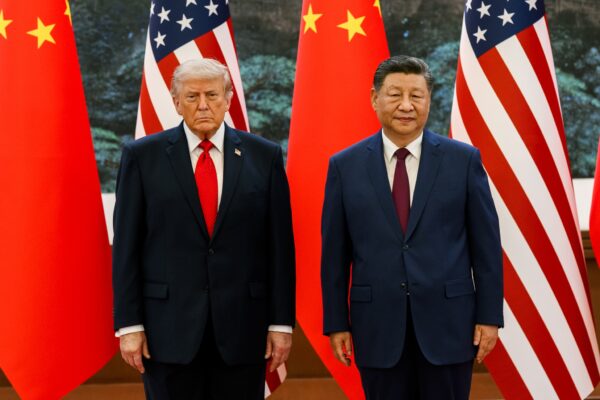
When China’s leader Xi Jinping welcomed U.S. President Donald Trump to Beijing on May 13, he framed the agreement to build “a constructive China-U.S. relationship of strategic stability” as the opening of a possible “new paradigm” in bilateral relations. Chinese commentators have embraced that framing with an enthusiasm that goes well beyond ritual endorsement of Xi Jinping Thought. A survey of 50 Chinese-language commentaries published around the summit shows the trip being described variously as a possible “turning point in the current phase,” an “important conceptual innovation and policy breakthrough,”…