On June 9, marking the 34th anniversary of diplomatic relations between Georgia and China, something notable happened, or rather, something notably quiet happened. There were no handshakes, no joint press conferences, no smiling leaders posed before flags. Instead, the Chinese embassy in Georgia published a set of letters exchanged between President Xi Jinping and Georgian Dream’s handpicked president, Mikheil Kavelashvili, announcing that the two countries had upgraded their relationship to a “comprehensive strategic partnership.” For Georgian Dream, this was presented as a diplomatic triumph. Prime Minister Irakli Kobakhidze followed with…
Category: The Diplomat
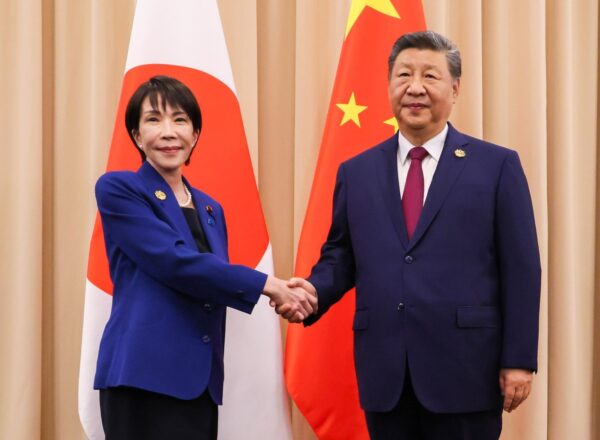
Three Characteristics of China’s Criticism of the Takaichi Administration
China’s criticism of Japan is intensifying rapidly. Within the context of China-Japan relations, the current campaign is unprecedented by any historical measure. It has three distinct characteristics. First, following Japanese Prime Minister Sanae Takaichi’s remarks about Taiwan on November 7, 2025, critics in China doubled down on existing issues, including the problem of treated water from the Fukushima Daiichi nuclear power plant and the theory of the San Francisco Peace Treaty’s invalidity, expanding them into a narrative of “new militarism.” More recently, the scope of the rhetoric has widened further,…
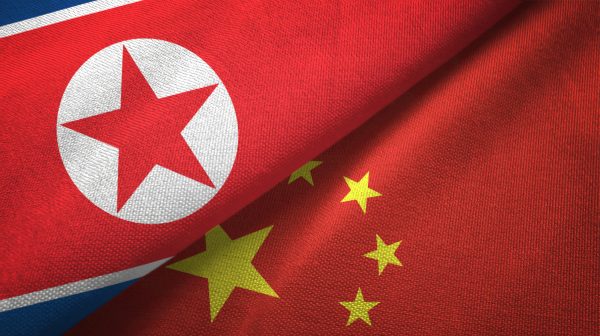
Why Was Xi Jinping in North Korea?
From June 8 to 9, Chinese President Xi Jinping and his wife made a state visit to Pyongyang. The high-level delegation accompanying them included Cai Qi, a member of the Standing Committee of the Political Bureau; Wang Yi, Minister of Foreign Affairs and Member of the Central Committee; and Dong Jun, Minister of National Defense. The seven-year gap since Xi’s previous visit to North Korea suggests a cooling in bilateral relations, perhaps connected with North Korea’s recent involvement in Russia’s war in Ukraine. Prior to the visit, several significant diplomatic…
As Integration in the Greater Bay Area Accelerates, Small Businesses in Macau Suffer
Cross-border consumption has become a part of daily life for Macau residents, facilitated by easier border crossings and, above all, by the “northbound travel for Macau vehicles” scheme, which allows cars from the territory to circulate in Guangdong province. Especially on weekends, thousands cross the border of the former Portuguese-administered territory in search of lower prices in the supermarkets and restaurants of neighboring Zhuhai. Macau is a special administrative region of China, located about 60 kilometers from Hong Kong. It is the only place in the Asian giant where gambling…
Bolivia’s Troubled Path With China
In May 2026, as Bolivia was paralyzed by protests seeking to topple the government of Rodrigo Paz, China’s ambassador to Bolivia, Wang Liang, was conspicuously silent about the crisis. While anti-government elements threw dynamite at police and maintained roadblocks that denied the entry of food, gasoline and even medical supplies into the capital, La Paz, Wang held an economic forum in the southern department of Tarija, ironically titled “Bolivia, into the world with China.” From May 20-30, 2026, the author traveled to Bolivia, engaging with business, academic and government personnel…
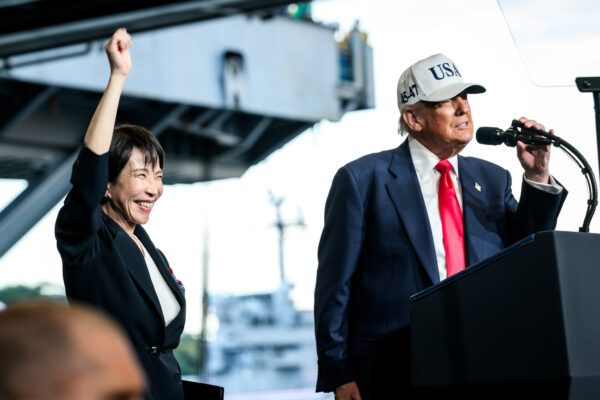
Trilateral Dynamics: China’s Strategy to Test US Restraint of Japan
On April 17, 1895, the Qing dynasty signed the Treaty of Shimonoseki (also known as the Treaty of Maguan) with Japan, ending the First Sino-Japanese War and dethroning the “Middle Kingdom.” More than a century later, on the same date, a Japanese Maritime Self-Defense Force (MSDF) vessel passed through the Taiwan Strait. On Weibo, a Chinese version of Twitter, a hashtag “China is no longer the China of 131 years ago” accused Japan of provocative action, attracting over 14 million views. The current Sino-Japanese tension began long before the April…
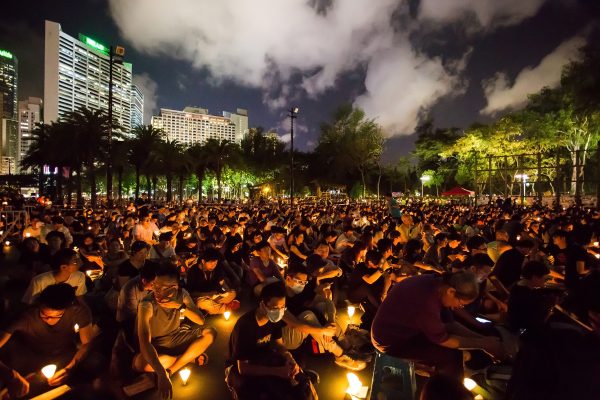
Why Beijing Still Fears the Tiananmen Mothers
“They won’t let us go to Wan’an Cemetery.” Days before the 35th anniversary of the Tiananmen Massacre, members of the Tiananmen Mothers were informed by the Beijing Municipal Security Bureau that they would be barred from visiting the graves of loved ones killed in 1989. For over three decades, Wan’an Cemetery served as the sole sanctioned space where grieving families could mourn together each June 4 – though always under heavy police surveillance. When I showed footage of the cemetery grounds to my Harvard freshman class 15 years ago, my…
Tiananmen Is Not Just China’s Story
Thirty-seven years ago, I was a middle school student who took to the streets of China, alongside hundreds of thousands of people. The majority of those who died in the resulting military action against protesters were not students. They were workers – ordinary citizens. I have never forgotten that. After the crackdown, China increasingly relied on economic growth to maintain political stability and state legitimacy. In the process, a society built on surveillance, censorship, and political control gradually took shape, and was steadily strengthened through economic growth and technological advancement.…
In Inner Mongolia, China’s Assimilation Campaign Moves Online
When Chinese authorities replaced Mongolian with Mandarin as the language of instruction for core school subjects in 2020, the move triggered the largest public protests Inner Mongolia had seen in decades. Six years on, the classroom fight is effectively over, and the campaign has followed Mongolian speakers into the one space they had left: the internet. A report released in January 2026 by PEN America and the Southern Mongolian Human Rights Information Center documented the systematic removal of Mongolian-language content from Chinese online platforms – social media groups shut down,…
The Politics Behind Taiwan’s Soft Power
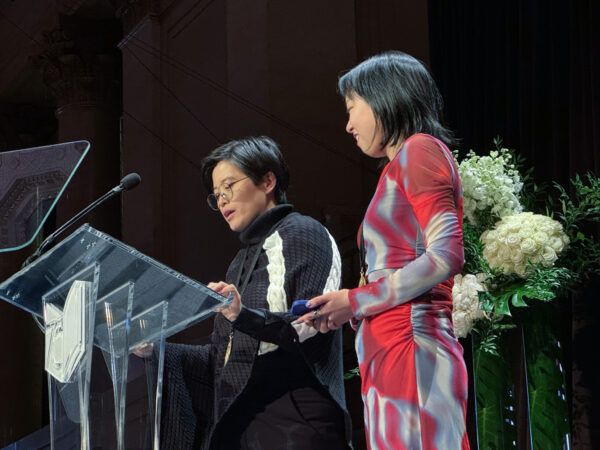
“Taiwan Travelogue” made history in late May as the first Taiwanese literary work to win the International Booker Prize. This also made the novel the first Mandarin-language novel to win the International Booker Prize in translation. This was not the first major win for “Taiwan Travelogue.” Previously, in 2024, author Yang Shang-zi and translator Lin King had won the U.S. National Book Award for Translated Literature. This makes “Taiwan Travelogue” the first novel to win both the U.S. National Book Award and the International Booker Prize. “Taiwan Travelogue” dovetails with…