China’s leader, Xi Jinping, has spent the last year standing up to President Trump. He met triple-digit tariff with triple-digit tariff and restricted rare earth exports, forcing the Trump administration to back down. Both sides suffered, and so did the global economy.
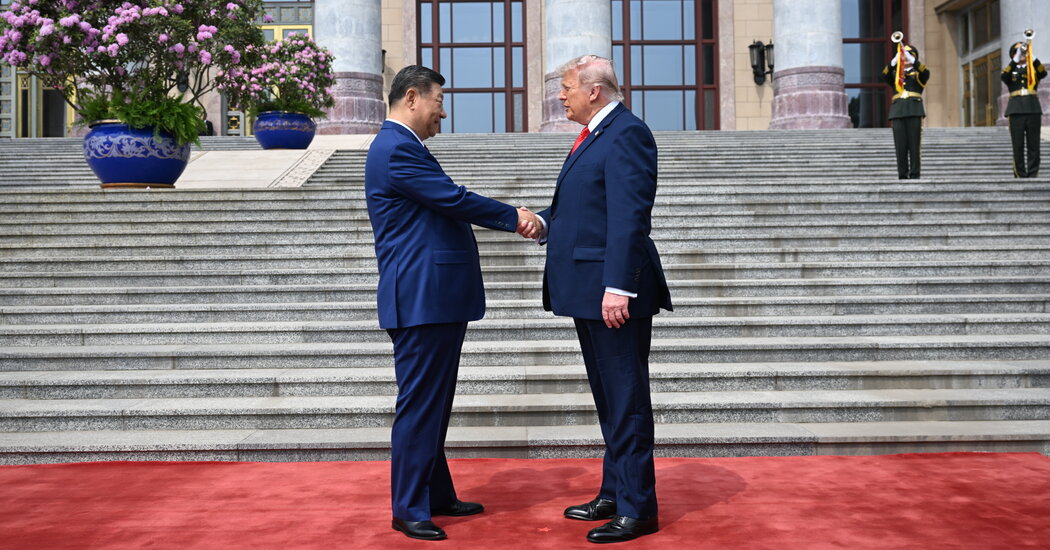
But having made his point, and established China as America’s peer, Mr. Xi is now pivoting from retaliation to conciliation. At a summit in Beijing this week that he billed as historic, Mr. Xi offered Washington a choice: Accept China as an equal power with red lines that must not be crossed or continue in a cycle of conflict that risks a global “Thucydides Trap” of superpower collision.
He has given this new blueprint a new, if somewhat stilted, name: “constructive strategic stability.”
He trotted out the term throughout the summit, a visit designed to show Mr. Trump what friendship could look like between the two countries, with pageantry in the cavernous rooms of the Great Hall of the People, a private tour of the Temple of Heaven and talks inside Zhongnanhai, the secretive walled compound of the Chinese leadership.
In some ways, the Trump administration was already playing by China’s rules on this visit. The American president was largely deferential to Mr. Xi. Mr. Trump lavished him with praise and refrained from pushing back when the Chinese leader issued a warning to the United States about treading carefully on the subject of Taiwan, the self-governed island claimed by Beijing.
Redefining the terms of engagement
Mr. Xi spoke in lofty, abstract terms about what exactly constructive strategic stability entailed. He spoke of “cooperation” being a “mainstay”; “competition within proper limits”; “manageable differences” and “expectable peace.”