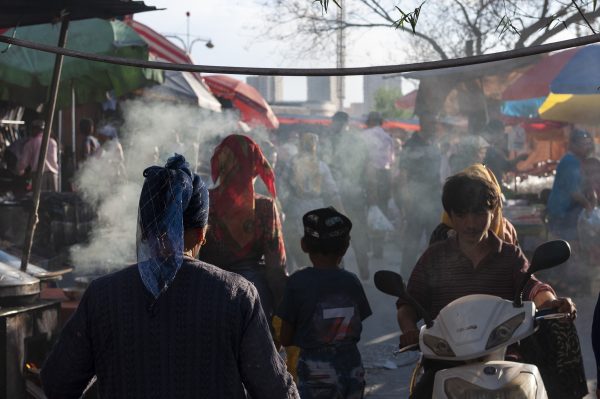
The risk of the Uyghur genocide being forgotten is a grave concern. The Chinese Communist Party (CCP) has not only employed deliberate and calculated tactics to conceal its genocide and crimes against humanity in East Turkestan but has also orchestrated a campaign to ensure others forget it is happening. Gregory H. Stanton, the president of Genocide Watch, formulated a comprehensive framework known as the 10 stages of genocide, outlining the different phases leading up to the occurrence of genocide. It starts with classification as a crucial stage in identifying an…
Category: The Diplomat
China is Untangling the Latin American Spaghetti Bowl
The Western Hemisphere was instrumental in developing ideas and norms around international and regional governance. In fact, since the independence period, leaders in the Americas have sought to develop collective governance mechanisms. However, due to differing preferences, ideological schisms, and leadership styles, the region has seen the proliferation of regional governance mechanisms rather than the consolidation of these mechanisms into a unified regional body. This has created a spaghetti bowl of interconnected countries tied together through different regional bodies — often with the same countries participating in multiple organizations that…
De-Risking’s Blind Spot: China’s Targeting of Global Civil Society
“De-risking” has become the buzzword in China policy circles since G-7 leaders endorsed the concept in May of last year. The task of reevaluating the complicated global supply chain with the People’s Republic of China (PRC) has catapulted to the top of elites’ minds from Washington to Brussels to Tokyo. However, this laser focus on vulnerabilities in the economic relationship with China ignores a critical blind spot: the vulnerability of democratic societies and their non-governmental sectors. Chinese Communist Party (CCP)-affiliated entities have pierced – and in some cases, subsidized –…
In Taiwan, Battling Fake News One Conversation at a Time — With a Focus on Seniors
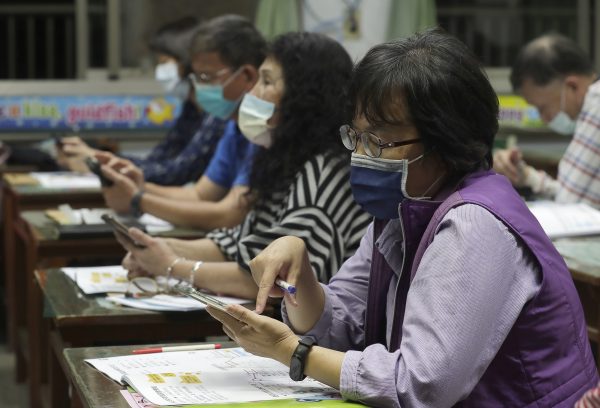
Their days often began at the crack of dawn. They’d head out to a church, a temple, a park and set up a stall. They’d seek out seniors in particular, those who are perhaps the most vulnerable citizens of the information-saturated society that has enveloped them. To get people to stop and listen, they’d offer free bars of soap — a metaphor for the scrubbing that they were undertaking. They’d talk to people, and ask them about their lives and their media consumption habits. They’d ask: How has fake news…
More Than MOFA: China’s Comprehensive Diplomacy
China’s “comprehensive diplomacy” refers to the totality of collective foreign interactions orchestrated under the leadership of the top Chinese Communist Party (CCP) leadership. This encompasses diplomatic activities conducted not only by the Ministry of Foreign Affairs but also by other government agencies and government-organized non-governmental organizations (GONGOs). These efforts aim to foster overall and comprehensive interactions with other nations, thereby promoting international relations. The overarching goal of comprehensive diplomacy is to mobilize and coordinate various party-state agencies to advance China’s national strategic and diplomatic objectives. China’s Foreign Policy Bureaucracy The…
Deceptive Practices and Countermeasures on China’s Online Retail Platforms
As reported by China’s Ministry of Commerce, in 2023 total online retail sales amounted to 15.4 trillion yuan ($2.1 trillion), an increase of 11 percent, marking China’s 11th consecutive year as the world’s largest online retail market. Meanwhile, the rapid expansion of e-commerce has facilitated the adoption of various deceptive strategies to target a broader customer base, giving rise to significant concerns. Deceptive Practices on China’s Online Retail Platforms The prevalent deceptive practices on China’s online retail platforms mainly fall into two categories: the sale of fake goods and deceptive…
3 Key Points for Understanding China’s Foreign Policy
When I talk with foreign friends in Beijing, some of them mention that they are increasingly confused about China’s foreign policy. Does China want to change the status quo in the Asia-Pacific? Is China using Europe as a bargaining chip with the United States? How did “wolf warrior” diplomacy come about? Their questions are interesting and universal. However, it is difficult to get introductions from experts in China because some are reluctant to talk to foreign media. As a relatively independent journalist, I think it is necessary to make a…
China Does Not Fear the Return of Donald Trump
The 2024 U.S. presidential election cycle has commenced, attracting global attention to the rematch between former President Donald Trump and current President Joe Biden. Trends in polling data from the end of last year point to a significant likelihood of Trump’s comeback. This possibility appears to have strategists worldwide on edge – the potential return of Trump seems poised to exacerbate the fragility of the liberal international order. One of the more fascinating questions raised in discussions of a potential second term for Trump is whether China dreads the prospect.…
Canadian Miners Needs Capital – But Only China Is Stepping Up
After more than a decade of aggressive expansion, China now stands tall as the world’s largest mining producer and financier by some margin. It is the leading miner of aluminum, coal, gold, magnesium, tin, zinc, manganese, tungsten, phosphate, nitrogen, potash, and other critical minerals. Canada, which used to be a leading force in the mining sector despite its small demographic size and investment pool, is now at the bottom end of the global top 10 producers. Still, China is looking to capitalize on the extent of Canada’s mining network nationally…
Xi Jinping’s Balancing Acts: Short-Term Gain, Long-Term Pain?
While predicting China’s trajectory has always been fraught with danger, there are a few trend lines that provide some guidance. These trend lines stem from what the Asia Society Policy Institute’s Neil Thomas has astutely framed as Xi Jinping’s three “balancing acts”: balancing economic growth with security, balancing diplomatic “struggle” against the United States with avoiding economic “decoupling” from the West, and balancing “competition between different sub-factions in elite politics.” Xi’s approach to each of these balancing acts suggest that while he may have achieved short-term gains in each, this…