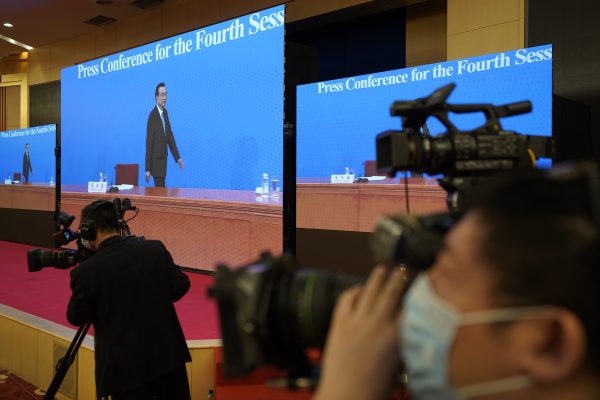
In early March, China made a surprising announcement to cancel the traditional press conference by the premier – currently Li Qiang – scheduled at the end of its annual legislative gatherings. According to the government spokesperson, the legislature will not schedule the premier press conference during the rest of this congressional term, which lasts through 2027. The announcement was another sign of the increasing authoritarian politics within China since its top leadership decided to amend the country’s constitution in 2018. First introduced in 1988, the premier’s press conference was one…
Category: The Diplomat
China’s Two Sessions Announces a 5 Percent Growth Target and 1 Trillion Yuan National Bond
China’s “Two Sessions” (the annual meetings of the National People’s Congress and the Chinese People’s Political Consultative Conference) closed on Monday in Beijing. The Two Sessions featured two important announcements regarding China’s economy: a 5 percent GDP growth goal for 2024, and a deficit rate of 3 percent with the issuing of 1 trillion yuan national bond. Notably, President Xi Jinping’s policy papers centered around ensuring “stability” rather than pursuing “progress.” The GDP growth goal, despite being on par with its past years’ sluggish growth, remains challenging. The Chinese economy…
What’s in Hong Kong’s New National Security Bill?
Hong Kong unveiled a proposed law that threatens life imprisonment for residents who “endanger national security” on Friday, deepening worries about erosion of the city’s freedoms four years after Beijing imposed a similar law that all but wiped out public dissent. It’s widely seen as the latest step in a crackdown on political opposition that began after the semi-autonomous Chinese city was rocked by violent pro-democracy protests in 2019. Since then, the authorities have crushed the city’s once-vibrant political culture. Many of the city’s leading pro-democracy activists have been arrested…
China, Taiwan, and Core of Vatican Diplomacy
After the 2024 presidential election in Taiwan, Nauru immediately severed ties with Taipei and resumed diplomatic relations with Beijing. Lionel Aingimea, Nauru’s minister of foreign affairs and trade, told CCTV reporters that breaking off ties with Taiwan will bring new opportunities for Nauru’s development. Following Nauru’s diplomatic switch, Taiwan is left with only 12 diplomatic allies. In other words, out of over 190 countries in the world, only 12 are willing to accept diplomatic envoys from the Republic of China under the terms of the Vienna Convention on Diplomatic Relations…
President Bio’s Visit Charts a More Holistic Path for China-Sierra Leone Relations
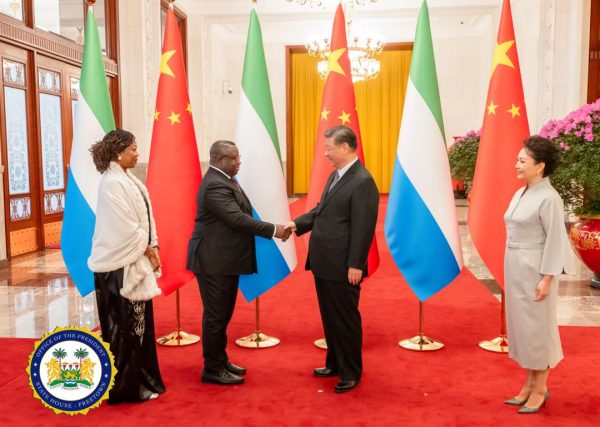
From February 27 to March 2, Sierra Leone’s President Julius Maada Bio paid a state visit to China at the invitation of Chinese President Xi Jinping. It was the first visit to China by an African president in 2024. Our past research shows that frequent, high-level visits to China by African leaders are often correlated with stronger trade and investment relationships with China. But how exactly does this happen? And will this correlation continue, especially with concerns being expressed internationally about the state of the Chinese economy? A closer look at…
The Political Calculus Behind Xi Jinping’s Emphasis on Climate Leadership
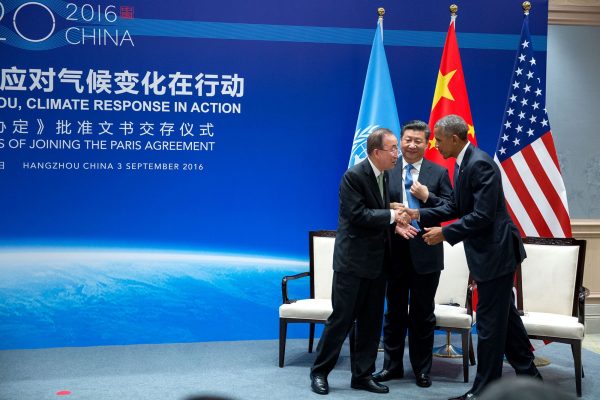
On February 1, 2024, after renewing diplomatic ties with Nauru, a former ally of Taiwan, Qian Bo, China’s special envoy to Pacific Island nations, expressed China’s willingness to cooperate with Nauru in combating climate change. This initiative is part of a wider trend in China’s engagement with developing countries on environmental issues. Over the past decade, China has undergone a significant shift in its stance on climate change. Contrary to his predecessors, who highlighted climate equity and underscored China’s status as a developing nation, President Xi Jinping’s approach redefines China…
After the 2024 Election, Taiwan’s Real Challenge Begins
Since Taiwan’s first democratic presidential election in 1996, national elections have centered on national identity and the island’s future relationship with China. At present, however, the majority of Taiwan’s population largely identifies as Taiwanese, contrasting sharply with less than 3 percent identifying as Chinese only. This shift in identity, among other factors such as China’s treatment of Hong Kong, elicited a more centrist approach from the presidential candidates in the 2024 elections, pivoting their campaign focus toward domestic policy. The foreign policy platforms of all candidates aligned on protecting Taiwan’s…
China Looks to Revive Slowing Economy and Salvage Property Market as Annual Congress Convenes
It’s clear that China’s efforts to build confidence in its slowing economy will top the agenda of its ceremonial legislature, the National People’s Congress (NPC), which convenes Tuesday in Beijing. What remains unclear is how the ruling Communist Party can navigate toward stronger, sustained growth as China’s workforce is aging, relations with Washington are fraught, and housing construction – a main driver of the economy – is in crisis. Hopes for a strong, consumer-led recovery after severe anti-virus controls ended in late 2022 have not been fulfilled. Local governments are…
China-Taiwan Boat Collision Near Kinmen Continues to Reverberate in Taiwanese Politics
An incident in mid-February that led to the deaths of two Chinese fishermen continues to be politically contested between the pan-Blue and pan-Green camps in Taiwan. Likewise, the Chinese government has sought to use the incident to escalate gray-zone activity around Kinmen, an outlying island of Taiwan at its closest 2 kilometers from Xiamen in China. A Chinese speedboat intruding into the territorial waters of Kinmen refused to submit to a search by the Taiwanese coast guard on February 14. The Chinese speedboat then attempted to flee, but in the…
China’s Shuttle Diplomacy With Ukraine and Russia: All Symbol, No Substance
“Starting from March 2, Special Representative of the Chinese Government for Eurasian Affairs Li Hui will visit Russia, the EU headquarters, Poland, Ukraine, Germany and France for the second round of shuttle diplomacy on seeking a political settlement to the Ukraine crisis,” China’s Foreign Ministry spokesperson announced at a press conference this week. As anticipation mounts for the outcomes of this tour, pressing questions arise: Will the results diverge from those of the first round of China’s shuttle diplomacy? If the West is draining its resources and attention on Ukraine…