More Than MOFA: China’s Comprehensive Diplomacy
China’s “comprehensive diplomacy” refers to the totality of collective foreign interactions orchestrated under the leadership of the top Chinese Communist Party (CCP) leadership. This encompasses diplomatic activities conducted not only by the Ministry of Foreign Affairs but also by other government agencies and government-organized non-governmental organizations (GONGOs). These efforts aim to foster overall and comprehensive interactions with other nations, thereby promoting international relations. The overarching goal of comprehensive diplomacy is to mobilize and coordinate various party-state agencies to advance China’s national strategic and diplomatic objectives. China’s Foreign Policy Bureaucracy The…

Deceptive Practices and Countermeasures on China’s Online Retail Platforms

As reported by China’s Ministry of Commerce, in 2023 total online retail sales amounted to 15.4 trillion yuan ($2.1 trillion), an increase of 11 percent, marking China’s 11th consecutive year as the world’s largest online retail market. Meanwhile, the rapid expansion of e-commerce has facilitated the adoption of various deceptive strategies to target a broader customer base, giving rise to significant concerns. Deceptive Practices on China’s Online Retail Platforms The prevalent deceptive practices on China’s online retail platforms mainly fall into two categories: the sale of fake goods and deceptive…

3 Key Points for Understanding China’s Foreign Policy

When I talk with foreign friends in Beijing, some of them mention that they are increasingly confused about China’s foreign policy. Does China want to change the status quo in the Asia-Pacific? Is China using Europe as a bargaining chip with the United States? How did “wolf warrior” diplomacy come about? Their questions are interesting and universal. However, it is difficult to get introductions from experts in China because some are reluctant to talk to foreign media. As a relatively independent journalist, I think it is necessary to make a…

China Does Not Fear the Return of Donald Trump

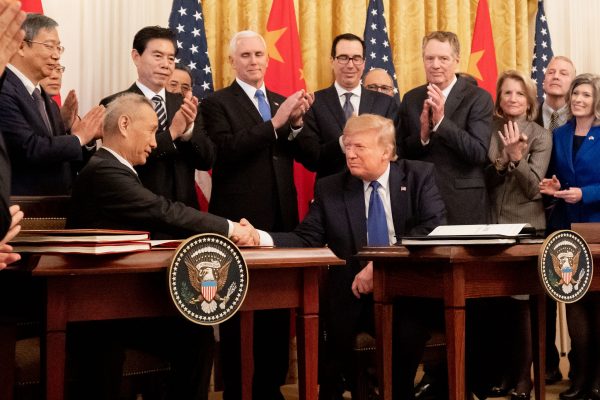
The 2024 U.S. presidential election cycle has commenced, attracting global attention to the rematch between former President Donald Trump and current President Joe Biden. Trends in polling data from the end of last year point to a significant likelihood of Trump’s comeback. This possibility appears to have strategists worldwide on edge – the potential return of Trump seems poised to exacerbate the fragility of the liberal international order.  One of the more fascinating questions raised in discussions of a potential second term for Trump is whether China dreads the prospect.…

Canadian Miners Needs Capital – But Only China Is Stepping Up

After more than a decade of aggressive expansion, China now stands tall as the world’s largest mining producer and financier by some margin. It is the leading miner of aluminum, coal, gold, magnesium, tin, zinc, manganese, tungsten, phosphate, nitrogen, potash, and other critical minerals. Canada, which used to be a leading force in the mining sector despite its small demographic size and investment pool, is now at the bottom end of the global top 10 producers. Still, China is looking to capitalize on the extent of Canada’s mining network nationally…

Xi Jinping’s Balancing Acts: Short-Term Gain, Long-Term Pain? 

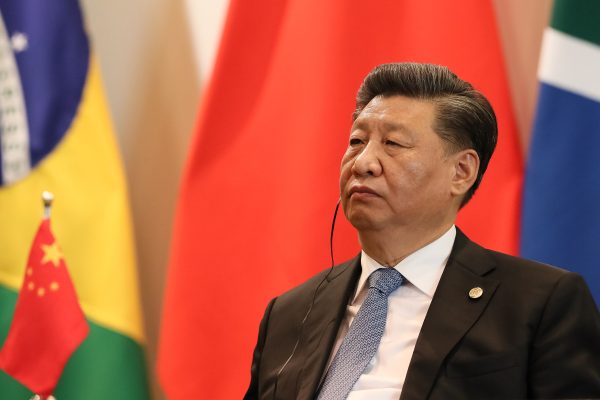
While predicting China’s trajectory has always been fraught with danger, there are a few trend lines that provide some guidance. These trend lines stem from what the Asia Society Policy Institute’s Neil Thomas has astutely framed as Xi Jinping’s three “balancing acts”: balancing economic growth with security, balancing diplomatic “struggle” against the United States with avoiding economic “decoupling” from the West, and balancing “competition between different sub-factions in elite politics.” Xi’s approach to each of these balancing acts suggest that while he may have achieved short-term gains in each, this…

New Security Law Firmly Aligns Hong Kong With Chinese Communist Party Ideology

Since Beijing introduced its draconian Hong Kong National Security Law in 2020, Hong Kong’s authorities have arrested or scared into exile key opposition figures. Stringent electoral reforms ensured Hong Kong’s parliament, the Legislative Council or LegCo, is now stacked with “patriots.” China’s leadership is reaping the fruits of its efforts: On March 19 the LegCo passed the city’s homegrown Safeguarding National Security Ordinance (SNSO) by 89 votes to zero in a record-setting 11 days. That was a far cry from 21 years ago, when Hong Kong’s first attempt to implement…

The Latest Security Legislation in Hong Kong Betrays Beijing’s Insecurity

On Tuesday, Hong Kong’s legislature unanimously passed the Basic Law Article 23, the city’s homegrown national security law. The bill was approved only 11 days after it was introduced, and less than four years after Beijing imposed the draconian National Security Law (NSL) on the city, whose broad provisions criminalize an enormous range of activity and allows for violators to be tried on the mainland. Video of the proceedings showed every member of the Legislative Council raising their hand to approve Article 23, as a television screen on the wall…

China Changes Tack on Water Politics

Sixteen major rivers originate in China that supply fresh water to nearly 3 billion people in 14 Asian countries – more than a third of the world’s population. As “Asia’s water tower,” China has often been depicted as the upstream bully when it comes to water politics – taking what it needs for itself with little consideration for its downstream neighbors.  But with the growing connection between sustainable development and regional stability, China has an opportunity to use transboundary water management as a springboard for regional peace and cooperation. Its success…

Self-Censorship, Hong Kong’s Next Export 

Since around mid-2020, the Hong Kong government has initiated a series of measures aimed at curtailing civic society and the freedom of expression, impacting both the cultural and political spheres. Secretary for Security Chris Tang has emphasized the necessity to counteract what he terms “soft resistance” and has spoken of artistic creations as a “common modus operandi of those seeking to endanger national security.” This month the adoption of national security legislation to fulfill Article 23 of the Hong Kong Basic Law further consolidated this process.  The expanded scope of…