Fake Mental Hospitals Highlight China’s Elder Care Challenge

A recent expose revealed a cottage industry of private psychiatric hospitals admitting patients on false pretenses to defraud the government out of vast quantities of medical funds. While there’s nothing new about medical fraud in China, this incident also shines a spotlight on how the country is struggling to deal with its aging population. The scandal, uncovered by the Beijing News, is shocking not only in its details but in its scale. The newspaper reported that dozens of psychiatric hospitals in the neighboring cities of Xiangyang and Yichang offered inpatient…

Who Will Succeed Xi Jinping?

Attention in China is gradually shifting toward the post-Xi Jinping era. This is not because Xi is expected to step down anytime soon from his posts as general secretary and president. Rather, it reflects the fact that even as Xi is widely expected to enter a fourth term, discussion of the post-Xi Jinping era has begun. This discussion is being driven by expectations that potential successors may be appointed at the 21st Party Congress in 2027 to the Politburo Standing Committee of the CCP or to the Politburo. One of…

The Pandemic Roots of the Sino-Russian ‘No-Limits’ Friendship

On February 4, 2022 – four years ago, today – China and Russia proclaimed a “no-limits” friendship. It was set out in the Joint Statement of the Russian Federation and the People’s Republic of China, issued by Presidents Vladimir Putin and Xi Jinping on the sidelines of the Beijing Winter Olympics. Released just 20 days before Russia’s full-scale invasion of Ukraine, the declaration has since become one of the most frequently cited tropes in discussions of China-Russia relations.  While analysts often and correctly point to the practical constraints of the…

NATO’s Asia-Pacific Engagement Does Not Impress China 

China’s official rhetoric about NATO has hardened in recent years. China accuses NATO of stirring up “bloc confrontation” in Asia and has labeled the organization a “Cold War remnant.” Chinese spokespeople have further attacked NATO’s legitimacy, alleging that the alliance has “bypassed the U.N. Security Council and waged wars against sovereign states, creating huge casualties and leaving tens of millions displaced.” Despite the tough talk, China is not that concerned about NATO. As we document in a new article in International Affairs, Chinese scholars and think tank analysts believe NATO’s…

China’s New Viral App Asks: Are You Dead? 

A Chinese personal safety app called Are You Dead? – recently rebranded as Demumu – has gone viral in recent weeks, attracting widespread media attention. Behind its sudden popularity lie deeper social transformations, including demographic shifts and changing personal and family relationships. At the same time, demand is growing for trust-based, non-medical, easy-to-use care networks tailored to the rapid rise of one-person households. Demumu also shows how digital technologies are not only responding to everyday safety concerns but also reshaping social and cultural norms. As traditional kinship ties and community…

China’s Tech Regulation Paradox Amid Great Power Competition

Even as China deepened its review into Meta’s acquisition of Manus, another long-running technology standoff was brought to a close. After six years of sustained political and regulatory pressure, ByteDance finalized a deal over TikTok to establish a majority American-owned joint venture designed to secure U.S. data and avert a U.S. ban on the platform. Taken together, these two high-profile episodes signal a shrinking strategic space for Chinese technology companies pursuing global expansion and expose a growing paradox at the core of Beijing’s technology regulation. How China’s tightening regulatory framework…

China’s AI Push in the Persian Gulf Region

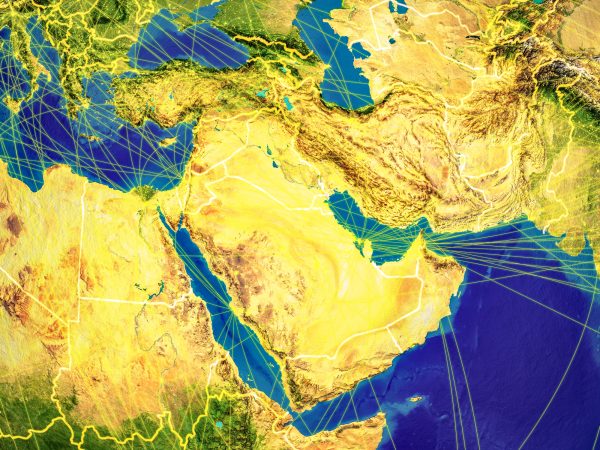
In recent years, a quiet yet profound competition has been unfolding among the countries of the Persian Gulf – this time over data, not oil. China has been quietly yet systematically sowing the seeds of its technological influence in the Gulf.  The key countries that Beijing has targeted for technological influence are Saudi Arabia, the United Arab Emirates and Qatar. These countries, aiming for economic diversification and developmental goals, have turned to new technologies, including AI, from China.  How have Chinese AI companies in the Persian Gulf changed the nature…

The Rise and Fall of China-Czechia Relations 

In August, Beijing announced it was cutting contact with Czech President Petr Pavel after his private meeting with the Dalai Lama in India. In reality, there was little contact to sever. The era of his predecessor – former President Miloš Zeman, who once called Xi Jinping his “young friend” and told Chinese television that Czechs should “learn from China how to stabilize society” – is long gone.  Over the past four years, China-Czechia relations have reached a historic low under the government of Prime Minister Petr Fiala. Yet this collapse cannot…

China’s Soft Power Gambit in Peru

While there has been plenty of analysis devoted to China’s development of the Chancay port in Peru, an angle that has been too often overlooked is China’s tactical use of cultural engagement to facilitate this achievement. Leading up to and in parallel with Chancay’s opening, Beijing conducted multiple targeted campaigns to spotlight historical and civilizational parallels between China and Peru.  Beijing’s influence in the South American country is not only about investment, but also crucially about shaping public perceptions and narratives over time, especially in an arena often overlooked by…

Who’s Coming to China’s 2025 Victory Day Military Parade?

In recent weeks, Western audiences encountered two starkly different portraits of China’s economic model. In his book “Breakneck,” tech analyst Dan Wang argues that China is an “engineering state” that builds fast and learns by doing, a stark contrast to what he terms America’s stagnant “lawyerly society.” Separately, on the Lex Fridman Podcast, economist Keyu Jin described a highly decentralized, market-driven system – a “mayor economy” where local competition fuels innovation.  Both stories resonate because they offer compelling explanations for China’s eye-popping infrastructure, its dominance in solar and electric vehicles…