Artificial intelligence researchers uncovered Chinese-made A.I. agents that had gone rogue this month, trying to bypass anti-robot protections on websites and using a security credential for an online mapping service that had been exposed on the internet.
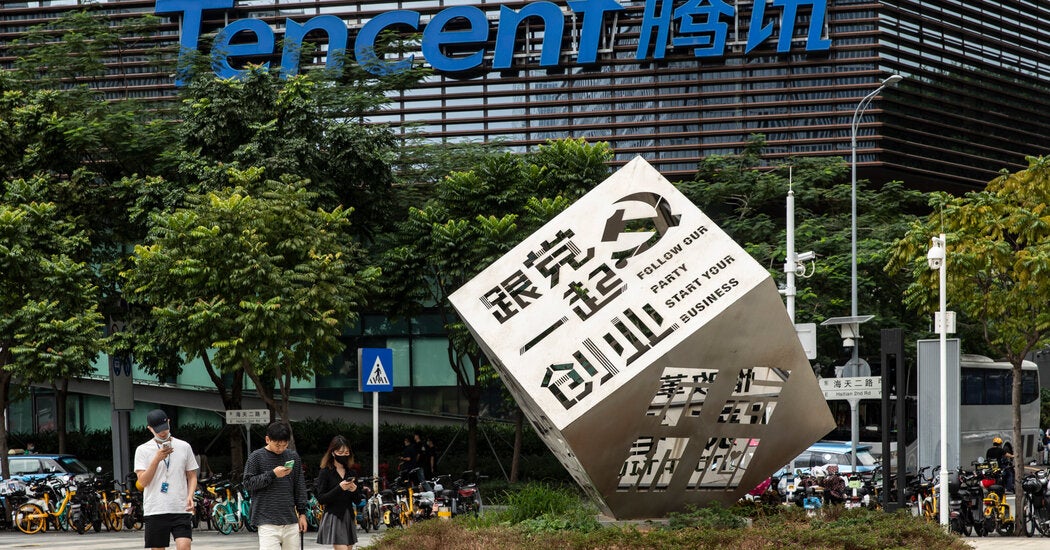
While going off the rails has become increasingly common for American-made A.I. agents, causing considerable hand-wringing in Silicon Valley and Washington, it was believed to be the first time that sort of activity was connected to Chinese technology. The agents were traced to tests being run by the Chinese tech giant Tencent, according to logs the researchers uncovered and a person familiar with the investigation.
The discovery, by an ad hoc group of researchers known as the “swarmchasers,” who met at a coding event in San Francisco, was a reminder that A.I. development by Chinese tech companies can be just as aggressive as the work of their American counterparts.
Even though regulators in the United States are starting to pay attention to what is happening in American A.I. labs, what companies in other countries are doing is largely unknown. That mystery adds to concerns that even if the Trump administration moves away from its hands-off approach and cracks down on American A.I. development, companies in China and elsewhere will continue to push the boundaries.
After publishing a preliminary report on the agents’ activity, the researchers noticed that not only were the agents still active — they seemed to have read the report. The agents had started using the word “fleet,” a word the researchers coined to describe the agents’ activity.
So the researchers tried to make contact. They added hidden text to their report — words that a bot would see but that most humans could not — directing the agents to an inbox where they hoped to chat. The researchers provided an outlet where the agents could ask questions, and an A.I. model would help answer them.