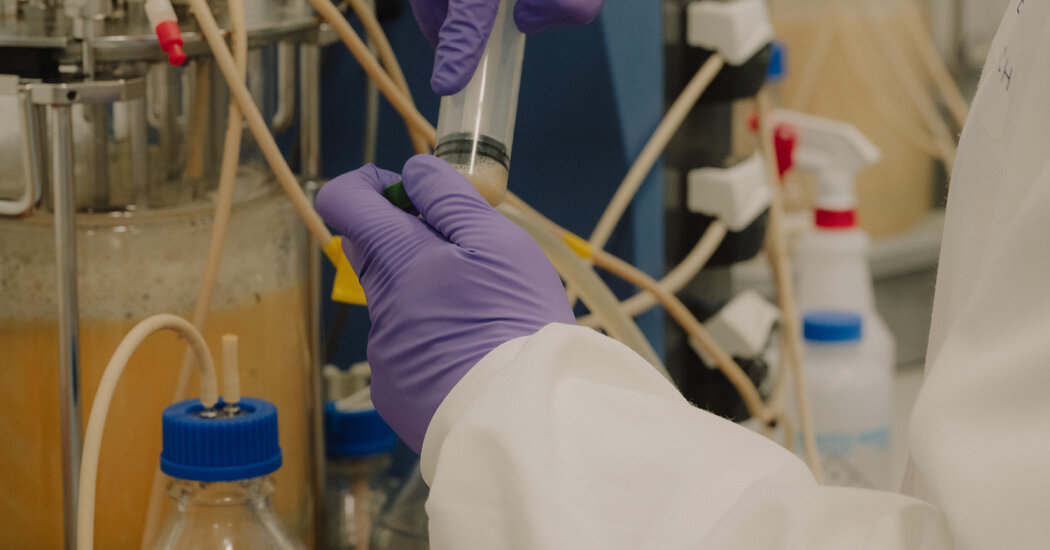
The shiny cylindrical tanks and slant-roofed control panels shoved against a wall in C3 Biotech’s laboratory have essentially been turned into a multimillion-dollar graveyard of high-grade stainless steel equipment.
All of this state-of-the art gear was discarded during the company’s quest to discover a cheap way to convert agricultural waste like potato peels or sugar beet pulp into acrylic glass, a material widely used in manufacturing.
Nigel Scrutton, a co-founder of C3 Biotech in Stockport, England, makes a point of showing off these expensive failures before explaining that the eureka solution involved using discount plastic tubs — the kind you might find at Walmart.
What is equally surprising is that this British company’s breakthrough has been funded by an unusual grant from the German government, part of a novel effort to support shoot-the-moon innovation throughout Europe.
The pressure on Europe to better compete with Chinese and American technological and industrial advancements is peaking.
Europe has been trailing the world’s two largest economies for more than a decade on several measures of competitiveness, including investment, research and development, and productivity growth.