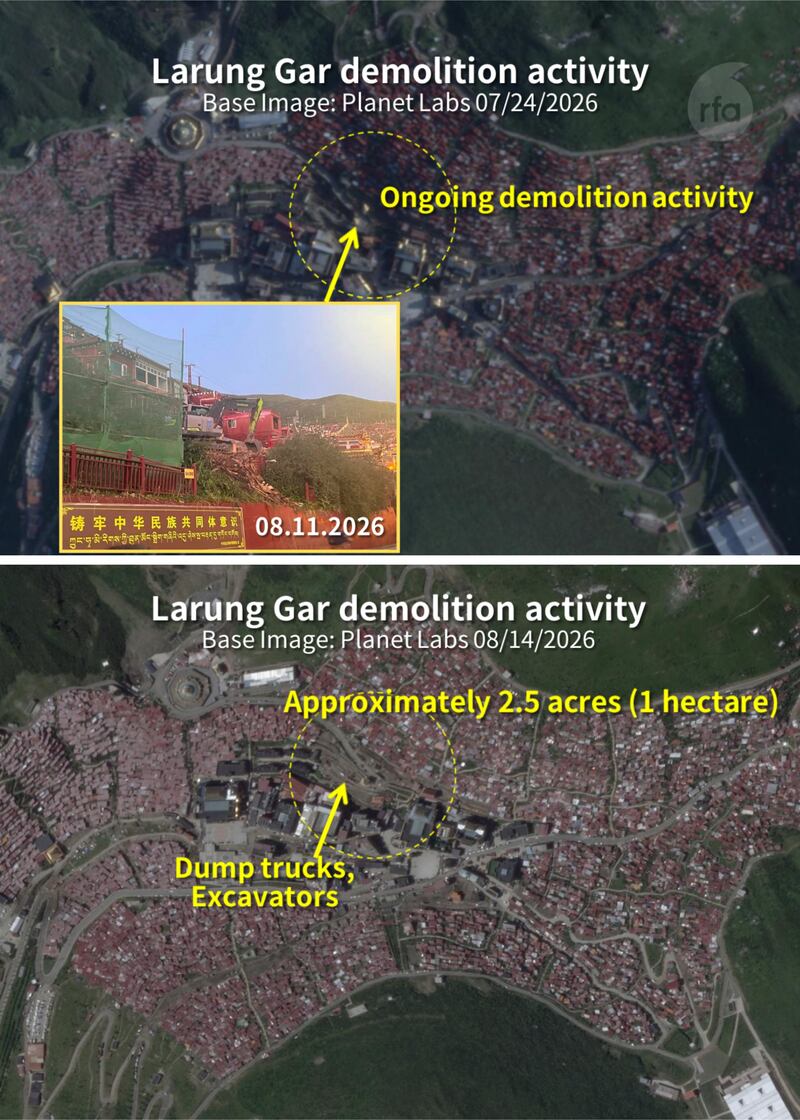
Chinese authorities in Tibet have over the past month continued and expanded demolition of the Larung Gar Buddhist Academy, satellite imagery analyzed by Radio Free Asia shows. It is the latest in a series of moves by Beijing to downsize the major center of Tibetan Buddhist learning which at its peak in the early 2000s was home to 40,000 Buddhist monastics.
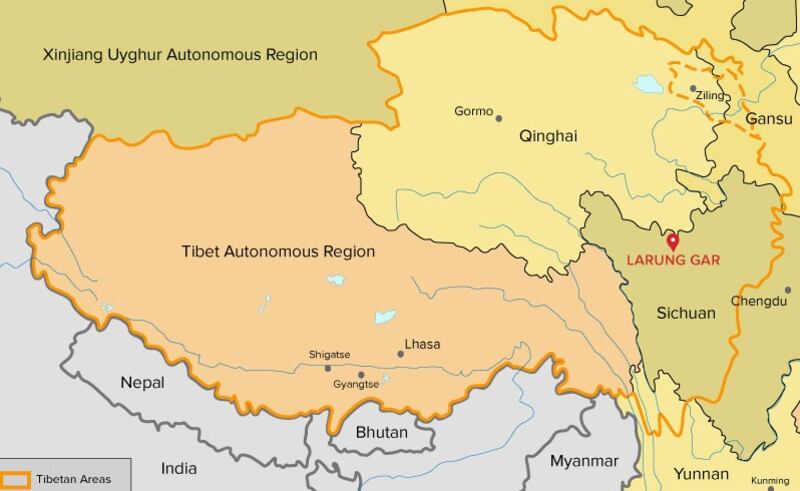
Last year, Chinese authorities expelled thousands of Tibetan monks and nuns from Larung Gar, which is in Serthar county (Seda in Chinese) within the Kardze (Ganzi) Tibetan Autonomous Prefecture of Sichuan province. Sources at the time said that thousands of homes had been marked for demolition.
The demolitions have been carried out in separate phases since 2001, according to the Central Tibetan Administration, or CTA, the official government-in-exile located in Dharamsala, India.
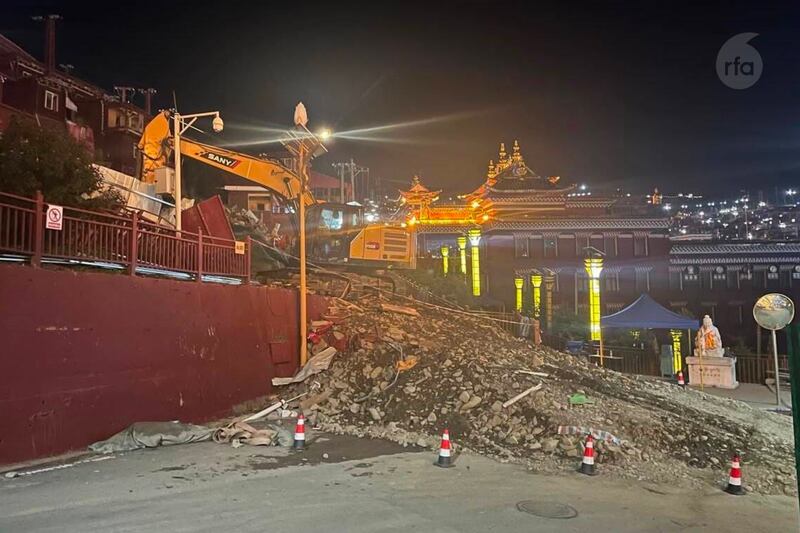
This time, at least 1,060 residences belonging to monks and nuns are targeted for demolition, which appears to have begun around July 13, Tenzin Pema, director of strategic communication at the Washington-based International Campaign for Tibet, or ICT, and formerly RFA Tibetan director, told RFA.
“RFA’s August 14 imagery appears to show clearance spreading around the academy’s central area, supporting our July 17 report that a new demolition campaign began around July 13,” she said. “The current campaign raises fears of another major assault on Tibetan Buddhist religious, cultural, and educational life.”
ICT is concerned that this latest round of demolitions at one of the largest Tibetan Buddhist centers in the world represents a further tightening of restrictions on religious practice, Pema said.
Cultural nexus
Established in 1980 to revive Buddhist scholarship, Larung Gar has grown into one of the world’s largest centers for Tibetan Buddhist learning. Over the decades, it became one of the most influential centers for the study of Tibetan language, culture, and religion, attracting thousands of Chinese Buddhist practitioners, in addition to Tibetans.
The current phase of demolition follows an earlier one about a decade ago, where Chinese authorities destroyed half the compound and sent away thousands of monks and nuns, over what authorities said were overcrowding and fire-safety concerns. Rights groups, however, have said that the demolitions are part of Beijing’s attempt to exert control over religious and educational institutions.
Satellite imagery captured Aug. 14 confirms that approximately 2.5 acres (1 hectare) has been cleared from a residential area of the academy since demolition started. Dump trucks and excavators remain visible at the site, and demolition is scheduled to be completed by Aug. 20, according to RFA sources familiar with the situation on the ground in Serthar.
According to ICT, Larung Gar has been reduced to about half its size through the demolition of dwellings over the years. In 2016 and 2017, about 5,000 monks and nuns were evicted from the academy and nearly 5,000 dwellings were demolished, Pema said.
Sources told RFA that last year, after some monks and nuns were expelled from Larung Gar, a number of residences were left vacant. This year, however, some of the residences are reportedly being demolished without public notice. There are also reportedly plans to continue demolishing additional residences next year.
Prior to the current round of demolitions, Chinese authorities intensified restrictions at Larung Gar, limiting the number of monks and nuns at the religious institute and expelling some of them, RFA Tibetan reported. The number expelled has not been confirmed, but demolition began in residences that had been vacated under these restrictions.
In apparent protest of the demolitions, a monk reportedly displayed a large portrait of the 10th Panchen Lama, from a window of one of the residences.
The Panchen Lama is the second most important figure in Tibetan Buddhism after the Dalai Lama. After the 1989 death of the 10th Panchen Lama, the Dalai Lama and the Chinese government appointed different people to be the 11th. The 10th Panchen Lama is therefore the last person to hold the position to have been recognized by both the Chinese government and Tibetans.
Some sources familiar with the situation in Larung Gar told RFA that it remains unclear whether the monk who hung the portrait has been detained by Chinese authorities. Other sources said that the monk has disappeared and his whereabouts are unknown. Tight restrictions on communication between the area and the outside world have prevented confirmation of details, including the monk’s name.
The Chinese government’s demolition of monks’ residences at Larung Gar is a “serious situation” that demands global attention, Tenzin Lekshay, spokesperson for the CTA, told RFA.
“Despite China’s widespread claims and propaganda that religious freedom exists in Tibet, the actual situation on the ground clearly demonstrates a lack of religious freedom,” Lekshay said. “The international community must directly protest against the Chinese government.”
Increased Surveillance
Concurrent with the demolitions, local level authorities have placed restrictions on the number of tourists allowed to visit Larung Gar and limited movement within the academy’s grounds.
In a notice issued July 11, Serthar County tourism authorities said road maintenance work leading to Larung Gar would begin on July 13, and that the operating hours of public buses traveling to the site would be temporarily changed.
The Serthar County Public Security Bureau also reminded tourists that they must only travel to Larung Gar via official arrangements and are prohibited from entering on their own. Authorities also warned visitors not to trust information provided by people with no connection to the local area and prohibited individuals from bypassing restricted areas or crossing mountains to enter the site independently, according to information obtained by RFA Tibetan.
Visitors are reportedly allowed to remain for no more than 90 minutes and must travel on designated shuttle buses. They are also required to rent a small electronic tracking device for 200 yuan ($29). According to sources, the device is used to monitor visitors’ movements, enforce time limits and restrict access to certain areas.
People with contacts inside Tibet told RFA that telephone conversations with individuals in and around Larung Gar are believed to be closely monitored by Chinese security authorities, making residents reluctant to speak openly.
Sources also said local people are increasingly afraid to answer questions directly about conditions at Larung Gar, adding that this level of surveillance is no longer unique to the area but has become common across many parts of Tibet.
Forced unity
ICT emphasized that these developments must be viewed against the backdrop of Larung Gar’s recent history and in the context of China’s new Ethnic Unity and Progress Law. The latest demolitions come after China implemented the law, which focuses on reshaping ethnic identity, changing the legal framework around language, expanding state oversight of religion, and extending the law’s reach beyond China’s border.
“It is especially concerning that the demolitions began just weeks after the new law came into effect on July 1,” Pema said. “The law codifies broader coercive assimilation policies aimed at erasing Tibetan identity and threatens the future of key centers of Buddhist learning and practice such as Larung Gar.”
Edited by Eugene Whong.