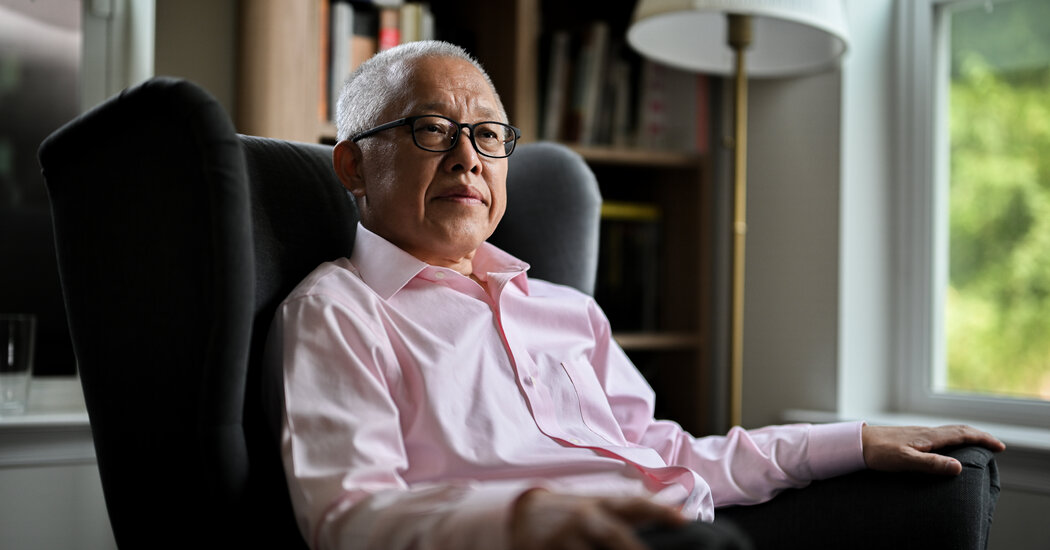
The Chinese police officers hurried the pastor out of the jail cell where he’d been held for 266 days. They hustled him into a van, then onto a train — where he sat surrounded by about two dozen officers, many with cameras trained on him.
The pastor, Jin Mingri, who founded one of China’s most prominent underground churches, wondered aloud if he was being transferred to a secret prison. An officer laughed and told him to think more positively.
Hours later, Mr. Jin, who also goes by Ezra, had been escorted onto a flight. As the plane started to move, the man sitting next to him turned to introduce himself. He was an American government official, he said.
Mr. Jin was free.
Mr. Jin’s sudden release from Chinese jail on July 3, brokered after a personal appeal by President Trump to the Chinese leader, Xi Jinping, was a rare concession from Beijing. It reflects how, in Mr. Xi’s authoritarian system, the fate of such high-profile detainees or prisoners — like Mr. Jin, or the imprisoned Hong Kong pro-democracy dissident Jimmy Lai — can depend less on the courts than on intervention at the highest levels.
The pastor was rounded up last October in China’s biggest church crackdown in nearly a decade, alongside many of his fellow church leaders. Mr. Trump raised Mr. Jin’s case to Mr. Xi during his visit to Beijing in May, but it had not been clear in the weeks that followed that Mr. Xi, who has tightened controls on society, and on religion in particular, would agree to his release.