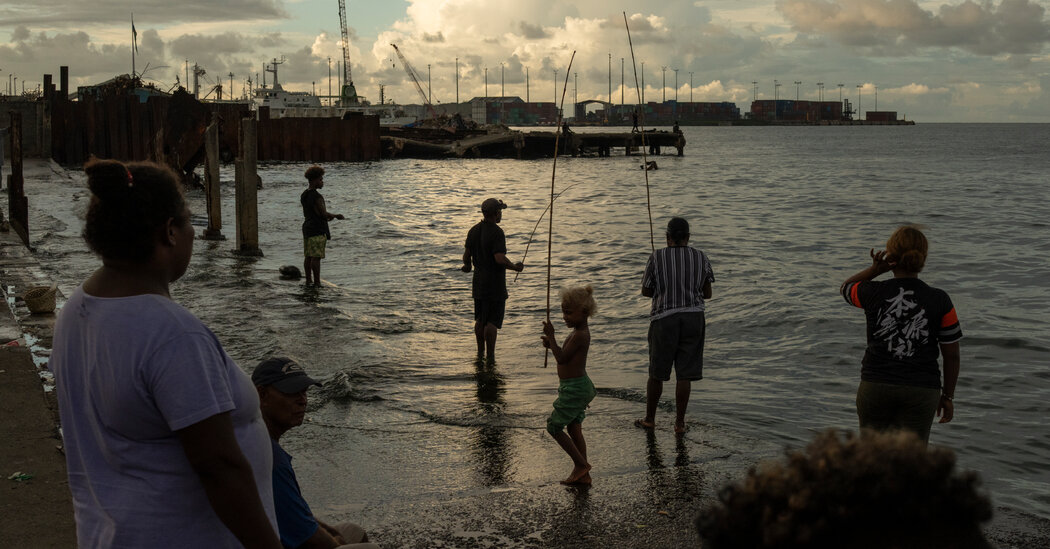
The first sign that something unusual was unfolding in the Solomon Islands was when the Chinese police showed up at Fighter One, a quiet village ringed with banana trees.
The Chinese officers gathered villagers on a grassy patch and proposed a system they said would help keep them safe. They suggested that the residents fill out cards providing the names, addresses and dates of birth for each household member. They recommended collecting fingerprints and palm prints — both highly unusual and legally dubious in a country lacking laws governing personal data collection.
Under China’s leader, Xi Jinping, Beijing has tried to export its ideas about security to the world in countries like the Solomon Islands, a Pacific nation 3,000 miles away. Where Washington offers treaties that commit American troops to defend U.S. allies against external threats, Beijing offers something different: equipment and tactics for governments to keep order at home.
That pitch has appealed to many authoritarian and weak democratic states in Africa, Southeast Asia and Central Asia that view domestic threats to regime security as an equal, if not bigger, priority than fielding an army.
But the Solomon Islands, which had signed a security pact with China in 2022, is also emerging as an early test of the limits of China’s efforts.