Stay informed with free updates
Simply sign up to the Automobiles myFT Digest — delivered directly to your inbox.
The writer is the author of ‘Chip War’
This month, Ford and China’s Xiaomi both denied reports that they were considering a joint venture to produce vehicles in the US. Their denials are unlikely to stop the rumours. Such a tie-up has logic: legacy automakers in the west need Chinese electric vehicle expertise while Chinese companies need access to the lucrative US car market.
The main obstacle facing Chinese auto manufacturers hoping to sell to US customers is not tariffs but rules that restrict the use of Chinese connectivity systems. Cars sold in the US can use Chinese plastic and glass, but they cannot use Chinese communications chips or software for autonomous driving.
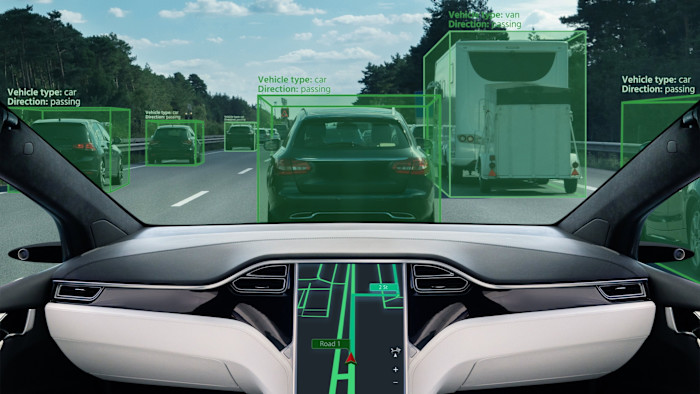
The primary concern for American regulators is security. A typical high-end car might have a dozen cameras plus radars and laser sensors collecting images of everything around the car. They often have voice sensors inside as well as internal cameras to monitor a distracted driver. Cyber security around all these sensors is, at best, opaque. Norwegian researcher Tor Indstøy conducted an investigation into a new Chinese-made Nio EV and reported that 90 per cent of the data his car collected was transmitted to servers in China.
The espionage risks are obvious, but the bigger problem is the potential for sabotage. Norway’s researchers drove a Chinese-made bus deep into a mine in order to study its operation without connectivity. They found over-the-air access to its battery management system. Denmark and Britain have probed similar vulnerabilities.
Note that the first country to act on these risks was China. Beijing imposes limits on cars’ data transfer, in addition to informal restrictions on where Tesla cars can drive. Yet when the US followed suit by banning connectivity and autonomy components from China, many in Europe thought Americans were paranoid.
Now, according to a report from Polish think-tank OSW, Europeans are also treating cars as security threats. Poland is reported to be preparing to ban Chinese cars from military bases. Britain’s Ministry of Defence has reportedly told officials not to have sensitive conversations inside cars with Chinese electronics, fearing eavesdropping.
Despite this, influential US and European voices have welcomed Chinese auto investment. Legacy carmakers hope joint ventures with Chinese firms will reinvigorate their technology. Even US President Donald Trump is warming to Chinese auto investment. “If they want to come in and build a plant and hire you and hire your friends and your neighbours, that’s great,” Trump told the Detroit Economic Club in January.
China’s leaders — seeking concessions before the upcoming summit with Trump in April — may well ask for the US connected car rules to be weakened. That would be an error. These restrictions give the US government and American firms unique leverage.
Compare that with Europe’s approach. EU leaders hoped the tariffs they imposed on Chinese EVs would provide space for European companies to catch up. But tariffs haven’t stopped German carmakers from outsourcing even more of their software and chip design to Chinese companies. The result is that even European-manufactured cars have built-in vulnerabilities.
Chinese autonomous driving firms are now using European-made auto bodies — thus avoiding European tariffs — and coupling them with Chinese sensors and software to deploy robotaxis across Europe. Europe provides the bodies, China provides the brains.
America’s connected car restrictions create the opposite incentive. Restrictions on Chinese tech have induced some Chinese firms to share knowhow and intellectual property when Chinese firms are locked out. China’s Quectel, for example, is reported to have transferred software to Eagle Wireless in the US, expanding its position as a supplier of cellular modules that connect cars to the internet.
The connectivity rules also strengthen the hand of US legacy automakers in any new joint ventures. Chinese partners know they must transfer technology to American hands, which will then control any software updates. America’s lead in auto tech is enhanced. Europe, by contrast, is barely in the race.
Connectivity restrictions, not tariffs, are the most potent source of US leverage in the global auto industry. They’ve strengthened America’s position, whereas Europe’s tariffs-first approach has intensified its reliance on China for critical systems. If Chinese companies want access to the US car market, they must not only build a plant and hire American workers, they must support American technology, too.