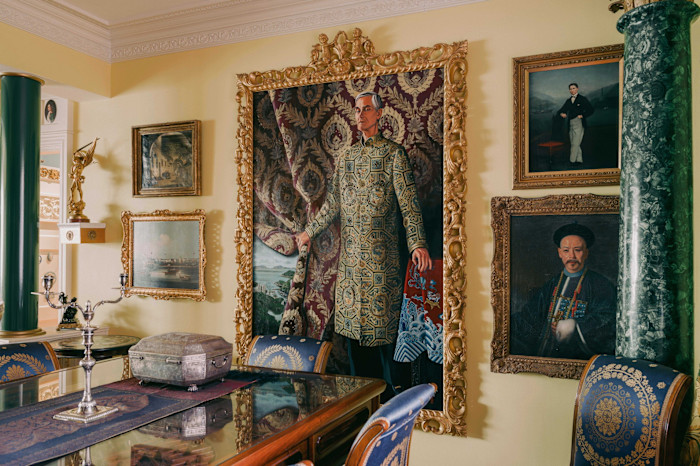
“It amuses me to think I may be the youngest thing in my flat,” says Chris Hall. The 74-year-old tax accountant has spent 40 years amassing nearly 3,000 textiles from across China, ranging from imperial robes to a weaving created to celebrate the 2008 Beijing Olympics — a significant collection which he has recently donated to the Hong Kong Palace Museum (HKPM).
Hall made the donation to secure the future of his archive and open it up to the people of Hong Kong — despite the joy he gets from living with antiques. At his home on the Peak, Hong Kong Island’s highest hill, the textiles were hidden away, protected from sunlight, insects and humidity in a dedicated bedroom.
Now they are available for all to see as part of an exhibition called A History of China in Silk. HKPM has also set up a centre, in collaboration with Hong Kong Polytechnic University, to research and study Chinese textiles. “This collection is transformative for our collection,” says Daisy Wang, the museum’s deputy director of curatorial, collection and programming. “Art history is a relatively young academic discipline in China — on the mainland, it’s mostly fashion and textile technology schools offering textile-related courses. We hope to broaden the field by raising awareness of Chinese textiles and connecting it to other disciplines.”
Hall first came to Hong Kong in 1955, aged three — one of many locations he lived in with his British parents, including Sudan, where he was born, Nigeria, Sierra Leone, Malawi and Malta, because of his father’s job as a treasury accountant. They returned permanently to Hong Kong in 1968, and Hall spent time there during holidays from boarding school and university in England, and his early professional years, before moving back for good in 1978. There, he established a career giving advice on American tax affairs and eventually started his own consultancy.
His urge to collect began long before that, with the plastic zoo animals bought using his pocket money as a child. He was interested in history from an early age — it’s what he studied at Cambridge — and in textiles, too. He recalls being fascinated by the outfits his mother wore when she dressed for dinner. But his “obsession” truly began at a Sotheby’s auction of textiles at the Mandarin Hotel after his return to Hong Kong. “I didn’t buy anything, but it was love at first sight,” he recalls.
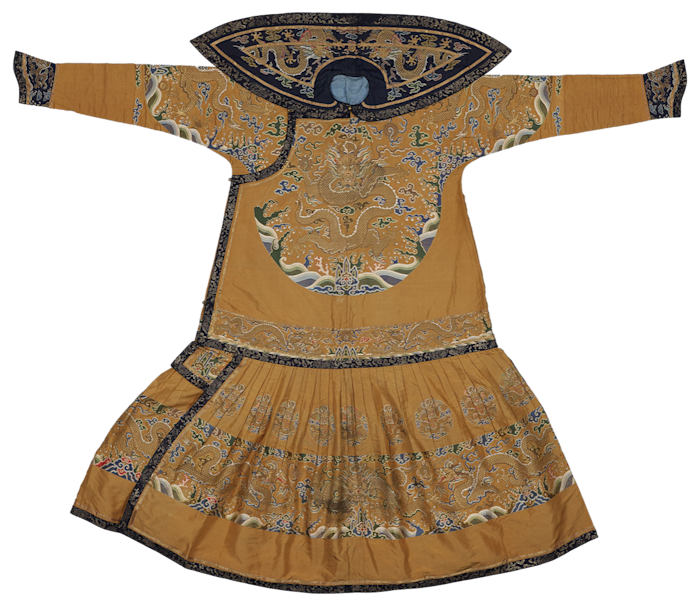
As his salary rose, he started collecting in earnest, starting with a late 19th century dragon robe (the formal dress of China’s imperial court). “It was unusual because it had been lengthened — a tailor had cut its inside flap and embroidered additional clouds on. I assumed it had been acquired by a tall foreign lady in the 20th century and used as a cocktail dress with high heels.”
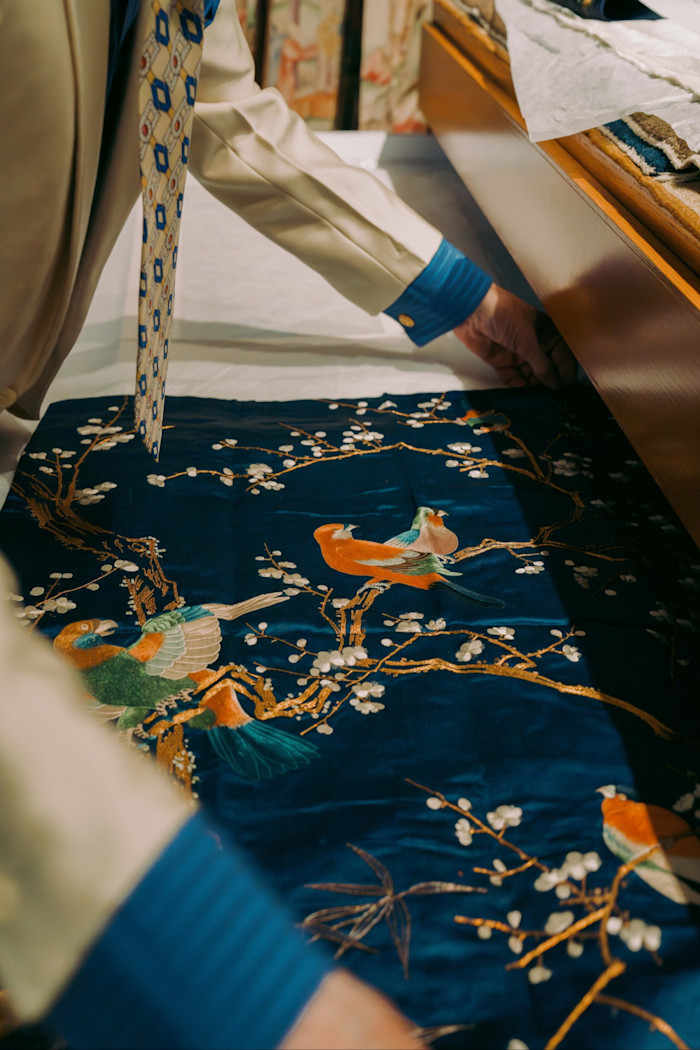
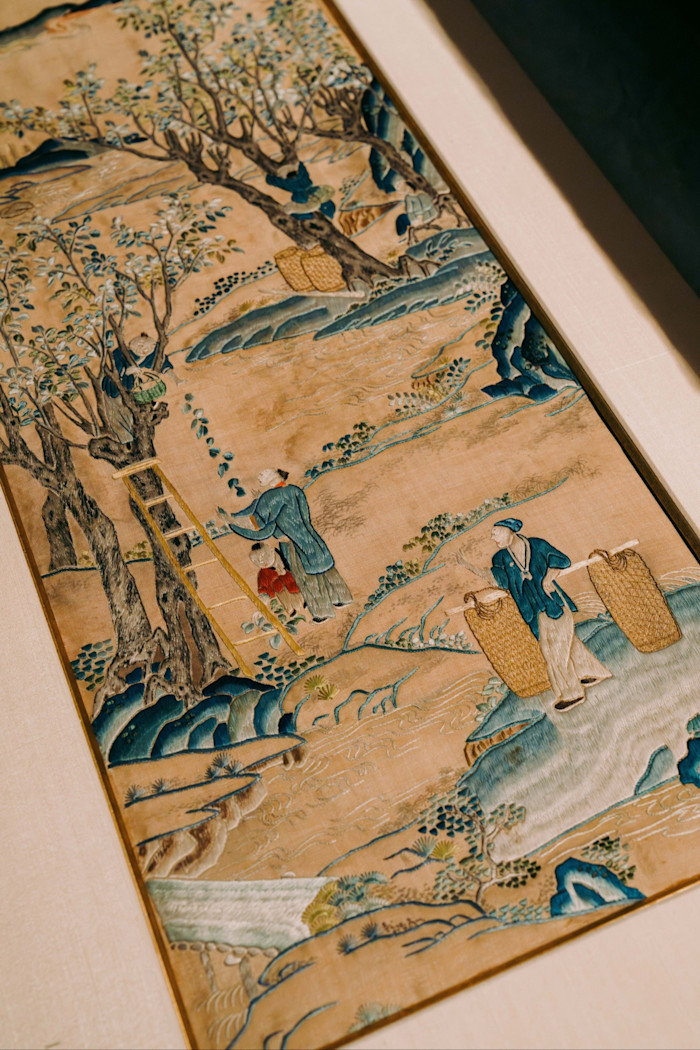
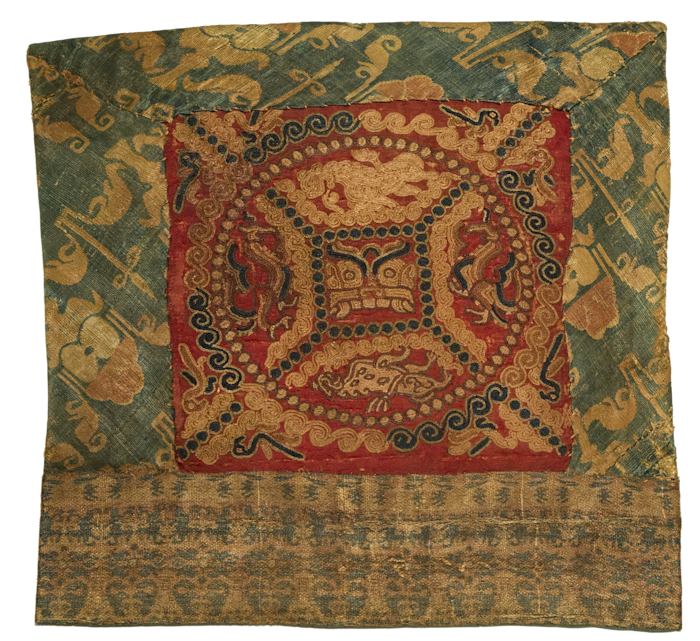
Since then, he has built a collection spanning centuries — from items dating back to the Tang dynasty (618-907), through the Liao, Jin and Ming periods, to the 21st century. The collection also traces the evolution of craft technology — from block printing to resist dyeing. Hall has expanded his knowledge through visits to places associated with craft, from an embroidery institute in Suzhou and a weaving institute in Nanjing, to villages where textiles are still made using traditional techniques.
When he began collecting, he was in the right place at the right time — silk textiles were not highly valued as pieces of art, so were relatively affordable, he says. “Chinese textiles from the 14th, 15th, 16th, 17th century were appearing on the market, and it was a wonderful opportunity to buy.” Among the items he acquired were Ming dynasty textiles that had accumulated in Tibetan monasteries over centuries, and robes from the Forbidden City that were sold after the fall of the Qing dynasty in 1912.
Today, prices have risen sharply, and many significant works remain overseas. Wang identifies the two types of silk textiles that have circulated globally: those made for the international market that were transported along the silk road, and those for the domestic market, such as dragon robes and embroidered rank badges (patterned insignia sewn onto clothing that indicate the wearer’s civil, military or imperial status), which have become highly collectible because of their beauty and rarity. “I think it would be very difficult, if not impossible, to put together a collection like mine today,” he says, “regardless of how much money the person has, because they’re just not available.”
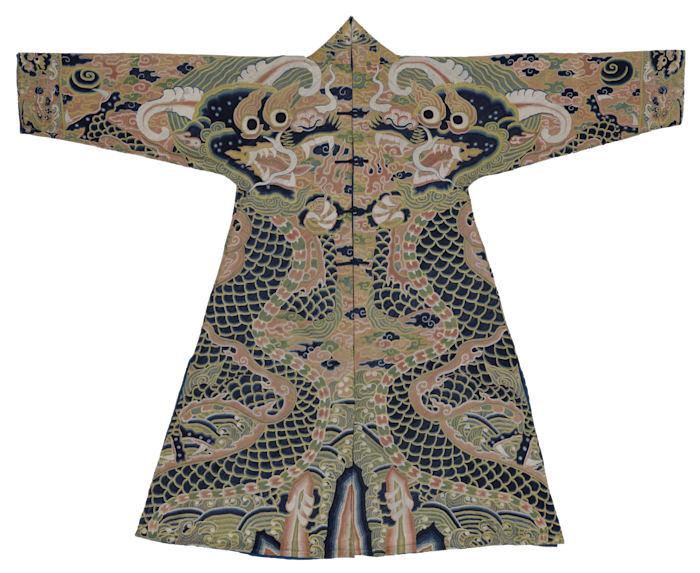
His favourite object is a 15th-century dragon robe, which he bought for $120,000. “It has more than a million stitches on it and it has retained its original colour because it survived above ground and not in a tomb,” he says. “It’s one of the most important pieces in my collection.”
But he believes anyone interested in clothing is missing out if they focus on only the most opulent pieces. “No one valued the emperor’s underwear enough to keep it, whereas I have a collection of underwear,” he says. “I also have handkerchiefs, ankle covers, mirror and cushion covers, dye cans, advertisements and tools — anything even remotely connected with textiles.”
Over the years, he has missed out on acquiring a range of interesting pieces. “But that’s not really a problem, because something else good always turns up later,” he says. A notable gap in his collection is the couture fashion made since the opening up of China, but he’s content to leave that for future generations to collect. “It’s not really fair for one person to have everything.”
To April 6, hkpm.org.hk
Find out about our latest stories first — follow FT Weekend on Instagram, Bluesky and X, and sign up to receive the FT Weekend newsletter every Saturday morning