Unlock the Editor’s Digest for free
Roula Khalaf, Editor of the FT, selects her favourite stories in this weekly newsletter.
UK Prime Minister Sir Keir Starmer will on Thursday sign a pact with China’s President Xi Jinping to share intelligence to tackle people-trafficking gangs, in a sign of a significant warming of relations.
After a spell of what Starmer called “Ice Age” diplomacy, Britain and China have agreed to work together to curtail the supply of the Chinese-made small boat engines used in Channel crossings.
Chinese state media have given generous coverage to Starmer’s visit, as Beijing seeks to exploit the rupture in the western alliance created by US President Donald Trump’s economic and military threats to his allies.
Starmer, the first British leader to visit China since Theresa May in 2018, told a travelling business and cultural delegation in Beijing that they were “making history”.

The prime minister hopes improved relations can yield business opportunities — a number of deals are expected to be announced during the visit — and help Britain tackle gangs bringing migrants from France in small boats.
Downing Street said that under a border-security pact, UK teams will work with Chinese authorities to prevent small boat engines and equipment used in Channel crossings getting into the hands of criminal gangs.
Number 10 said the plan included intelligence sharing to identify smugglers’ supply routes and working with Chinese manufacturers to prevent legitimate businesses being exploited.
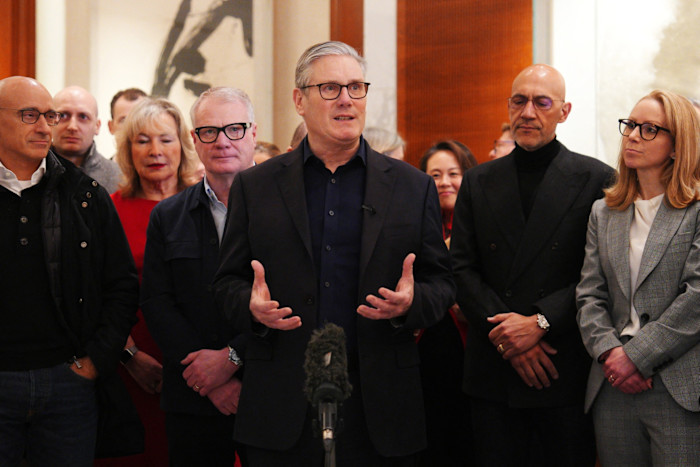
Starmer, speaking at the start of a four-day visit to China, told the UK travelling delegation of company bosses and leaders of big cultural institutions: “We are engaging and building a comprehensive, sustained, stable, strategic approach to China.”
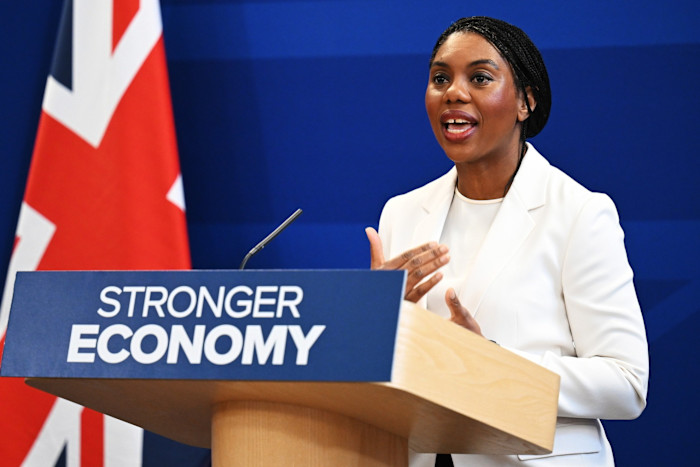
The bilateral relationship fell into disrepair under the last Conservative government, and Kemi Badenoch, Tory leader, on Wednesday said Starmer should not have approved a new Chinese embassy in London or travelled to Beijing.
“We should be talking more to those countries who are aligned with our interests, not the country that is doing everything it can to undermine our economy,” she said.
“I think that that is what the prime minister should be talking about and he needs to show strength, not approving a super-embassy which many people think is going to become a spy hub.”
Downing Street has taken extensive measures to avoid being hacked during the China visit, including the provision of disposable burner phones for members of the official party.
Tensions also remain on human rights, but Starmer has avoided criticising China in public, notably on Beijing’s crackdown on civil rights in Hong Kong and its oppression of the Uyghur Muslim minority in Xinjiang.
Starmer’s government is also considering whether to approve a £1.5bn wind-turbine factory in Scotland proposed by Shanghai-listed manufacturer Ming Yang, amid fears the technology could be used for spying.
“No decision has been made in relation to Ming Yang,” Starmer said. “There’s no decision on that yet, one way or another, but obviously uppermost in our minds is the national security of the United Kingdom.”
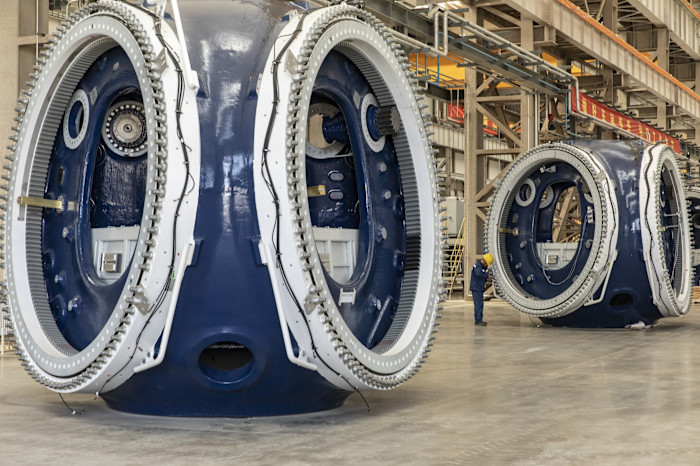
Britain is shutting China out of its nuclear power programme and Starmer was asked whether wind power was different. “That’s part of the consideration in any decision but there is no decision,” he said.
Chinese state television showed a beaming Starmer descending from his British Airways jet to be greeted by Chinese finance minister Lan Fo’an and an honour guard before being ushered into a Hongqi, or Red Flag, the limousine of choice for high Chinese officials and their guests.
China’s state media lauded Starmer’s visit as a “new chapter” in bilateral ties, while taking a swipe at Trump.
“China is willing to take this visit as an opportunity to enhance political mutual trust and deepen pragmatic co-operation with the UK . . . working together to make due efforts and contributions to world peace, security and stability,” state news agency Xinhua said on Thursday.
For Beijing, the visit is a welcome chance to revive ties with the UK, one of Washington’s staunchest allies, as it seeks to capitalise on differences in the west over Trump’s tariffs and his treatment of Ukraine and Nato.
China sees the ruptures in the alliance as offering it a chance to repair ties that have been damaged by allegations of spying, trade surpluses and tacit support for Russia in the Ukraine war and to isolate the US, which it views as its true competitor.
“Ahead of the trip, Starmer said that the UK would not be forced to ‘choose between’ China and the US, a stance widely seen as reflecting a more rational British diplomatic approach amid a shifting international landscape,” the Global Times Communist Party tabloid reported on Wednesday.
“In the face of an ‘unpredictable’ US, western countries are increasingly seeking greater ‘predictability’ in their external relations. Against this backdrop, Starmer’s remarks can be seen as . . . a sign that Britain has finally come to its senses.”