Donald Trump spent decades professing faith in the power of tariffs, but still caught investors off guard when he unveiled his “liberation day” levies in the Rose Garden of the White House in April 2025.
The shock of suddenly seeing manufacturing powerhouses, such as China, Vietnam and Cambodia, threatened with tariffs of 46 per cent or more rattled markets, sparking a multitrillion dollar sell-off. To borrow the US president’s term, people got “yippy”.
And yet, despite economists such as Harvard University’s Kenneth Rogoff warning that Trump had “dropped a nuclear bomb on the global trading system”, the promised Armageddon never quite materialised.
Instead, by the end of 2025 the Trump administration had salami-sliced its way to the highest tariffs on US imports since the second world war — an effective rate of more than 10 per cent globally and more than 35 per cent for China by early December 2025 — but without provoking outright trade war.
Trump has not always backtracked — despite the popular 2025 markets trade dubbed Taco, or Trump Always Chickens Out — by the FT’s Robert Armstrong. Instead, the US president’s campaign to tackle imbalances of global trade contained multiple feints and tactical retreats, including with China.
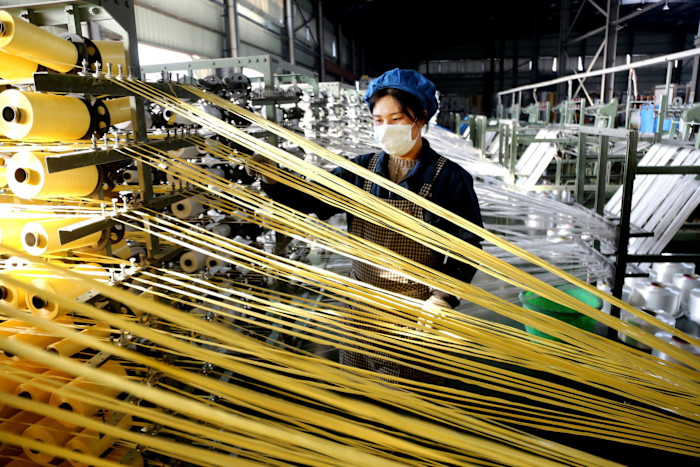
Despite tariffs driving a 40 per cent year-on-year fall in Chinese exports to the US in the third quarter of 2025, China’s trade surplus with the world still grew, exceeding $1tn last November.
At the same time, exports to the US from leading exporting countries in Asia also grew, according to US Census Bureau data, even though most countries in the Association of Southeast Asian Nations were subject to tariffs of around 20 per cent by mid-2025. The resilience arose from China rerouting goods via south-east Asian allies, US demand for electronic components to support the AI boom, and the continuing cost advantages of manufacturing in Asia.
With no significant tariff differential between Asian manufacturers, incentives for a radical shift in supply chains remain muted. As Ken Loo, secretary-general of a Cambodian trade body for goods manufacturers, recently told the FT: “If you hit everybody evenly, then you hit nobody.”
And while tariffs do increase costs, a 20 per cent tariff on $100 trainers that have a customs value of $25 ultimately increases the retail price of that item to $105 — painful, but not fatal.
Still, boardrooms can be sure that tariffs are not going away.
“Tariffs are now the new sanctions, and they’re here to stay,” says Maria Demertzis, head of the economy strategy centre at the Conference Board think-tank in Brussels, who predicts more of the same in 2026 and that business can cope with the new, higher-tariff world. “For business leaders, as long as they have a tariff number then they can adjust. They may not like it, but they can plan accordingly,” she adds.
Even if global supply chains do now settle into an uneasy equilibrium, building resilience against geopolitical upheaval will come at a cost, according to Simon Geale, executive vice-president at Proxima, a supply chain consultancy owned by Bain & Co.
“Supply chains are getting longer, not shorter, and CEOs must now think ‘risk first’ not ‘cost first’ as they did a decade ago,” he says. “Resilience is becoming a strategic asset for many companies as we move into a world that is increasingly designed for disruption.”
Predicting where disruption will come is difficult with a US president as mercurial as Trump. The reciprocal tariff agreements he has signed with a host of partners since mid-2025 are unstable by design, leading to constant renegotiation.
FT Live is at Davos
Join FT Live from January 19-23 at Davos for a series of exclusive interviews, high-level briefings, webinars and more.
The question for 2026 is how far the Trump administration will make good on threats it has already issued.
The office of the US trade representative has threatened the EU with retaliation against what it calls “harassing lawsuits, taxes, fines, and directives” against US technology companies and services businesses. As with EU rules on food safety, environmental regulations and the imposition of its carbon border tax, these are long-standing US complaints — what is unknown is how far Trump intends to push the point.
Equally long-standing are US complaints about the impact of China’s surpluses in steel, and its growing dominance in some electric vehicle markets and other key industrial sectors — as well as US demands to exclude Chinese tech from strategically sensitive supply chains.
Trump’s reciprocal tariff trade deals with countries such as Cambodia, Malaysia, Vietnam and Indonesia provide potential leverage to push that agenda — including the threat of 40 per cent tariffs on goods “transhipped” from China. The administration has many enforcement mechanisms available, but it has so far been opaque about whether it has the political will and the bureaucratic bandwidth to use them.
More stories from this report
Amid the threat of Chinese controls on critical raw materials, much may depend on the outcome of Trump’s state visit to Beijing in April and a return visit by President Xi Jinping to the US later in the year — the first of four potential meetings between the two leaders.
Finally, it is worth remembering that Trump and Xi are not the only potentially disruptive forces in world trade. The EU is also taking steps to address what French President Emmanuel Macron called the “unbearable imbalances” caused by the Chinese manufacturing juggernaut.
Brussels is doubling its steel tariffs, while pushing for a “Made in Europe” campaign to prioritise industrial inputs from European countries. But, as with Washington, questions remain about the EU’s true stomach for the fight.