This article is an on-site version of our FirstFT newsletter. Subscribers can sign up to our Asia, Europe/Africa or Americas edition to get the newsletter delivered every weekday morning. Explore all of our newsletters here
Good morning and welcome back to FirstFT Asia. In today’s newsletter:
China’s push for tech self-reliance
How Japan’s new leader managed Trump
What’s driving South Korea’s stock rally?
We start in Beijing, where China’s Communist party leadership has called for “extraordinary measures” to achieve “decisive breakthroughs” in semiconductors and other technologies.
What to know: The call for extraordinary measures was included in a party document released yesterday that expanded on the conclusions of a central committee meeting last week setting out the priorities of China’s next five-year plan for economic and social development. The document did not give details of the kind of measures envisaged, but in a speech also released yesterday, Xi highlighted the need to promote “technological self-reliance”.
Why it matters: The push by the party’s elite central committee to close the gap with the west in chips and other advanced technologies comes just days ahead of a meeting between Chinese leader Xi Jinping and US President Donald Trump in South Korea. China and the US have increasingly used technology controls and access to vital materials as weapons in their trade confrontation and Trump and Xi are expected to discuss Beijing’s export controls on rare earths when they meet.
Here’s what economists have said about Beijing’s new five-year plan proposals — and read our latest tech coverage below:
A TSMC challenger? Silicon Valley investors have invested more than $100mn in a secretive US start-up with an ambitious plan to challenge the dominance of TSMC and ASML in cutting-edge chipmaking.
OpenAI restructuring: The ChatGPT maker has completed a long-awaited restructuring, handing its largest shareholder Microsoft a $135bn stake and propelling the software giant to a $4tn market capitalisation.
Nvidia’s latest deal: The US chip group plans to invest $1bn in telecoms operator Nokia.
Here’s what else we’re keeping tabs on today:
Economic data: Australia reports third-quarter inflation figures.
South Korea: Trump begins a two-day visit as the country hosts the annual Apec summit.
Monetary policy: The US Federal Reserve is expected to cut rates by a quarter-point, while the Bank of Japan begins a two-day meeting ahead of its rate decision on Thursday.
Results: Alphabet, Meta, SK Hynix, Starbucks, Microsoft and Hyundai Motor report earnings.
Sign up here to receive The State of AI, the FT’s new newsletter dedicated to artificial intelligence and how it is changing global power.
Five more top stories
1. Japan’s Prime Minister Sanae Takaichi has pledged to reinforce the country’s defence capabilities as she and Trump vowed to bring the US-Japan security alliance into a “new golden age”. The public optics of Trump’s visit suggested Takaichi had successfully managed the US president, who earlier this year imposed tariffs on Japan and pressured Tokyo to boost defence spending.
Opinion: From golden golf balls to baseball’s Shohei Ohtani, Japan’s new premier hit clever notes in her encounter with Trump, writes Leo Lewis.
2. Israel launched a wave of air strikes across Gaza last night after accusing Hamas of repeatedly violating a ceasefire, in a significant threat to the fragile deal to end the two-year war in the shattered enclave. Local health officials in Gaza and Palestinian media reported at least nine people were killed, and several more injured, in the strikes.
3. Amazon has outlined plans to axe 14,000 jobs across its corporate workforce, as the company looks to cut costs amid rising spending on AI. In a message to employees, Beth Galetti, a senior executive at the Seattle-based tech group, said Amazon needed to be “organised more leanly”.
4. Kirkland & Ellis has given its lawyers training on their communication style as the world’s largest law firm by revenue tries to combat a reputation for unco-operative behaviour in negotiations between its private equity clients and their investors. Read the full story.
5. Tesla chair Robyn Denholm has stepped up her campaign to win shareholder support for Elon Musk’s $1tn pay package, warning of his potential departure should the compensation award not be not approved. Denholm and other Tesla board members are meeting this week with the company’s largest institutional investors to lobby for the plan ahead of a vote on November 6.
The Big Read
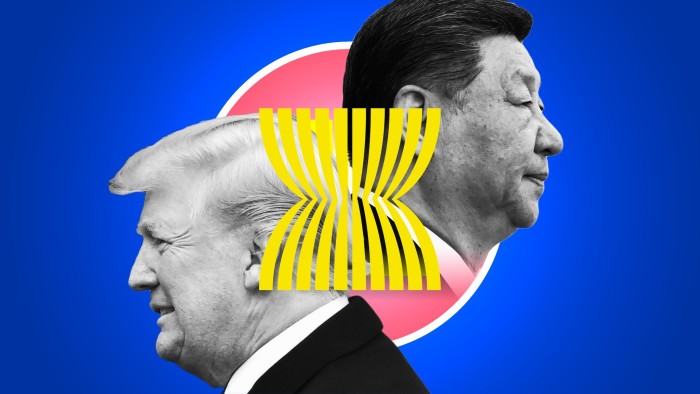
After decades of trying to straddle the divide between China and the US, many countries in south-east Asia are finding it harder to manage close ties with both superpowers. Amid Washington’s barrage of tariffs, though, Asean countries are finding Beijing to be more reliable. Will Trump push the region towards China?
We’re also reading . . .
Putin’s reading list: The Russian leader is obsessed with history, but there’s a reason he doesn’t like to cite his sources, writes Peter Frankopan.
Bill Gates: The Microsoft co-founder has called for the UN to make a “major strategic pivot” from a “doomsday view” of climate goals towards funding vaccines.
US stocks: Daily share price swings worth hundreds of billions of dollars are becoming commonplace on Wall Street, highlighting the “fragility” beneath the stock market’s rally.
Chart of the day
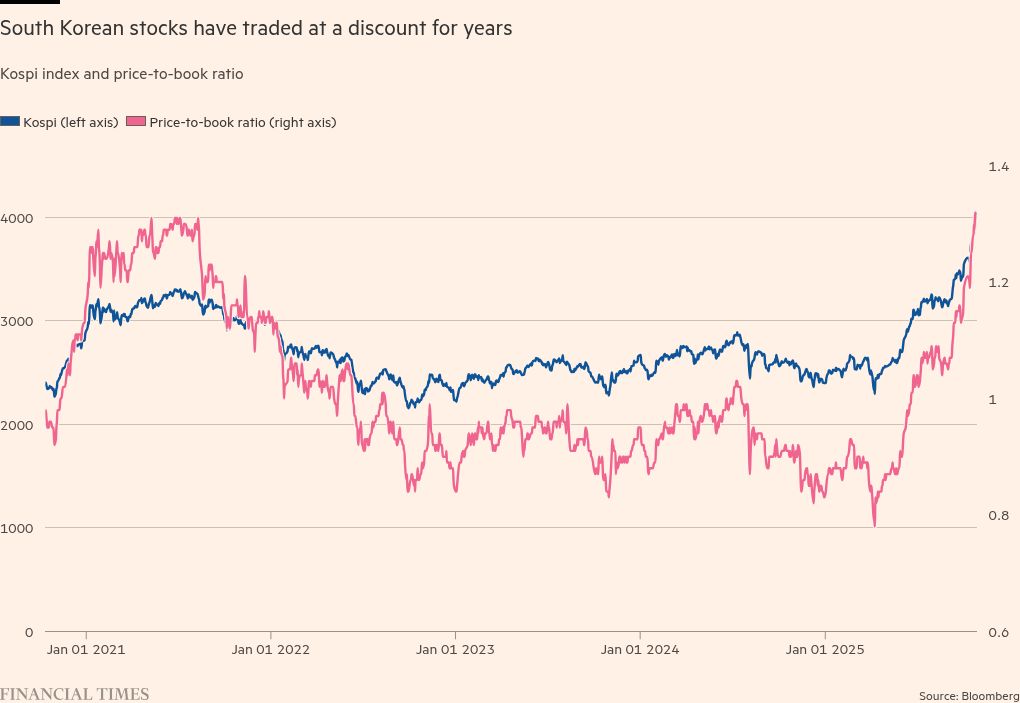
South Korea’s Kospi has gained more than 66 per cent this year, a remarkable turnaround for an index whose stocks traded below a price-to-book ratio of one for much of the past three years. What is driving the world’s best-performing stock market?
Take a break from the news . . .
Jeans aren’t exactly new. But this year they have hit the headlines thanks to viral ad campaigns, red-carpet appearances and a renewed popularity with shoppers. The comeback is reeling in serious money.