Read a version of this story in Mandarin.
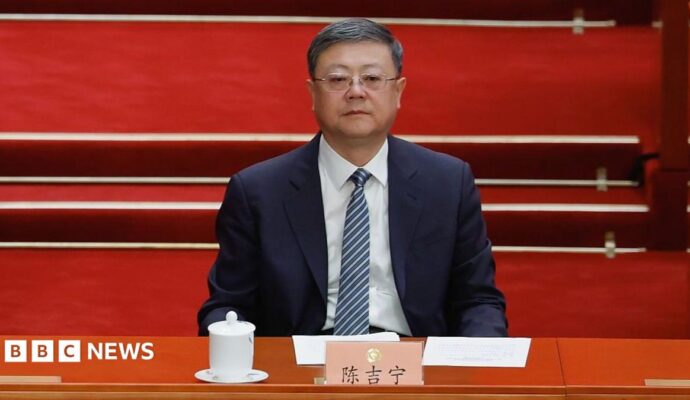
China has launched an investigation into Shanghai Communist Party chief Chen Jining, and experts told Radio Free Asia that the timing indicates competition has intensified ahead of an anticipated leadership reshuffle at next year’s party congress.
Chen, a member of the ruling Communist Party’s Politburo, is suspected of “serious violations of discipline and law,” authorities announced late on Nov. 24. He is the fourth member of the 20th Politburo to come under investigation, following He Weidong, Zhang Youxia and Ma Xingrui.
Authorities have yet to disclose details of the allegations, announce Chen’s removal from office or name a successor.
Chen’s downfall ahead of the 21st National Congress of the Chinese Communist Party, or CCP, has renewed scrutiny of how Xi intends to shape the next generation of Chinese leaders and whether he will identify a potential successor. Chen was once seen as a potential candidate for the country’s top leadership body,
He had been regarded as a low-profile technocrat with close ties to Xi, Akio Yaita, executive director of the Taipei-based Indo-Pacific Strategy Think Tank, told RFA Mandarin.
Shanghai has historically had a contentious relationship with the central leadership while serving as an important launching pad for local officials seeking positions in Beijing, Yaita said.
A key question, he added, was whether the investigation would remain confined to Chen or extend to other Shanghai officials who had worked with him.
Tightening control over local officials
Hours after the investigation was announced, Shanghai’s Communist Party Standing Committee convened an expanded meeting, expressing its “firm support for the decision of the Party Central Committee” and calling for political discipline to be prioritized and central government directives to be implemented.
Chen, 62, is the first serving Shanghai party chief to come under investigation since Chen Liangyu in 2006. As a result of that investigation, Chen Liangyu was found to have misused funds, was expelled from the CCP, and spent 18 years in prison.
A former president of Tsinghua University, environmental protection minister and Beijing mayor, Chen Jining joined the Politburo in 2022 and succeeded Li Qiang, currently China’s premier, as Shanghai’s party secretary that year.
The post has long been regarded as a stepping stone to China’s highest leadership positions. Xi and Li both previously held the position, as did former President Jiang Zemin and former Premier Zhu Rongji.
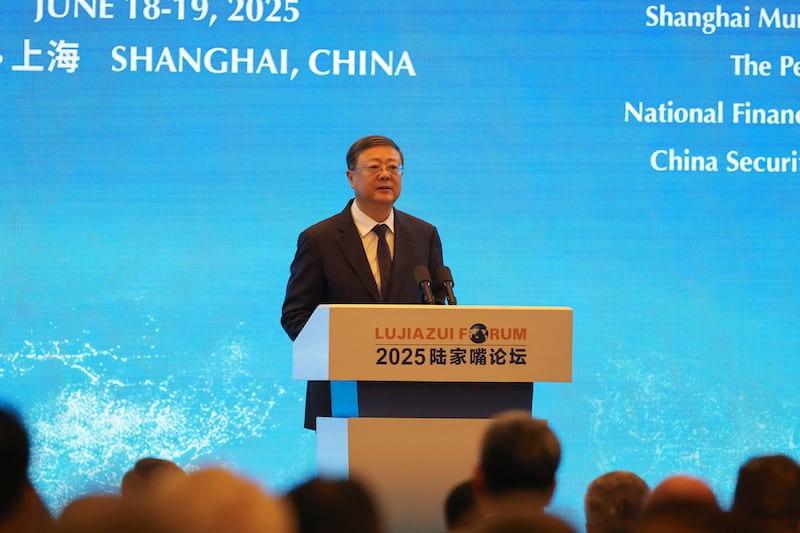
Tzeng Wei-feng, an associate research fellow at National Chengchi University’s Institute of International Relations in Taiwan, told RFA Mandarin that the Shanghai leadership’s swift declaration of support for the investigation suggested local officials would increasingly align themselves with Beijing’s policies.
He said the investigations into four Politburo members should be viewed in the context of the party’s Fifth Plenum late last month, which called for strengthened oversight and continued pressure in its anti-corruption campaign.
The expanding powers of party disciplinary authorities, he added, have given Beijing greater leverage over local governments and senior officials.
Yaita suggested that Chen’s extensive exposure to the West may also have worked against him.
Chen spent a decade in Britain and was among the Chinese leadership figures most familiar with Western values, languages and cultures, with the ability to communicate fluently in English with foreign leaders, he said.
At a time when, in Yaita’s view, Xi is increasingly turning China inward and seeking to distance it from the West, a senior official perceived as being overly close to Western countries could arouse Xi’s suspicions.
Succession questions resurface
Chen’s investigation has also renewed attention to the politically sensitive question of Xi’s eventual succession.
Veteran journalist Fang Fei told RFA Mandarin on the sidelines of a press conference in Taiwan that there had been few public indications that Chen was under scrutiny.
She said the successive investigations into senior officials could reflect internal power struggles within the CCP.
While a clear succession plan would help the party ensure a stable transfer of power, Fang said, identifying a successor could also undermine Xi’s authority by creating an alternative center of power.
She cautioned, however, that the opacity of the party’s decision-making made it difficult to determine who else might be implicated in Chen’s case or whether factional rivalries were involved.
Tzeng said Xi’s personal trust in individual officials could carry more weight than their professional expertise or performance in local government when senior leadership appointments are made at the next party congress.
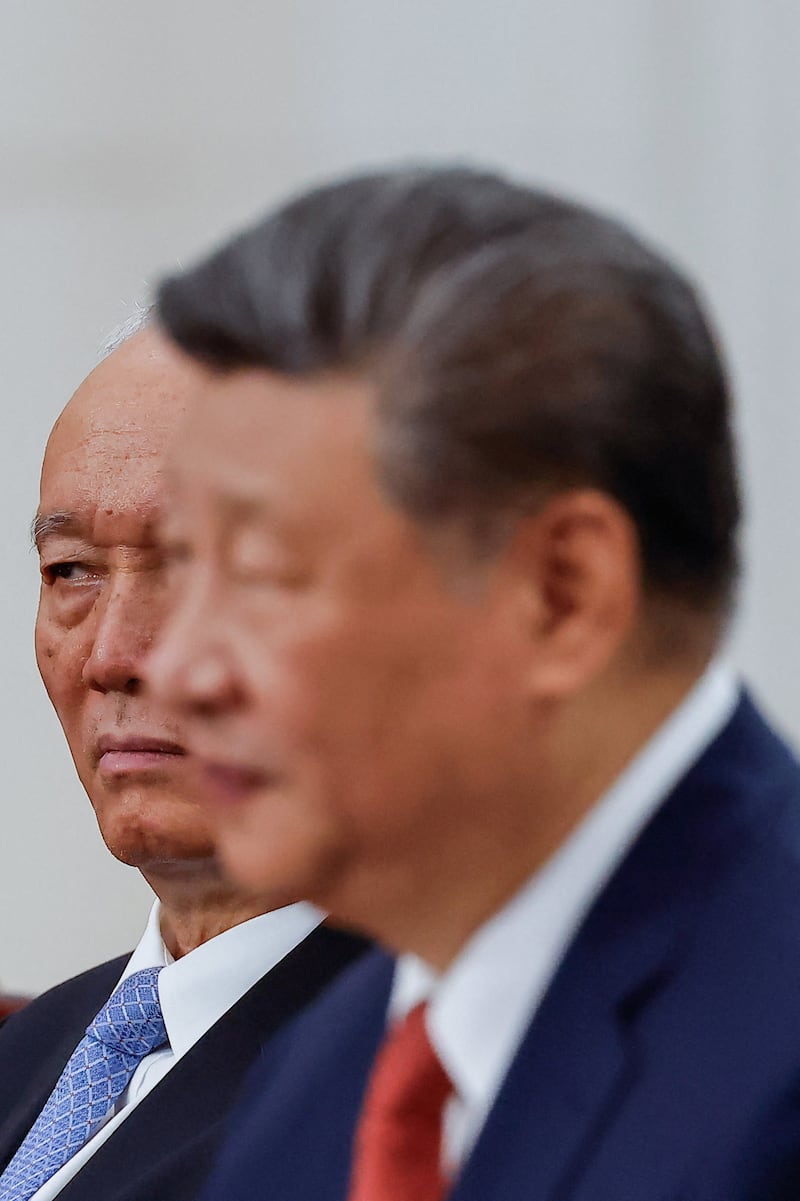
“From this perspective, we can assess that those who remain in office are likely to be members of Xi’s inner circle, such as Cai Qi, as well as those holding lower-risk positions, such as Wang Huning,” he said.
Cai, the former mayor of Beijing, is currently director of the CCP’s General Office, while Wang is the chairman of the National Committee of the Chinese People’s Political Consultative Conference.
U.S.-based economist Cheng Xiaonong, speaking in a previous interview with RFA Mandarin, said the concentration of power in a single leader, rather than the CCP’s previous model of collective leadership, had complicated succession arrangements.
The more concentrated power becomes, Cheng said, the more a leader may fear political retribution after leaving office, while appointing a successor risks allowing that person to establish an independent power base before the transfer of power.
That, he said, was a fundamental dilemma of the CCP’s authoritarian system.
Edited by Taejun Kang and Eugene Whong.