“Over the past 60 years, the glacier area on the Tibetan Plateau has shrunk by around 24 per cent, with around 7,000 small glaciers disappearing completely,” Gao Rong, deputy director of China’s National Climate Centre, told a press briefing on Wednesday.
“Looking ahead, the structural stability of glaciers across the Tibetan Plateau will decline further. Glacial disasters are likely to become more frequent and could amplify in destruction and reach through cascading effects.”
Beijing has stepped up cross-border support to its neighbour. Guo Jiakun, a spokesman for the foreign ministry, said on Wednesday that China’s second batch of emergency supplies had arrived in Kathmandu on Tuesday afternoon, accompanied by five DNA identification experts. A third shipment and a second expert team were being prepared.
After working for seven days, Beijing on Wednesday cleared the road to Gyirong Port, which was hit hardest on the Chinese side by the mudslide. Heavy machinery has reached the checkpoint area to aid a deeper search.
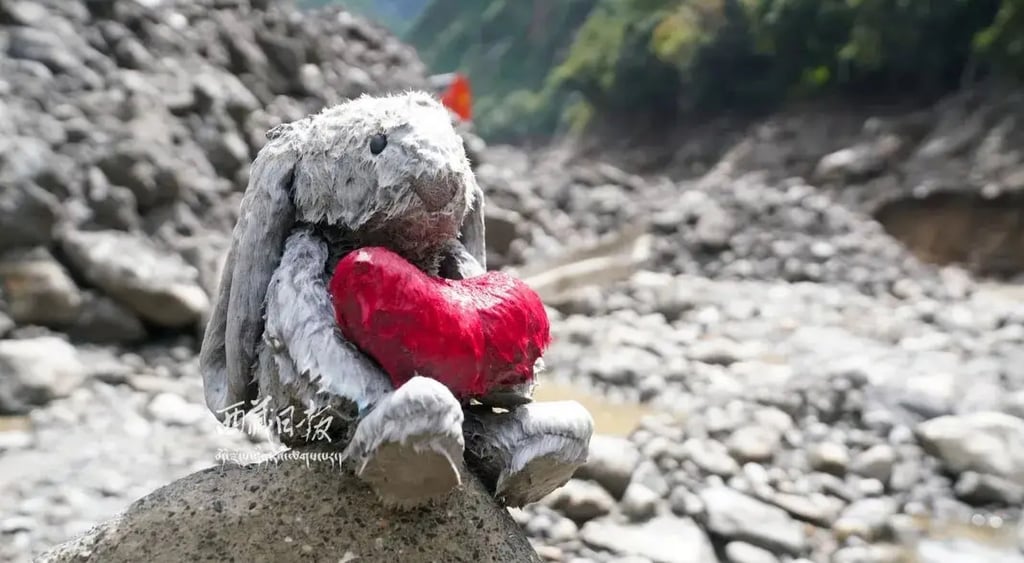
The mudslide created by the glacier collapse travelled 22km (13.7 miles) along the valley and reached the Gyirong Port border crossing in just seven minutes, according to an initial assessment last week.