Woo Jin Joo’s studio is full of magic. Ceramic green goblin feet line the windowsill, disembodied furry legs jut out of one white wall and, on the table behind where the Korean-Chinese artist sits drinking tea, a headless being dressed in a black coat squats, arms aloft in warning.
There are also neat racks of colourful thread next to a freehand embroidery machine, the source of this supernatural hoard. This is where Joo creates much of her art – surface embroideries and sculptural 3D creatures inspired by Korean myth, philosophy and the relationship between humans and the natural world.
“When I use the embroidery machine I feel like I’m painting,” she says. “It’s as if each thread has its own life.”
Joo was born and raised in Korea – mainly by her grandmother – before moving to the UK 12 years ago to study at Central Saint Martins and then the Royal Academy in London. Swapping east Asia for west Europe started her thinking about how she was shaped by culture and the world around her. “That transition made me want to explore who I am and how I see things.”
In 2021 she worked out how she wanted to go about it. She embroidered the 10 Daoist symbols of longevity, typically used to wish someone long life, on to an old Ikea bag – a plastic product that could take up to 1,000 years to decompose.
“It was that work that made me feel a connection, a way of drawing ideas together to make a transformation that resonated with religious beliefs as well as myth,” she says.
Guided by the idea from Korean folklore and shamanism that inanimate objects can become spirited beings called dokkaebi, she looked at the junk discarded in London with fresh eyes. Now she often uses found objects in her work – a creature with many feet peers out of an old shirt sleeve; a discarded wooden side-table now sprouts a 5ft-tall dokkaebi leg. “I love the idea that the small and mundane have spirit,” she explains. “We need to realise that the ordinary is special.”
Joo is part of a new wave of creatives showing that traditional, sometimes archaic, craft can be used to make very modern, joyful work. Makers are not just keeping these skills alive but evolving how they can be used. “I think a lot of makers are very experimental now, craft is no longer just about material knowledge, but about experimenting and playfulness. This means more people are drawn to it,” says Joo.
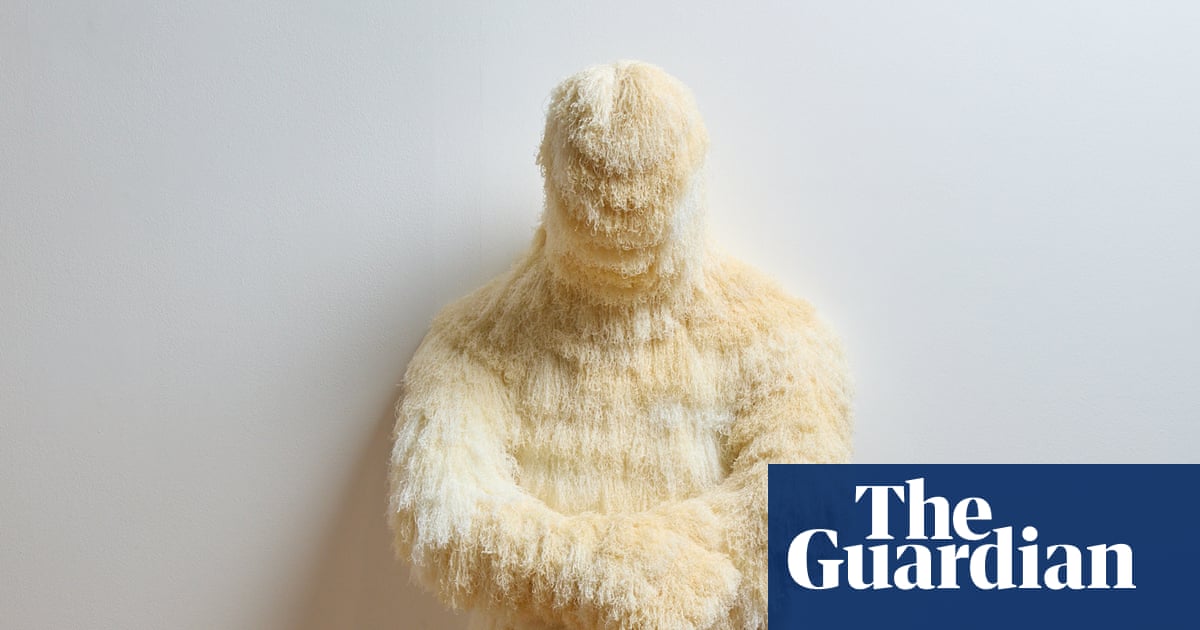
She is preparing for her first solo show, Bodily Inbetweenness, at London’s Ruup & Form gallery, which opens during Shoreditch Design Week. For this, she explores a new type of spirit, human emotions and how we display them – a concept that Joo shows through powerful figures, slightly reminiscent of corn dollies but 5ft tall, poking out of the walls. “For me, a sense of fun always wants to come out, but for some people it’s awkward, it doesn’t fully emerge,” she says.
The first sculpture in this series – I Hear Things Existing With Me, a contemplative figure slightly sunken into the wall it leans on – was one of the standout pieces at London’s Collect Craft Fair in February. Collect’s director, TF Chan, believes that you never forget the first time you see Joo’s work.
after newsletter promotion
“Mine was a pair of ceramic legs with each toe tipped in glossy red nail varnish,” he says. “In my view, she embodies the values of contemporary craft: closely bound to the artist’s heritage while accommodating both serious intellectual engagement and sheer delight.”
Joo loves the widespread interest in Korean culture – currently encompassing everything from pop to skincare and it is perhaps one of the reasons her work feels so current. “Because I’m from Chinese as well as Korean heritage it’s been very meaningful to see both cultures celebrated. I think that international attention has meant that, especially within Korea, there’s now more interest in preserving and honouring traditions.”
For Joo, seeing herself as a maker as well as an artist is a point of pride at a time when craftspeople continue to struggle for art world acceptance. “There is still a hierarchy,” she says. “A lot of fine artists now use craft like ceramic or textiles and that’s seen as part of their knowledge. Whereas if you come from a craft background what you do is rarely considered fine art. It should be free-flowing.”
With another show to prepare for at the Harley Foundation, Nottinghamshire, later this year, Joo has long hours ahead of her in the studio creating her magical creatures, but she relishes that. “I think it’s the trickle of everydayness that really shapes who I am and how I see things. That really is what my work is about.”