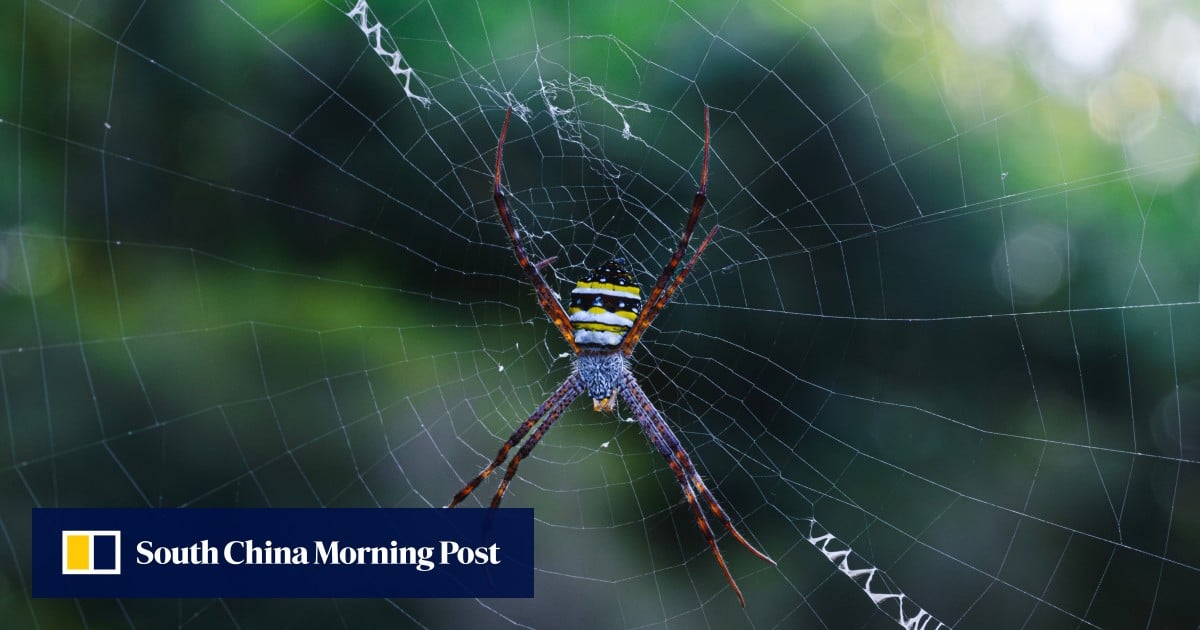
Scientists from China and the Netherlands have created a corn protein-based biopolymer with a process inspired by spider silk that could offer a sustainable alternative to plastics based on fossil fuel.
“Plant-derived biopolymers may become sustainable alternatives to fossil-based polymers, yet their poor material performance has so far limited their adoption,” the team said in a paper published in the peer-reviewed journal Nature Communications on May 11.
The resulting “plantymer” fibres and sheets had a rigidity comparable to silk and displayed good moisture and oxygen barrier properties.
Advertisement
“We have shown that processing protein materials inspired by spider silk can be applied to amply available plant proteins such as zein from corn,” said the team.
The team behind the find is made up of researchers from mainland China’s Nanjing Agricultural University, Jiangnan University, and the University of Hong Kong, as well as the University of Amsterdam and Wageningen University in the Netherlands.
Advertisement
More than 400 million tonnes of plastic are produced worldwide every year, with about half of it designed to be used once, such as for food packaging, according to the United Nations.