Satellite imagery has revealed that North Korea and Russia are scrambling to complete a new high-capacity road bridge across their Tumen River border, and experts told Radio Free Asia that the fervor for completing the project quickly is a sign of increased cooperation and warm relations between Pyongyang and Moscow.
Until now, the only bridge connecting the two countries has been the Bridge of Friendship, a much smaller rail-only bridge that was built in 1959 and had been intended to be a temporary measure until a permanent bridge could be built. That never happened, until now.
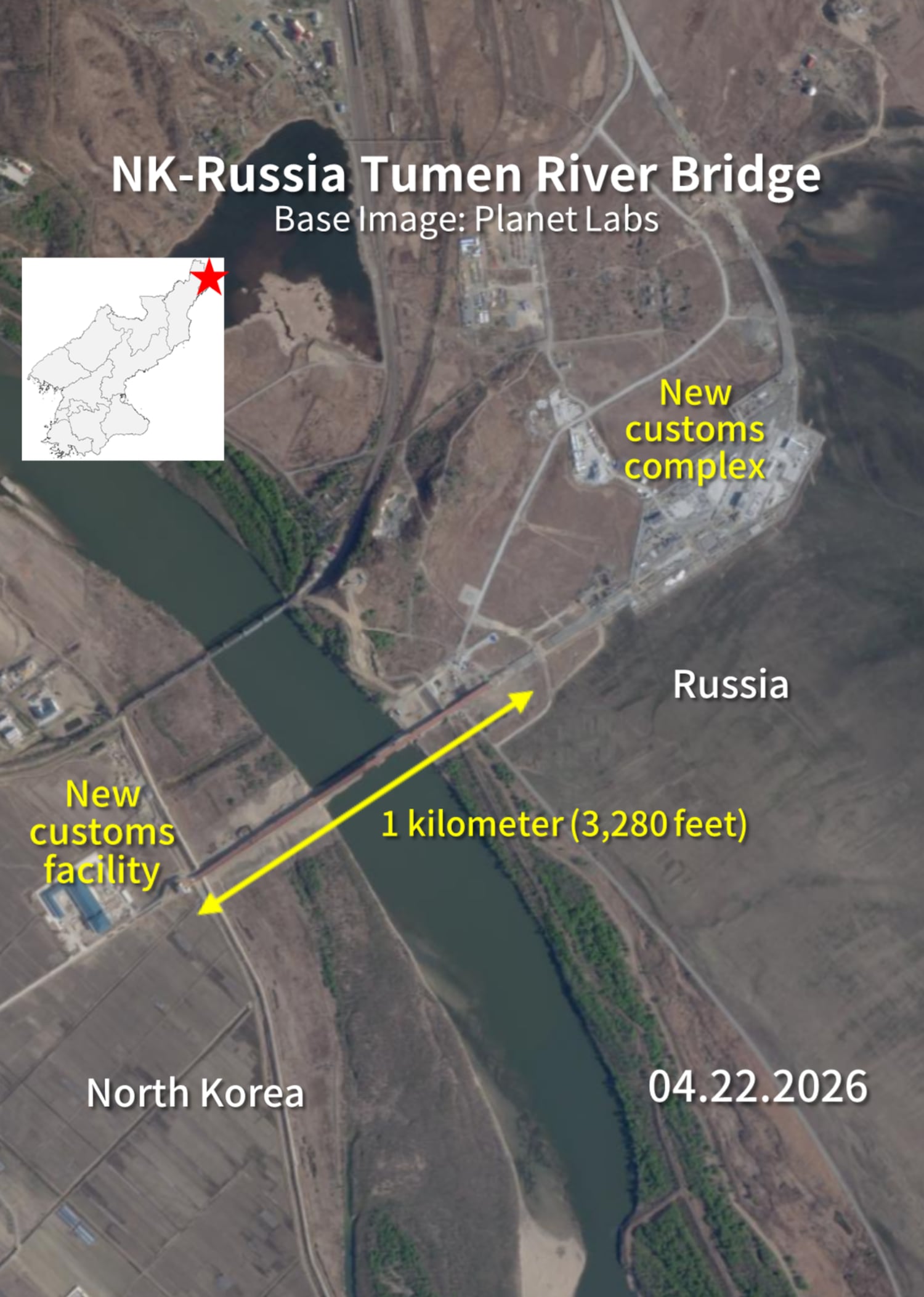
The new bridge, set to open next month, will be capable of handling up to 300 vehicles, and transporting 2,850 people across the border per day, according to Russia’s Ministry of Transport. It spans about a kilometer (3,280 feet) long and will connect the North Korean city of Rason, with the Russian town of Khasan.
“It appears both sides are pushing hard to complete the final construction in time for the official opening scheduled for this summer,” Bruce Songhak Chung, a senior researcher at the Seoul-based Korea Institute for Security Strategy, told RFA. “The project is showing approximately 80% to 90% completion ahead of the official opening.”
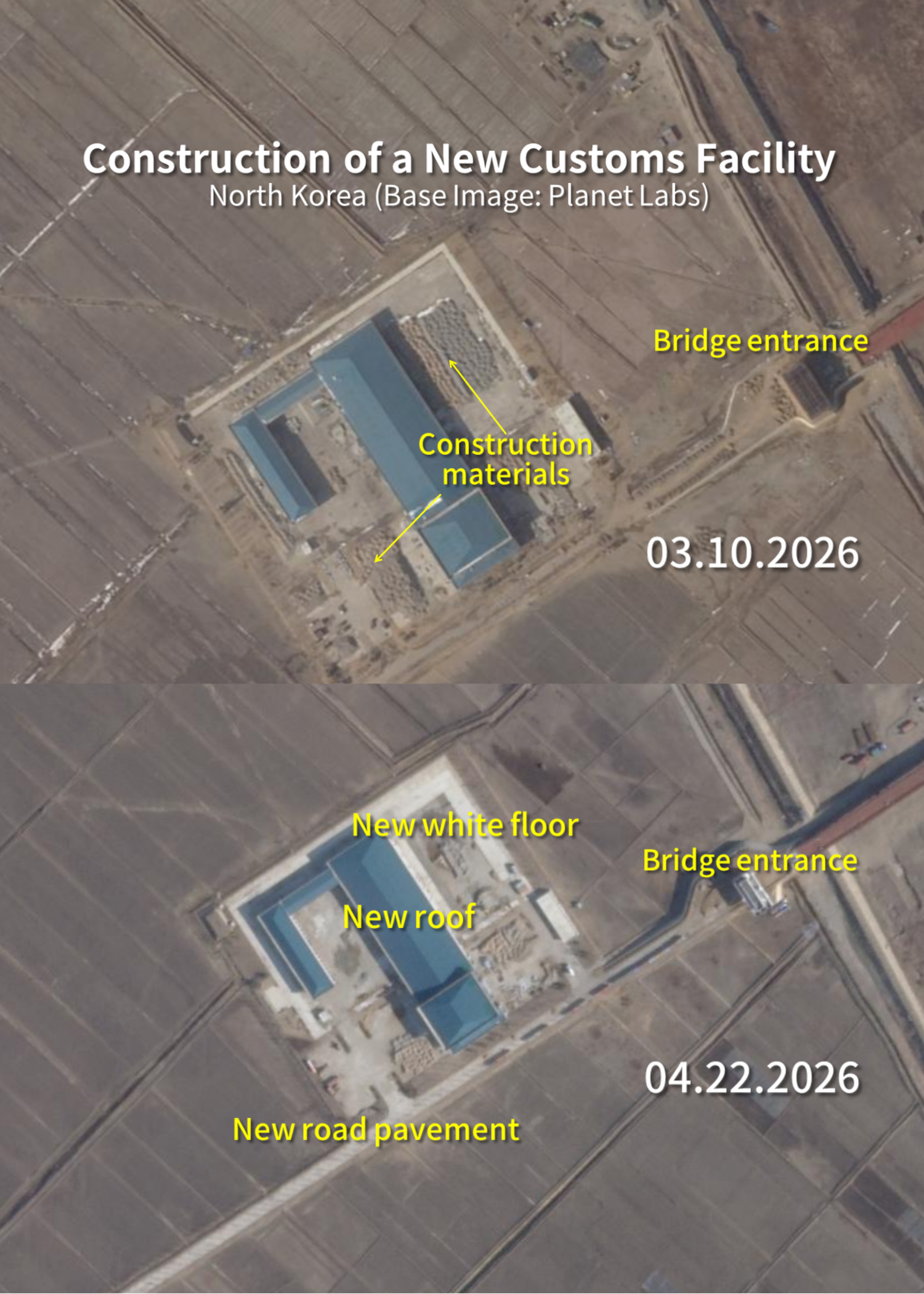
Satellite images from March 10, April 22, and May 16, show the progression of construction on a customs building on the North Korean side. Roofing work is now finished, and ground leveling and paving around the building have progressed significantly, Chung said. Paving work on access roads linking the customs facility is also in its final stages, he said.
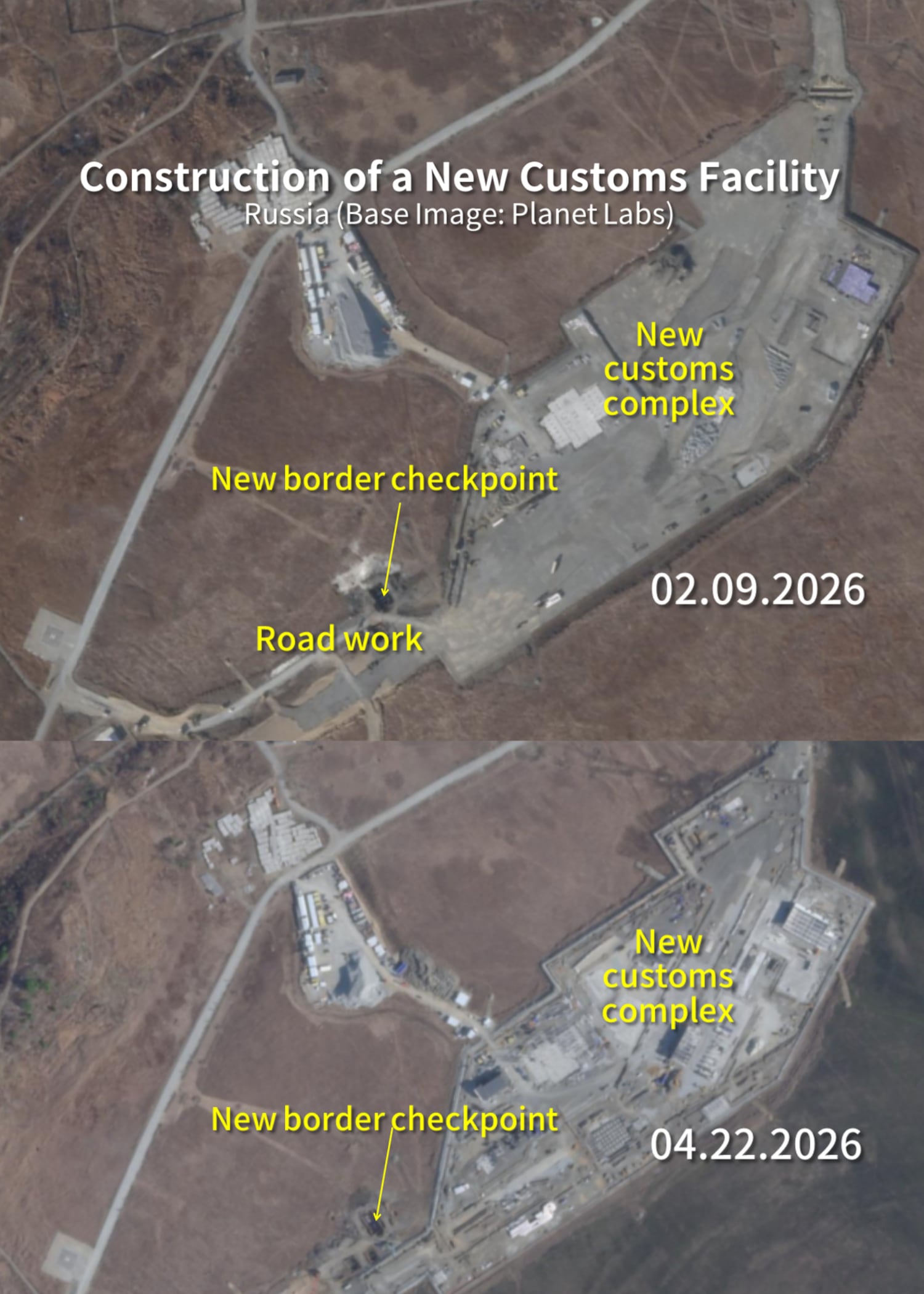
On the Russian side, construction of a large-scale customs complex has advanced rapidly. Satellite images from February and April show that building construction with concrete work, access road paving, and site clearing had all moved forward considerably. A small checkpoint building to inspect vehicles before the bridge is also under construction.
June grand opening
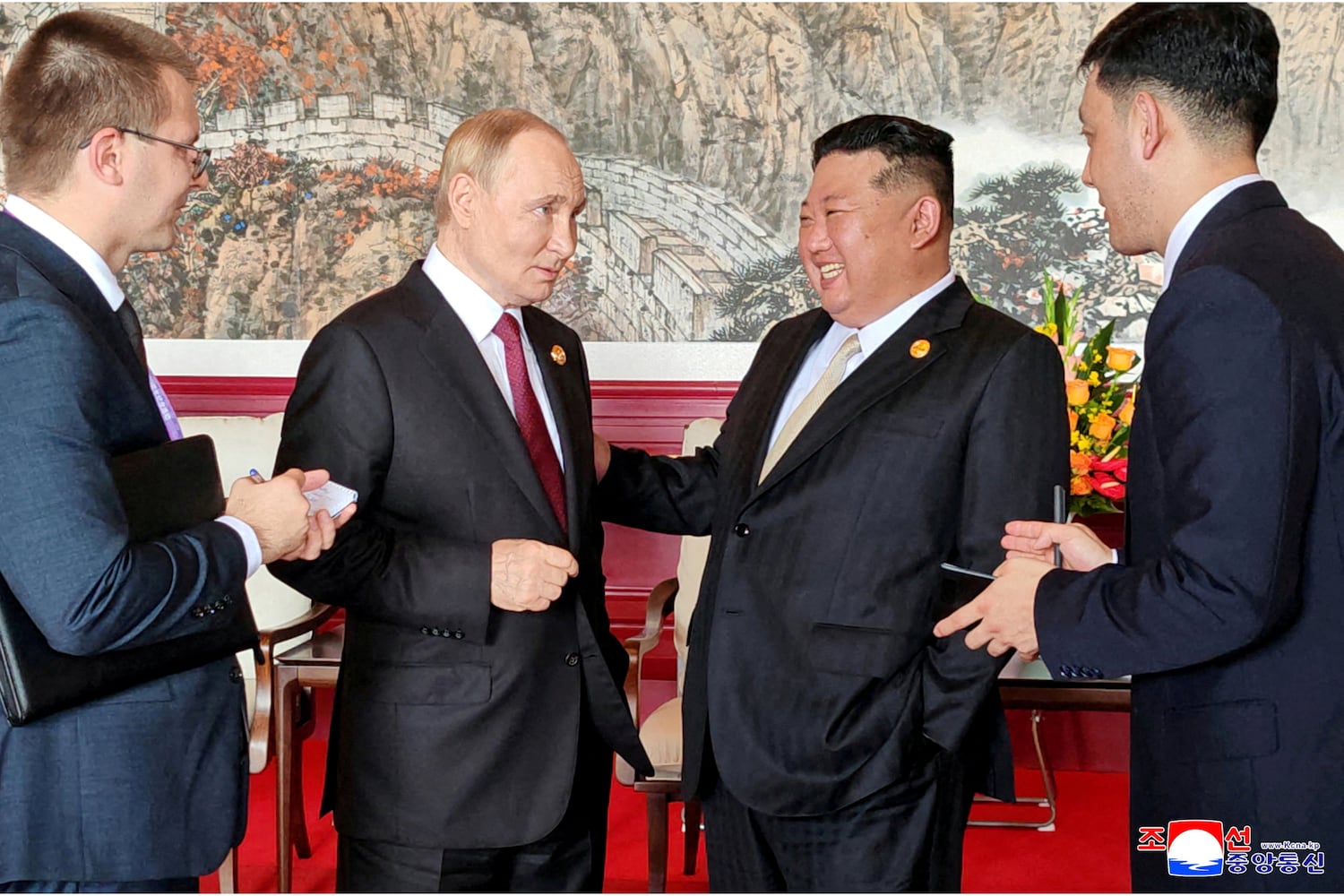
North Korean leader Kim Jong Un and Russian President Vladimir Putin agreed to build the new bridge at a summit in Pyongyang in June 2024. Since then both governments have held events to commemorate its progress.
A groundbreaking ceremony occurred in April 2025, and on April 21 this year, delegations from both countries virtually participated in a bridge connection ceremony.
On the same day as the connection ceremony, the Russian Embassy in Pyongyang announced that the bridge would be completed on June 19 — six months ahead of its original completion date.
Experts suggest the year-round road crossing will further develop trade, economic, and people-to-people ties between the Russian Far East and North Korea.
Moscow and Pyongyang rapidly increased trade and cooperation following Russia’s isolation from the international community following its invasion of Ukraine in 2022. Since then, the two countries have ramped up trade and cooperation, with North Korea even sending weapons and soldiers to fight on the Russian side.
Military and economic cooperation will only improve once the new bridge is completed, Joung Eunlee, the director of the Seoul-based Korea Institute for National Unification, told RFA.
“Road transport can move larger volumes of freight more quickly than rail and allow more people to travel, so bilateral trade is expected to grow once the bridge opens,” she said.
North Korea could also use the bridge to more aggressively deploy overseas workers to Russia, Kang Dong Wan, a professor of political science at Dong-A University in Busan, South Korea, told RFA.
The cash-strapped North Korean government routinely skirts sanctions by sending legions of workers overseas to earn foreign wages, then confiscates most of it.
The new bridge would further erode the effectiveness of sanctions, experts warned.
Tumen Bridge vs. Yalu Bridge (A barometer of relations)
The rapid progress on the Tumen River Bridge stands in sharp contrast to the New Yalu River Bridge between North Korea and China, which was structurally completed in 2014, but has not yet opened because completion of infrastructure on the North Korean side has stalled.
It was built as a symbol of North Korea-China economic cooperation, with China providing active investment.
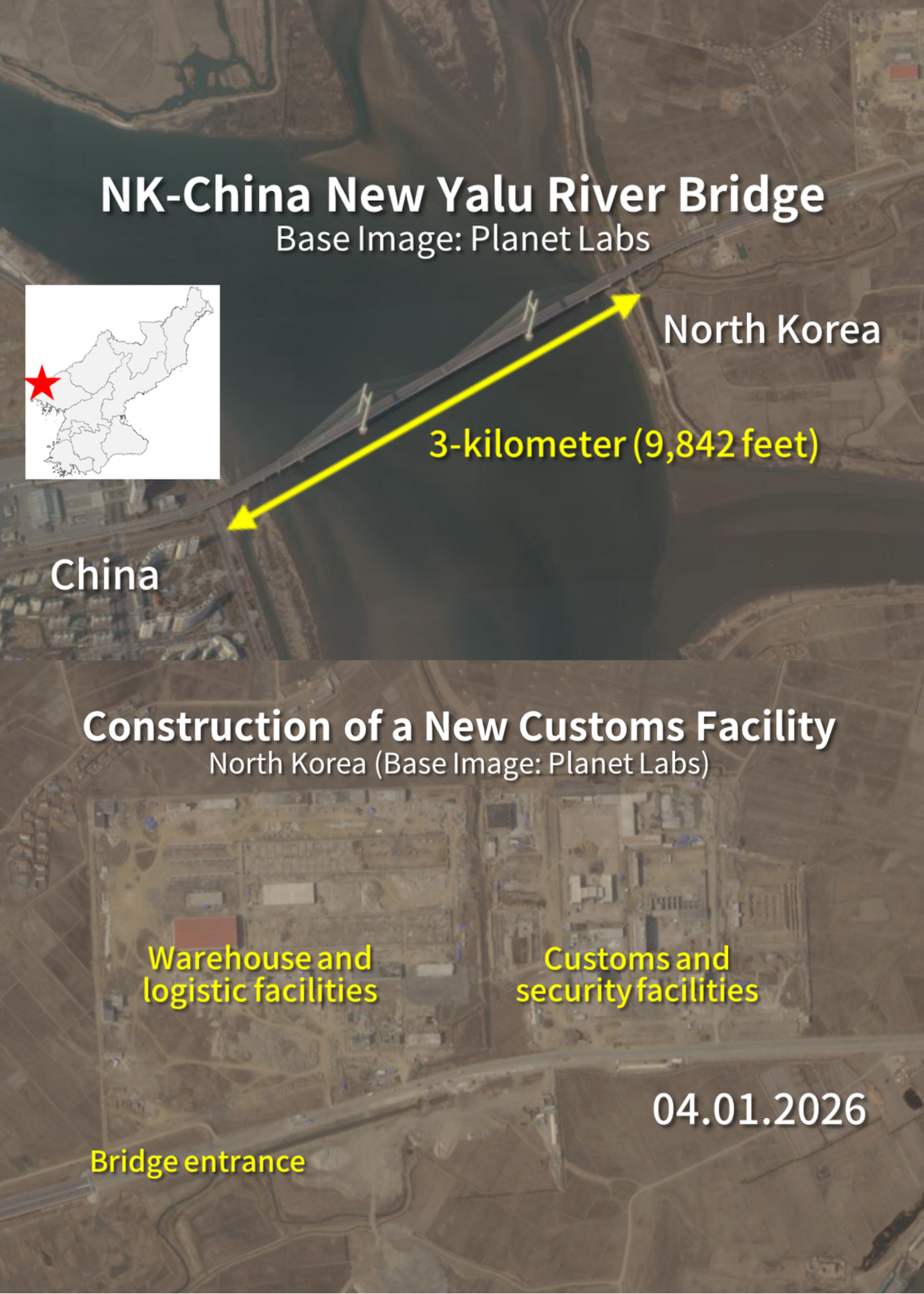
Recent satellite imagery of that bridge shows construction of customs facilities in North Korea have made considerable progress, but some areas still have empty lots and construction materials, Chung said.
Analysts say the diverging fates of the two bridges reflect Kim Jong Un’s strategic tilt toward Moscow over Beijing.
North Korea has been less than enthusiastic about opening the New Yalu River Bridge because it fears increased Chinese interference and influence, Andrei Lankov, a Russia-born North Korea expert and professor at Kookmin University in Seoul, previously told RFA.
Kim Jong Un has blocked the completion of that bridge to stop Chinese-style reform from flowing in and destabilizing the existing power structures in North Korea, Ri Jong Ho, a former senior North Korean official, who defected to South Korea in 2014 and currently lives in Virginia, told RFA.
“The New Yalu River Bridge has become a barometer of North Korea-China relations. It could open within months depending on Kim Jong Un’s decision — or it could take another decade, or remain closed beyond the Kim Jong Un era,” Ri said.
The rapid push to complete the Tumen River road bridge reflects Kim’s judgment that cooperation with Russia is far safer and more advantageous than with China, Ri said.
Edited by Eugene Whong.