Rising tensions in the Middle East cast a fresh shadow over the opening of China’s largest trade fair, at a time when the impact of geopolitical shocks is being reflected in the nation’s trade figures.
In conversations across sprawling exhibition halls after the Canton Fair opened its doors on Wednesday in China’s manufacturing hub of Guangzhou, domestic exporters and foreign buyers sounded each other out, trying to gauge how far those shocks might ripple through global trade.
The threat of US tariffs continues to weigh on sentiment, and exporters across a range of industries discussed how they spent the past few years reducing reliance on the American market. Several have been pinning hopes on Europe as a lifeline, while growth in demand from emerging markets has also offered a cushion.
Advertisement
Yet, widening uncertainties amid Middle East tensions are forcing a reassessment. Chinese exporters say geopolitical risks, from disrupted air routes to energy-driven inflation, are exposing fresh vulnerabilities in the very markets that they had come to depend on.
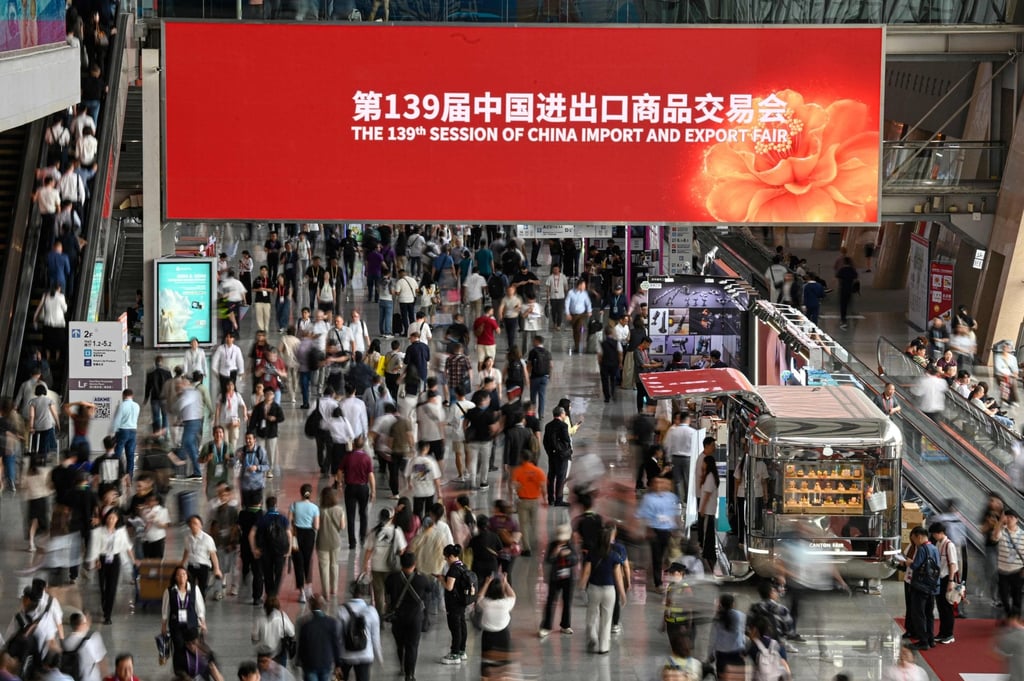
Spanning three weeks, the Canton Fair, formally known as the China Import and Export Fair, is widely seen as a bellwether for China’s vast export machine. This edition features a total exhibition area of 1.55 million square metres (16.68 million square feet), 75,700 booths and more than 32,000 participating companies – all exceeding records, according to organisers. There are also about 3,900 first-time exhibitors.
Jason Tan, a lighting exporter from Zhongshan, Guangdong province, said travel disruptions might affect buyer attendance. “Reduced flight frequencies and higher prices for routes via the Middle East have not only restricted Middle Eastern buyers, but also affected customers from Europe and parts of Asia, due to transit issues,” he said.