Unlock the Editor’s Digest for free
Roula Khalaf, Editor of the FT, selects her favourite stories in this weekly newsletter.
China has moved to stop “low-quality” companies from listing in Hong Kong as it seeks to slow but not halt an IPO boom.
The China Securities Regulatory Commission (CSRC) has blocked listings by some companies with opaque offshore structures, while stressing that the market remains open for business.
It shows how the regulator has learned from 2015, when a rush of low-quality issues helped to fuel a market bubble, and 2021, when a crackdown on offshore listings hurt the private sector.
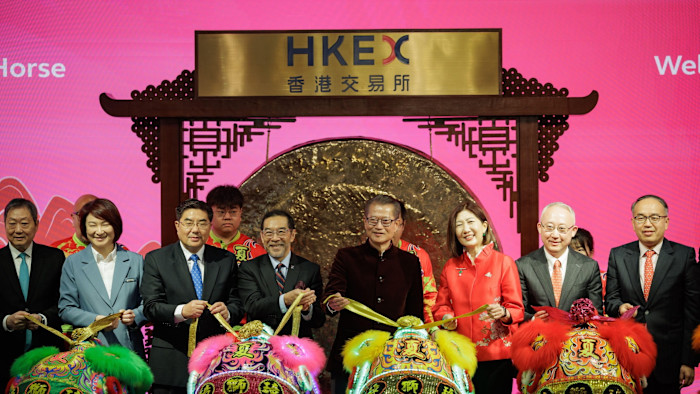
Hong Kong’s exchange was the world’s top listing venue in 2025 and almost 500 companies are in the pipeline to list this year, a record high.
In a statement to the Financial Times, the CSRC said its restrictions were prompted by “relatively low ownership transparency and higher compliance risks” among so-called red-chip companies, particularly those that adopted such structures after China’s new offshore listing rules came into force in 2023.
Red-chip companies are incorporated outside mainland China but conduct most of their business within the country, a legacy workaround that makes it easier for offshore investors to access mainland firms.
The CSRC said it had asked a small number of red-chip companies to dismantle such structures, describing it as a standard regulatory step that should not be over-interpreted.
Wu Qing, chair of the CSRC, stressed at a briefing in March the need to curb flawed applications and prevent a herd-like rush of listings.
Bankers involved in mainland and offshore IPOs said the CSRC had also been quietly reining in the pace of overseas listing approvals, including so-called A-to-H deals, to avoid an overheated market and a potential correction that could hurt smaller investors.
A-to-H deals involve companies that already have listings in mainland China issuing offshore shares in Hong Kong.
New issues in the US by Chinese companies have also faltered since late last year, amid scrutiny from the CSRC and stricter listing standards at Nasdaq, which has delayed or rejected offerings it believes could be vulnerable to manipulation.
The CSRC said it was helping the US Securities and Exchange Commission to investigate pump-and-dump schemes.
“Some degree of cooling-off in sentiment is exactly what regulators are aiming for,” said one IPO banker at a state-backed securities firm.
The Hong Kong exchange, along with the territory’s financial regulator, has raised concerns about the quality of the information submitted by potential share issuers.
It has threatened to “name and shame” the lawyers and accountants behind poor or inaccurate IPO prospectuses, alongside the bankers and companies involved.
Another concern, said one capital markets adviser, is young technology companies that use special routes such as Chapter 18C of the Hong Kong listing rules to sell shares before they are making money.
“If I were the CSRC I’d be extremely worried about these pre-revenue companies,” the adviser said.
Additional contributions from Wenjie Ding in Beijing