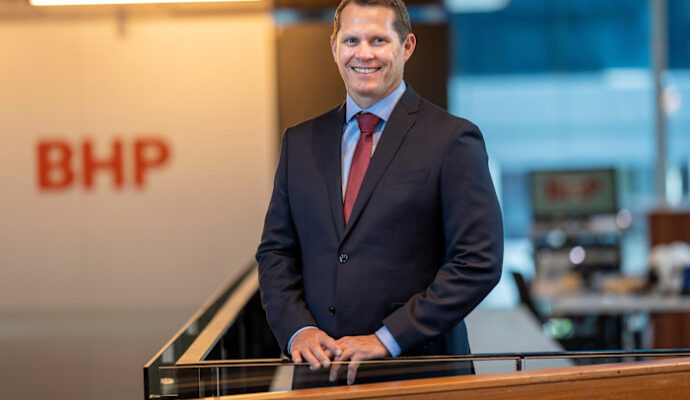
When German curator Tobias Berger moved to Hong Kong 20 years ago, the city’s cultural landscape was what he describes as a half-formed pyramid. “You need a museum at the top, commercial galleries and non-profit spaces filling out the rest of it,” Berger says. But at the time, apart from non-profit mainstays Asia Art Archive and Para Site (which is celebrating its 30th anniversary this year), little of that existed. Today, the scene is transformed: from the 2000s on came the blue-chip galleries, Art Basel, the M+ museum, the Tai Kwun cultural centre and, more recently, a proliferation of independent art spaces and alternative projects.
Berger is set to make his own contribution with Gold, the city’s newest art space, opening just ahead of Hong Kong Art Week. The space is housed in a former jewellery shop in the industrial district of Wong Chuk Hang, on the southern part of Hong Kong Island. The generous, high-ceilinged ground-floor venue will form part of Serakai Studio, a cultural think-tank co-founded by Berger and art patron Benjamin Cha, founder and CEO of property investment firm Serakai Group. Gold will offer programming across art, design, fashion, performance and music; its model, according to Cha, is inspired by listening rooms and concept stores.
Berger attributes this multidisciplinary approach to his experience working in highly structured institutions. From 2010 until 2015, he served as the first curator of visual arts at the M+ museum before becoming head of art at Tai Kwun, a position he held until 2022. With Gold, he’s experimenting with a novel model. “If you open a new space, there are always uncertainties,” says Berger. “I always believed it’s good to embrace them, as ultimately they create opportunities.”
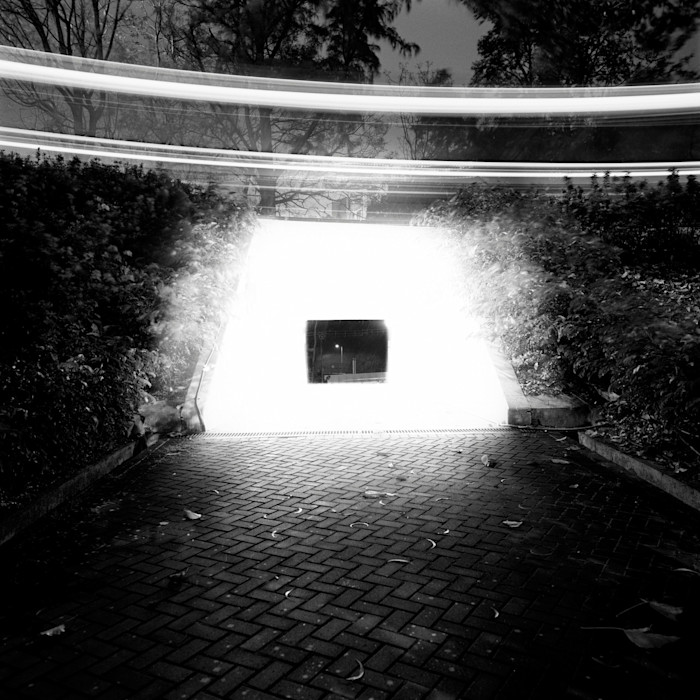
This sense of uncertainty inspired the theme for Gold’s inaugural exhibition, Certainly. The show will feature a mix of local figures such as street artist Lousy, best known for his neon-hued figurative graffiti, and Pak Sheung Chuen, whose conceptual practice explores chance encounters — one of his performances, “Waiting for a Friend (without Appointment)” (2006-7), consisted of the artist waiting at an underground station until someone he knew passed by — alongside international artists including Shinro Ohtake and Richard Serra.
The curatorial premise also draws on artist-composer La Monte Young’s instructional piece “Composition 1960 #10”, which consists of a single directive: “Draw a straight line and follow it.” The simple instruction becomes contentious as the line resists, curves and deviates. For Berger and Cha, it is a metaphor for trying to create an alternative cultural project in a city that is dominated by commercial — and now institutional — infrastructure.
Since Hong Kong emerged as an art hub in the mid-2000s, commercial activity has been typically concentrated in the corridor between the ultra-high-rent Central and Wan Chai districts along Victoria Harbour. More recently, the warehouses of Wong Chuk Hang have provided relatively affordable spaces for local galleries and independent projects to present experimental programming. This trend intensified during Hong Kong’s three years of pandemic restrictions, when warehouse rents fell.
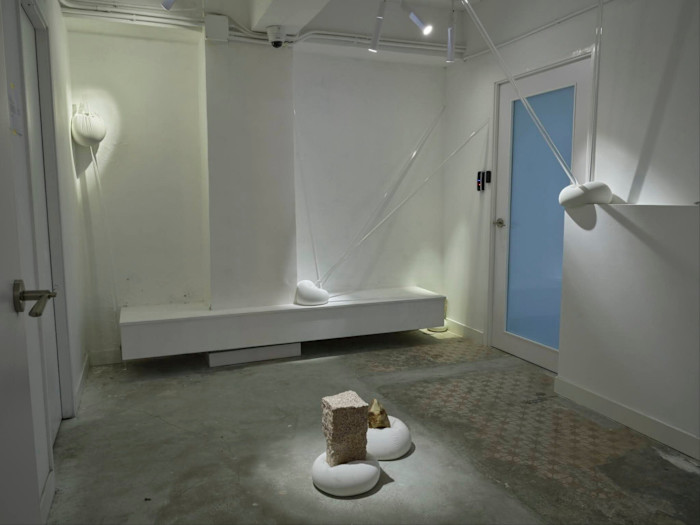
Three floors up from Gold is Current Plans, Hong Kong’s pioneering independent art space, known for staging unusual exhibitions such as a 2023 joint show featuring the surreal creations of Japanese wig artist Tomihiro Kono and photographer Sayaka Maruyama. Helmed by the curator Eunice Tsang and formerly headquartered in Kowloon’s Sham Shui Po neighbourhood, when it was known as Present Projects, Current Plans was launched during the pandemic with the aim of putting on topical exhibitions that captured what society was collectively experiencing during a time of massive upheaval and uncertainty.
One such show, Only A Joke Can Save Us, brought together local and regional artists whose work used humour to address the absurdity of that period. Another, Fault Line, bought together artists from varying disciplines, including designer duo Batten and Kamp, who create materially deceptive objects — a sculpture that appears to be a cushion but, on closer inspection, is in fact made from concrete. Visualising the idea that nothing is quite as it seems, the exhibition alluded to the cracks in the foundations of many of the systems we have come to rely on.
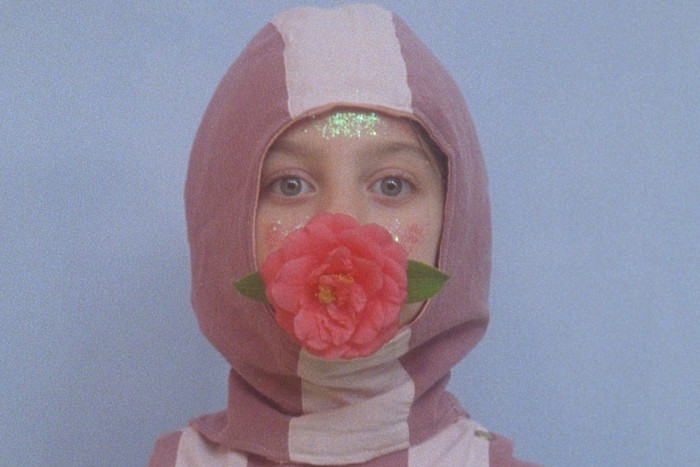
Now, Tsang is increasingly hosting artist residencies, noting that space constraints mean there are relatively few residency opportunities in the city. “It’s an important factor in building cultural exchange,” says Tsang, who is working with consulates to facilitate international projects. Current Plans’ latest exhibition, Imagine a Dead Blue Whale Inside the Pocket of a Giant, features Italian and Hong Kong artists who explore the creative potential of mistranslation between their cultures and languages (opening March 21).
The curatorial platform Knotting Space, launching during Art Week, aims to facilitate connections between international galleries and non-profit spaces for collaborative shows. “Hong Kong has always been an international relay point,” says Jims Lam, its director and curator. “So why not translate that into the ethos of an art space?” After serving as the curator for Supper Club, an alternative art fair that coincided with Art Basel Hong Kong last year, Lam was approached by the art-focused high-rise development H Queen’s to conceive a project for the building’s seventh-floor space.
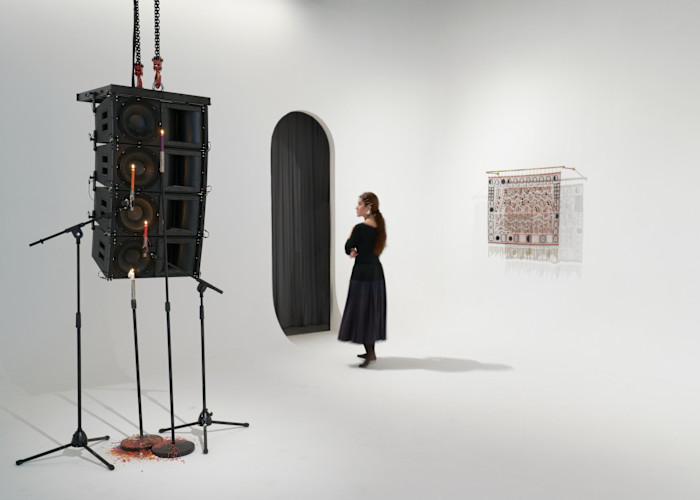
For the inaugural show, which Lam calls the first “knot”, Manila’s Drawing Room gallery has collaborated with Berlin- and Beijing-based gallery Hua International to present new work by Brazilian artist Vivian Caccuri, who creates sound-based installations, and Jinbin Chen, known for her ethereal figurative paintings which convey the intimacy of human relationships. Painter Shi Yi’s baroque take on daily scenes in contemporary China will be on view alongside Filipina artist Matina Partosa’s atmospheric paintings pondering Manila’s everyday moments. Also from the Philippines, Mark Justiniani presents a series of sculptures that draw on traditional folk dance rituals.
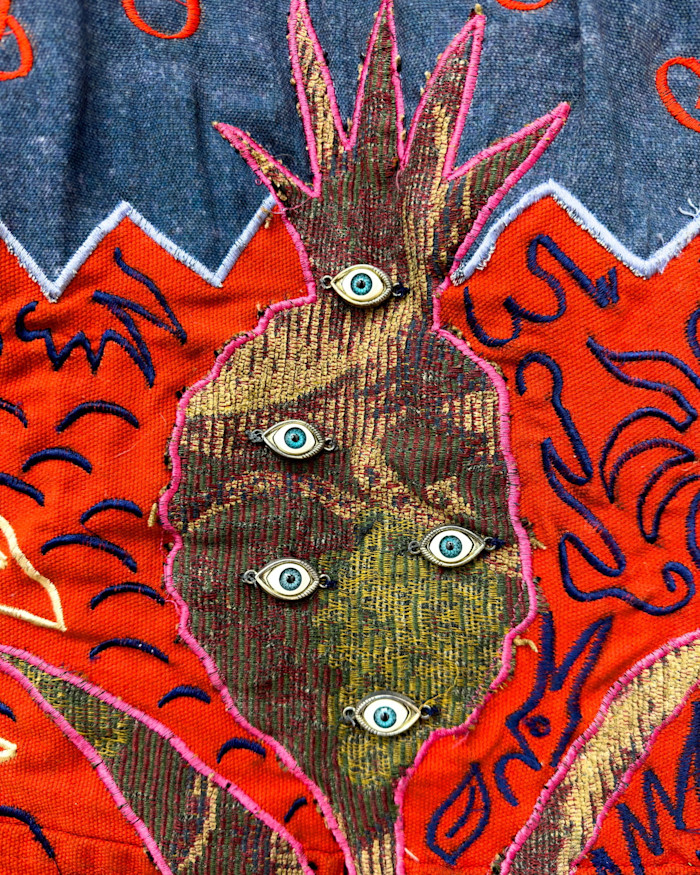
The Cheng-Lan Foundation, established in 2024 by young art patrons Brian Yue and Claire Bi, is opening the intimate project space Cheng-Lan’s Corner in the residential Mid-Levels near the outdoor escalators in Central on March 19. Yue, who was born during the last days of British rule in Hong Kong and moved to the UK at age 10, says “the artists have been chosen for their interest in community action, in memory and rootedness.” The inaugural exhibition will feature Filipino multimedia artist Cian Dayrit, whose cartographic embroidered tapestries trace how communities become dispossessed of ancestral lands, while shrine-like sculptural assemblages made of his family’s belongings carry intergenerational stories.
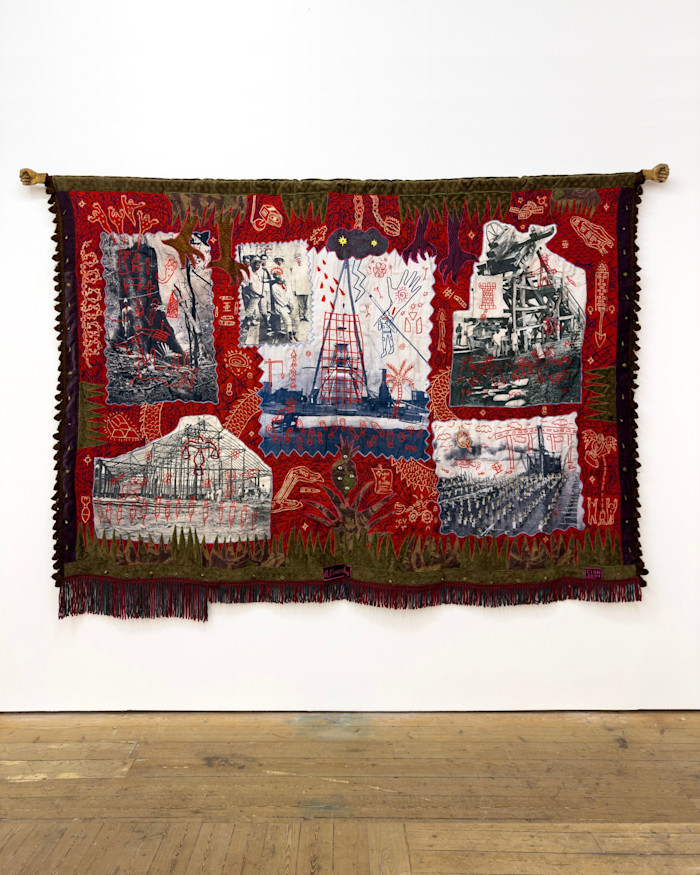
In Kowloon, Cattle Depot Artist Village houses older spaces such as 1a, founded in 1998, and Videotage, which is dedicated to showcasing video and new media works and was co-founded in 1986 by Hong Kong artist Ellen Pau, who is curating Art Basel Hong Kong’s film sector this year. Tomorrow Maybe, a non-profit art space at Eaton Hotel in Kowloon’s Jordan neighbourhood, will open Grieve the Departed Wound, a solo exhibition by in-demand Filipino performance artist Joshua Serafin (from March 20). Alongside presenting performances and documentation of his work — which uses dance and choreography to interrogate colonial legacies and ecological concerns — the artist has curated a selection of artworks by his friends centring on queer nightlife.
Balancing critical approaches with commercial reality can be challenging in a city like Hong Kong, yet many remain committed to pushing the ever-expanding boundaries of its art ecosystem. For their part, Berger and Cha have signed a 10-year lease on their space. “We’re putting our money where our mouth is,” Cha says. “We want to keep curatorial and creative integrity while still building something that’s financially sustainable.”
Find out about our latest stories first — follow FT Weekend on Instagram, Bluesky and X, and sign up to receive the FT Weekend newsletter every Saturday morning