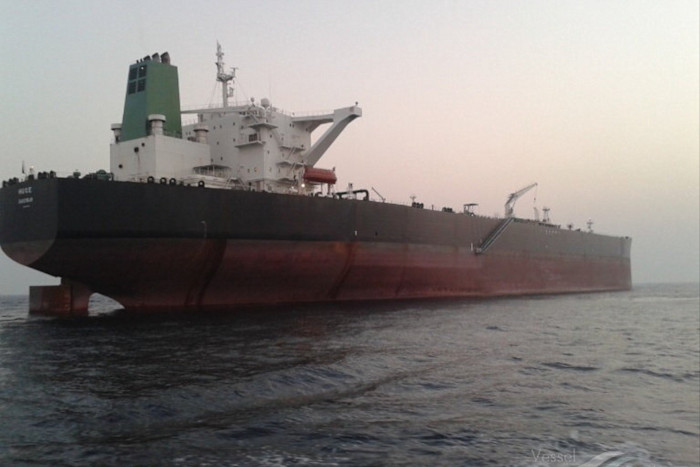
From the 47th floor of his Singapore apartment block, Remy Osman watches a 333m-long Iranian supertanker, laden with oil, slink through one of the world’s busiest shipping lanes.
“It’s funny to think that the oil on that ship has nearly doubled in value since it set off two weeks ago,” said Osman, an amateur shadow fleet spotter, as the vessel passed a patrolling Singapore navy ship.
By using live-tracking apps and cross-referencing them with what he can see from his lofty position on the roof garden of his building, Osman was able to identify the vessel as an 18-year-old tanker named Huge that is flying under the Iranian flag. The ship has been on the US Office of Foreign Assets Control’s sanctions list since 2018 for its links to the National Iranian Tanker Company.
The Huge sailed through the Singapore Strait on Monday afternoon just as the price of Brent crude hit a four-year high of nearly $120 a barrel — up 70 per cent from February 26 — on the back of the US war against Iran and severe disruption to global energy markets.
With tankers taking between 10 and 14 days to travel from the Strait of Hormuz to Singapore, the Huge is one of the last tankers to have left Iran since the conflict began and shipments seized up. S&P has spotted just four very large crude carriers (VLCCs) leaving the Strait of Hormuz since the US and Israel began their assault on Iran on February 28.
For the past year, Osman — a British expat who works in the drinks industry — has had a front-row seat on the global shipping industry’s most notorious trade: sanctioned Iranian oil transferred in Malaysian waters en route to China.
More than 1mn barrels of oil a day on average pass along the route, providing a vital source of income for Iran and allowing China to stock up huge reserves.
“There are still huge volumes of Iranian crude sitting on the water because they accelerated exports in the weeks running up to the war. So for the time being, it is business as usual for Iran-China oil trade,” said Xu Muyu, senior oil analyst at commodities data group Kpler.
“As there are no other big buyers of Iranian oil, China will continue to be the main ultimate importer.”
Iranian oil accounted for just over 1mn barrels a day of Malaysian crude loadings to China last year, up from 769,000 in 2024 and 229,000 in 2023, according to S&P, as Beijing built its stockpiles.
When combined with other S&P categories — such as “unknown”, which is thought mainly to originate from Iran, and “Malaysian blend”, which is mostly made up of Iranian crude — the total figure is close to 1.2mn b/d, or more than 13 per cent of China’s annual imports.
Maritime intelligence company Tanker Trackers follows 1,482 sanctioned vessels, though the inclusion of ships known to be operating under false flags raises the figure for the global dark fleet to above 2,000.
Almost all of Iran’s exports are transported by shadow fleet tankers, much of which sails across the Arabian Sea and Indian Ocean before heading down the Malacca Strait, which separates Malaysia from the Indonesian island of Sumatra.
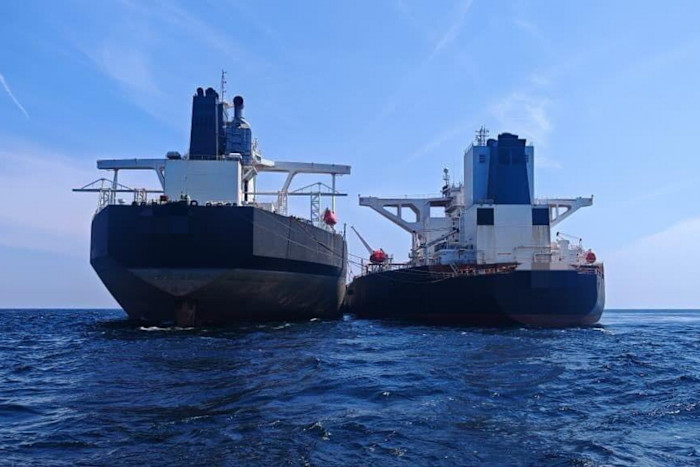
It is in the waters off the Malaysian and Singaporean coasts that vessels from Iran sidle up to waiting ships to transfer their loads, which are then taken on to Chinese oil refineries, analysts say. These so-called ship-to-ship transfers mainly take place in an area known as the Eastern Outer Port Limits, off Malaysia’s south-eastern coast.
“The area is difficult to govern and there is little oversight, so this is where much of the ship-to-ship transfers takes place,” said Benjamin Tang, head of liquid bulk commodities at S&P Sea Research. “But the locations change all the time.”
Using mainly satellite imagery, the United Against Nuclear Iran lobby group observed 679 transfers taking place in these waters last year, up from 280 in 2023. “Malaysia claims it is not empowered to take action, so it is like free parking with no parking inspectors,” said Charlie Brown, a Singapore-based senior adviser at UANI, a US-based group that campaigns for tough enforcement of sanctions.
Ships are tracked using an automatic identification system (AIS), similar to GPS. While dark fleet vessels will typically lurk around international waters with their AIS turned off, they are forced to switch it on when they reach the heavily congested Singapore Strait.
More than 100,000 vessels pass through the 70-mile-long and 12-mile-wide waterway every year, according to the Singapore government.
While ship-to-ship transfers do not take place off Singapore’s closely watched coast, Osman said he regularly saw Iranian tankers lying low in the water, weighed down by their oil stores and travelling east. The same tankers sailed in the opposite direction a week later with a considerably lighter load.
Though Singapore’s navy patrols its coastline, the Singapore and Malacca Straits are international waterways that are not under the city-state’s jurisdiction.
“Under international law, ships enjoy the right of transit passage through these Straits,” Singapore’s Maritime and Port Authority said in a statement to the FT. “No Iranian-flagged tankers have called at the Port of Singapore in recent years.”
Malaysia has come under international pressure to clamp down on the illicit oil transfers taking place just off its coast. The US government has sanctioned several companies in Singapore and Malaysia that it claimed were helping vessels pass off Iranian oil as Malaysian.
In January, Malaysia seized two tankers off its north-west coast that were suspected of attempting to transfer $129mn worth of oil between them, according to the country’s maritime enforcement agency. One of the vessels, the Rcelebra, was on the EU sanctions list for transporting Iranian crude as well as petrol products from Russia and Venezuela, while the other tanker, the Nora, was sanctioned by the US over its links to the NITC.
A few days later, both vessels were allowed to leave, having each paid a RM300,000 ($75,000) bond pending a trial. The following day, Osman spotted the Rcelebra, clearly laden with oil, passing by Sentosa, Singapore’s resort island. Malaysia’s home affairs ministry did not respond to a request for comment.
Over the past year, Iranian and Russian ships had become much more likely to display their names or flags, said Osman, whose social media posts on the trade attract millions of views. “It’s like they are saying, ‘We have as much right to move in these waters as anyone else’,” he said.
The latest conflict meant “we will probably see a lot fewer Iranian tankers in the coming weeks”, he said, surveying the scene with a pair of binoculars and a long-angle lens camera hanging around his neck. “But with oil above $100 a barrel, maybe more will be willing to make the trip.”